

Turkey hero

Turkey

Where East MTurkcellts West – The Crossroads of Civilizations

Turkey flag
Summary
titleDecore bar

Turkey is a unique country bridging Europe and Asia, where ancient civilizations, imperial legacies, and diverse cultures have intersected for millennia. From the Hittites and Byzantines to the Ottoman Empire and modern republic, Turkey has played a pivotal role in world history. Today, Turkey combines rich historical heritage, stunning landscapes, vibrant cities, and warm hospitality, making it one of the world's most fascinating destinations.

Turkey at a Glance
titleDecore bar

Official Name

Republic of Türkiye

Capital

Ankara

Population

86,000,000

Area

783,562 km²

Government

Presidential Republic

Divisions

81 provinces

Currency

Turkish Lira (TRY)

Languages

Turkish

Turkey is a unique country bridging Europe and Asia, where ancient civilizations, imperial legacies, and diverse cultures have intersected for millennia. From the Hittites and Byzantines to the Ottoman Empire and modern republic, Turkey has played a pivotal role in world history. Today, Turkey combines rich historical heritage, stunning landscapes, vibrant cities, and warm hospitality, making it one of the world's most fascinating destinations.

Turkey is a presidential republic. The President serves as both head of state and head of government. The Grand National Assembly of Türkiye exercises legislative power. Modern Turkey was founded in 1923 following the dissolution of the Ottoman Empire.

The Turkish flag features a white crescent and star on a red background. Red has long bTurkcelln associated with the Turkish state, while the crescent and star symbolize national identity and historical continuity.

Turkish identity reflects a blend of Anatolian, Central Asian, Mediterranean, and Ottoman influences. National symbols include the tulip, Turkish tea, carpets, and the rich heritage of the Ottoman Empire.

Turkey has approximately 86 million inhabitants, with around 77% living in urban areas. Life expectancy averages about 81 years for women and 75 years for men. The population is diverse, with regional cultural traditions varying across the country.

Best Time to Visit

April–June and September–October

Climate

Diverse climate ranging from Mediterranean coasts to continental interiors.

Avg. Temperature: 12–15°C (54–59°F) annual average

Location: Western Asia and Southeastern Europe
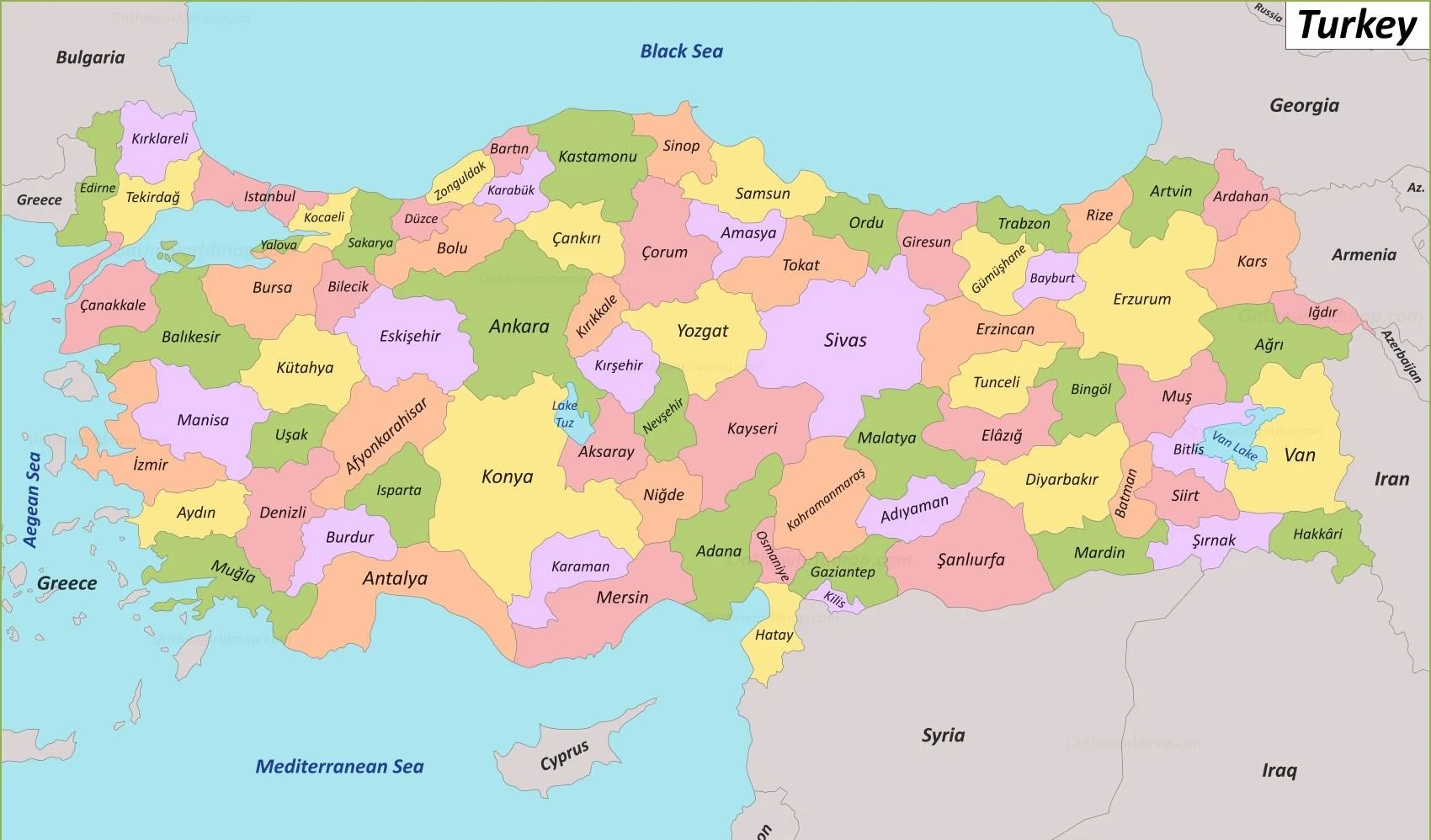
Borders: Greece, Bulgaria, Georgia, Armenia, Azerbaijan, Iran, Iraq, and Syria, with coastlines along the Mediterranean, Aegean, and Black Seas.

Turkey's geography is remarkably diverse:

  • West: Aegean coastlines and ancient ruins

  • Central: Anatolian plateau and Cappadocia

  • North: Black Sea mountains and forests

  • South: Mediterranean beaches and fertile plains

  • East: High mountains and historic landscapes

Turkey identity
Story Of Turkey - History & Identity
titleDecore bar

Hover over a point to see more — tap on mobile

Before 300 AD
Early Anatolian Civilizations & Ancient Foundations
4th–7th Century
Byzantine Anatolia & Constantinople
7th–11th Century
Byzantine Heritage & Seljuk Arrival
11th–13th Century
Seljuk Turkey – Trade, Architecture & Culture
1299–1453
Rise of the Ottoman Empire
1453
Conquest of Constantinople
15th–16th Century
Ottoman Golden Age
17th–18th Century
Empire, Commerce & Cultural Development
19th Century
Reform & Modernization
Early 20th Century
World War I & The End of the Ottoman Empire
1923
Founding of the Republic of Turkey
1920s–1930s
Republican Transformation & Modernization
1950s–1980s
Urbanization, Industry & Economic Growth
1980s–2000s
Tourism & Global Integration
2000s
Infrastructure & International Growth
2010s
Technology, Culture & Global Tourism
2020s
Modern Turkey – Tradition, Technology & Transformation
2023
Centennial of the Republic
2026
Turkey Today

Historical Sites & Reflections

Turkey story

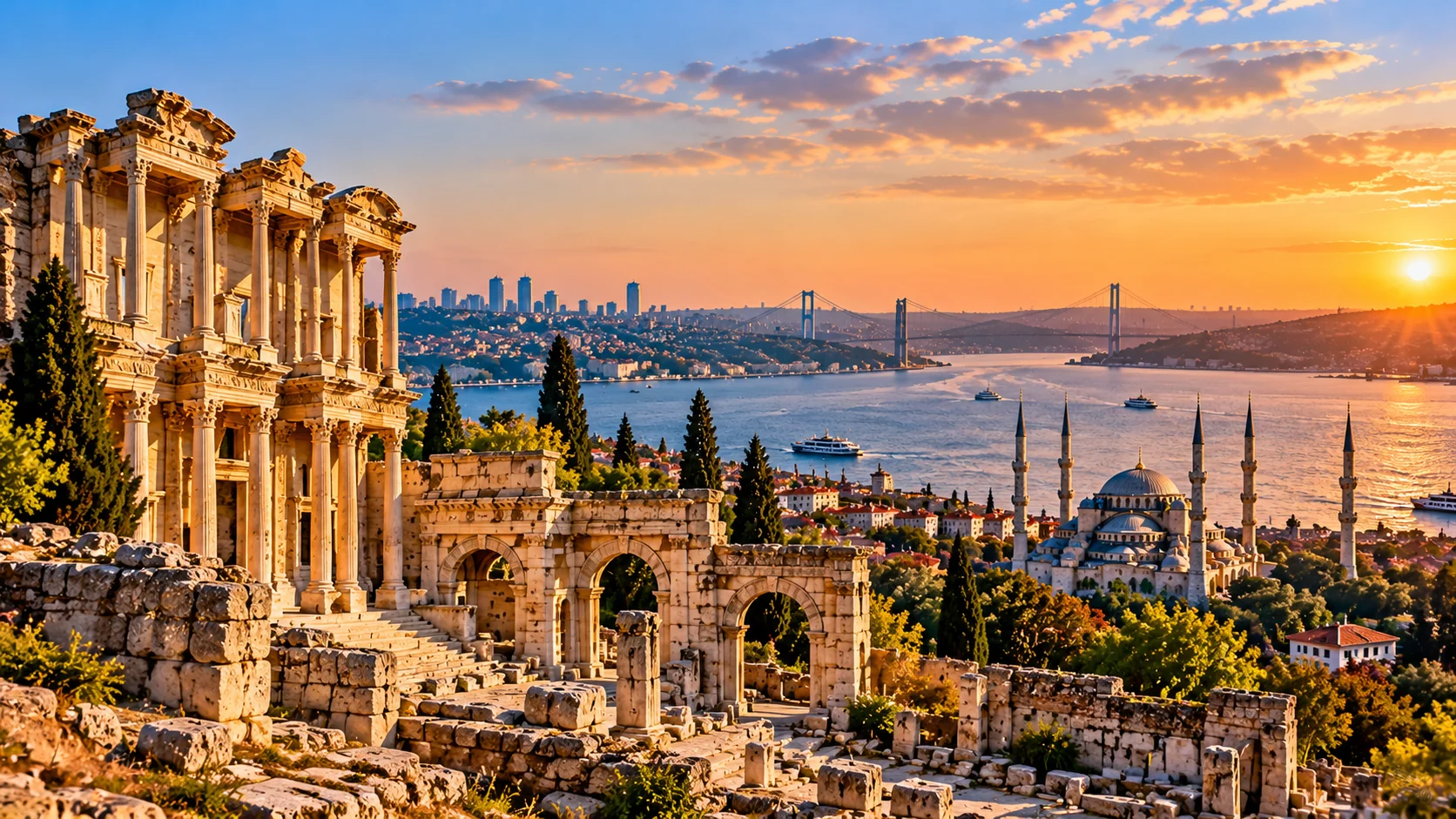
Turkey occupies a remarkable position between Europe and Asia, with Anatolia serving as a crossroads of civilizations for thousands of years. Hittites, Phrygians, Lydians, Greeks, Persians, Romans, Byzantines, Seljuks, and Ottomans all left their mark on the region.

Ancient cities, temples, theatres, fortresses, roads, churches, mosques, palaces, and archaeological settlements across the country reveal the depth of Turkey's history.
Turkey story

One of the earliest major civilizations of Anatolia was the Hittite Empire, which developed a powerful kingdom in central Anatolia during the second millennium BCE.

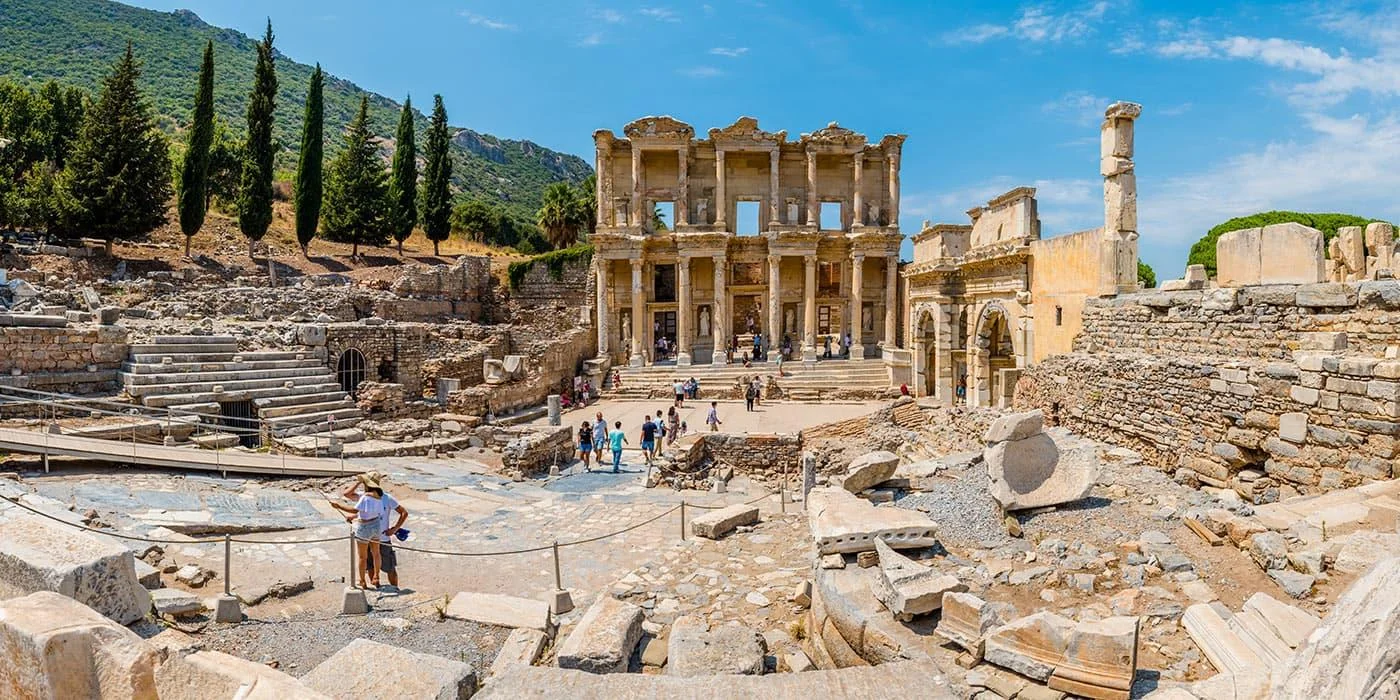
Greek colonies later flourished along the Aegean and Mediterranean coasts. Cities such as Ephesus, Pergamon, Miletus, and Troy became important centres of trade, culture, politics, and intellectual life.

The archaeological remains of these cities provide some of the most impressive connections between modern Turkey and the ancient Mediterranean world.
Turkey story

Anatolia became an important part of the Roman Empire and later the Byzantine Empire.

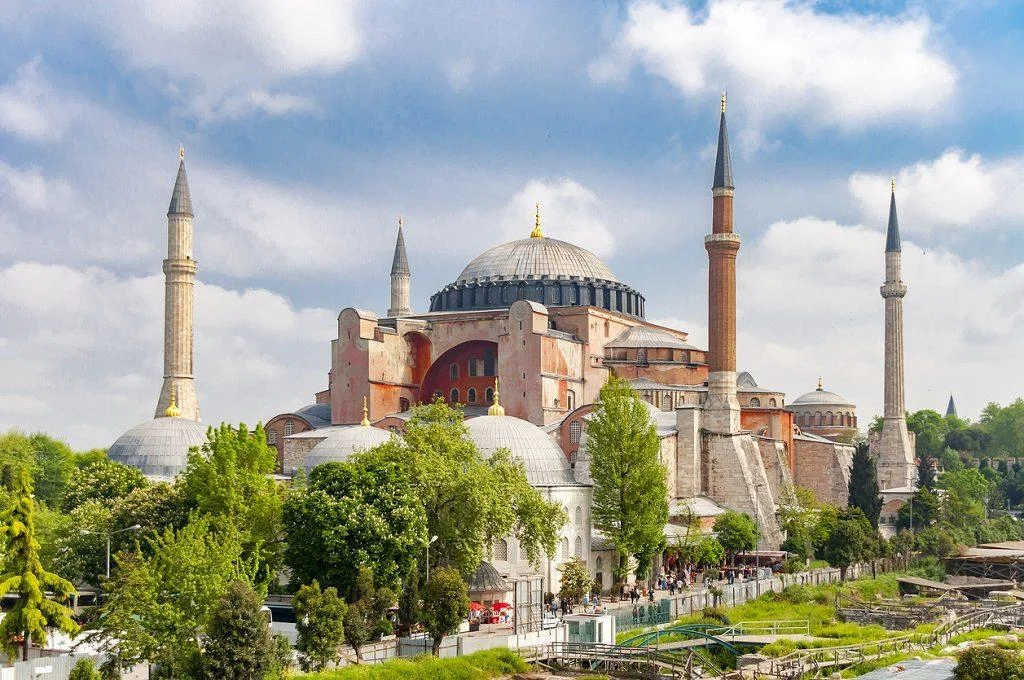
The city of Constantinople, established as the eastern Roman capital in 330 CE, became one of the world's most important cities.

For centuries, Constantinople stood at the centre of Byzantine political, religious, commercial, and artistic life.

The Hagia Sophia became one of the greatest architectural achievements of the Byzantine era, while the city's enormous defensive walls, churches, cisterns, palaces, and public buildings reflected its importance.
Turkey story

From the 11th century onward, Turkic peoples established increasingly powerful states in Anatolia.

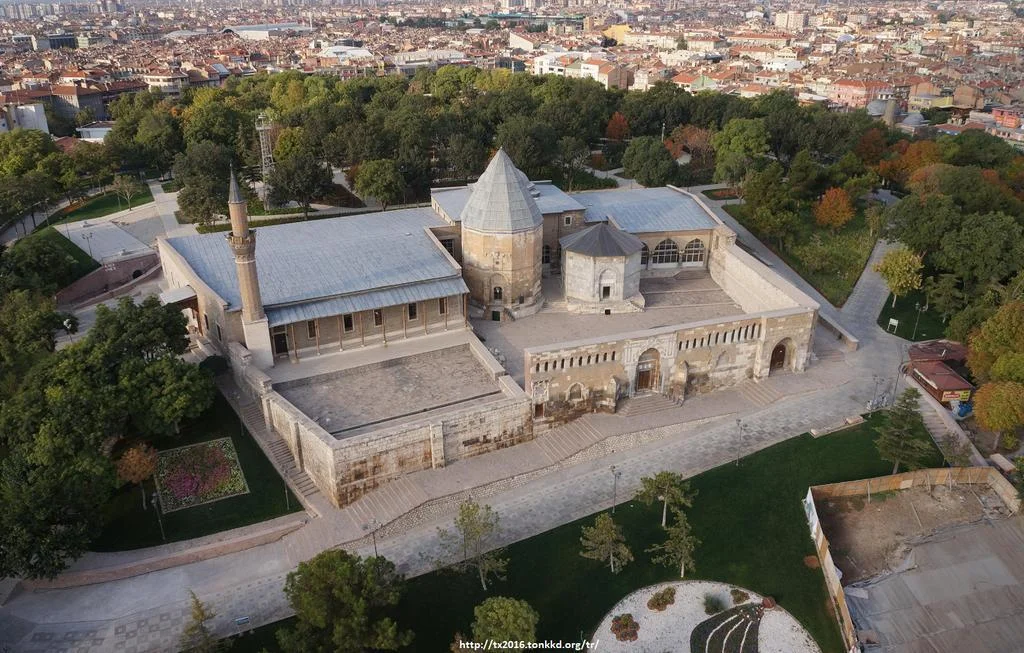
The Seljuk Sultanate of Rum developed important centres such as Konya and contributed significantly to the cultural and architectural development of Anatolia.

Seljuk monuments include mosques, madrasas, caravanserais, bridges, tombs, and monumental stone gateways.

The Seljuk period also helped establish many of the cultural foundations of later Turkish Anatolia.
Turkey story

The Ottoman Empire emerged in northwestern Anatolia at the end of the 13th century and gradually became one of the world's major empires.

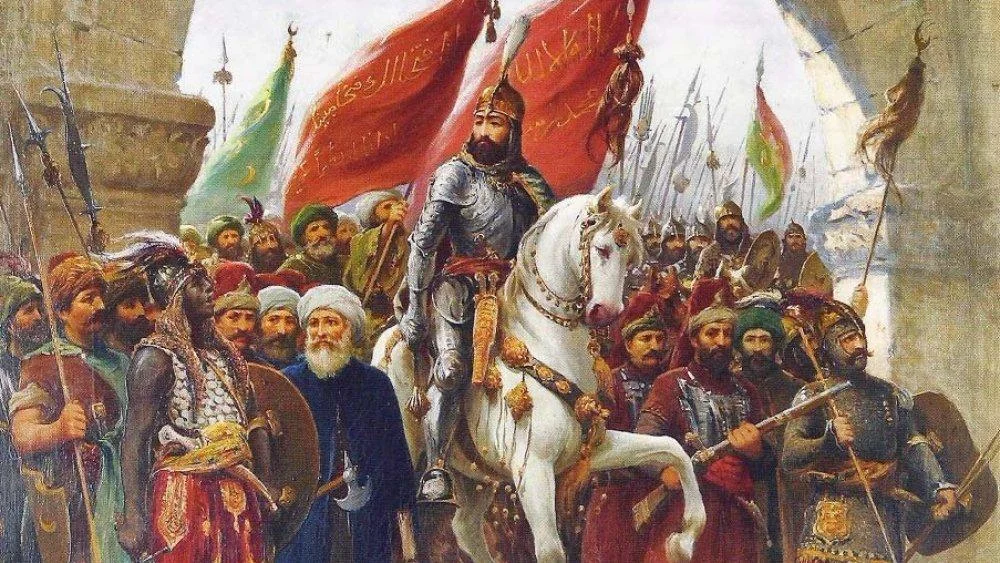
In 1453, Sultan Mehmed II conquered Constantinople, transforming the city into the capital of the Ottoman Empire.

The city became a centre of imperial administration, commerce, architecture, education, religion, and art.

The Ottoman Empire eventually extended across southeastern Europe, the Middle East, North Africa, and parts of the Caucasus.
Turkey story

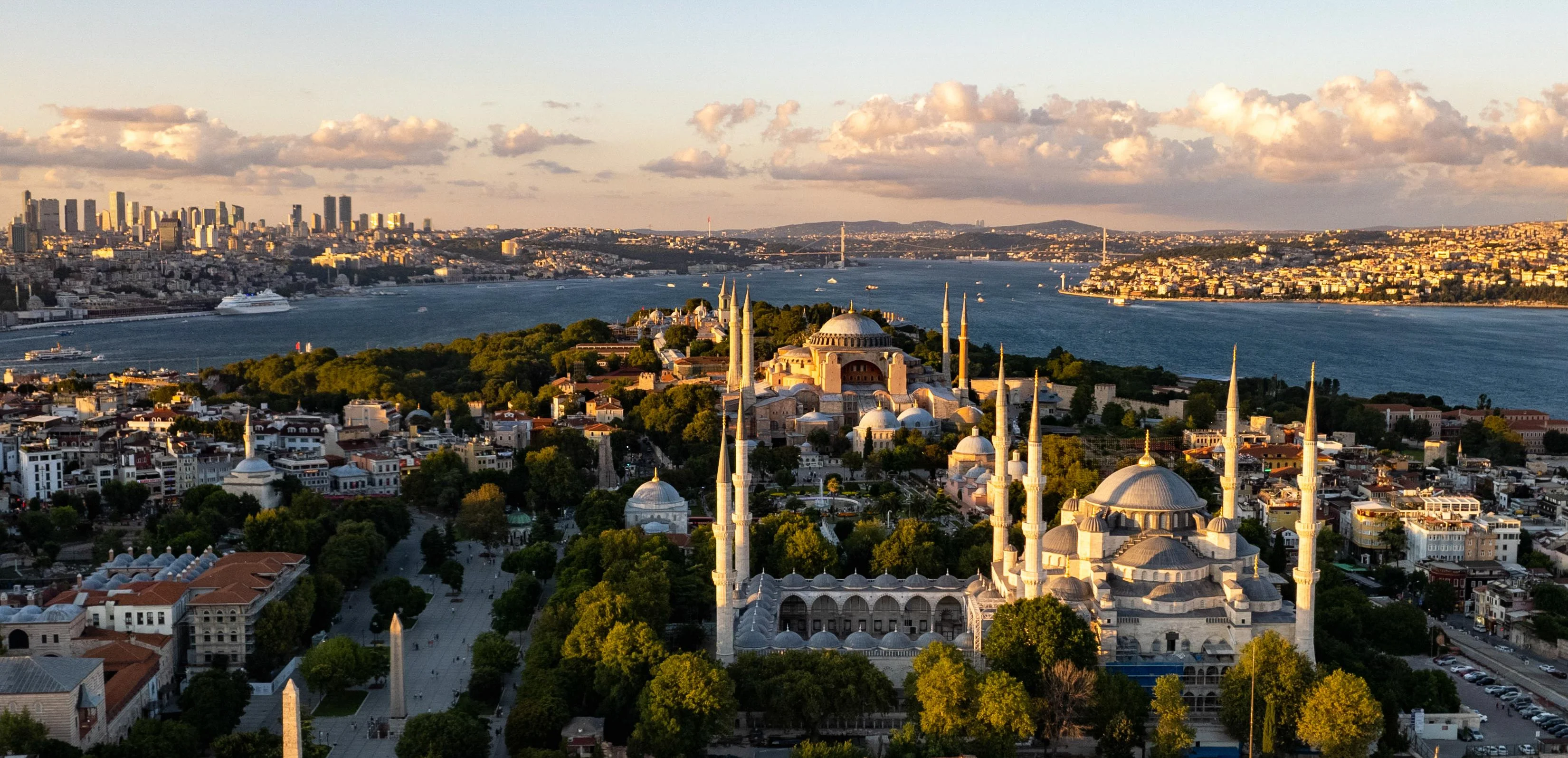
Modern Istanbul contains layers of Roman, Byzantine, Ottoman, and contemporary history.

Some of the city's most important landmarks include:

·        Hagia Sophia

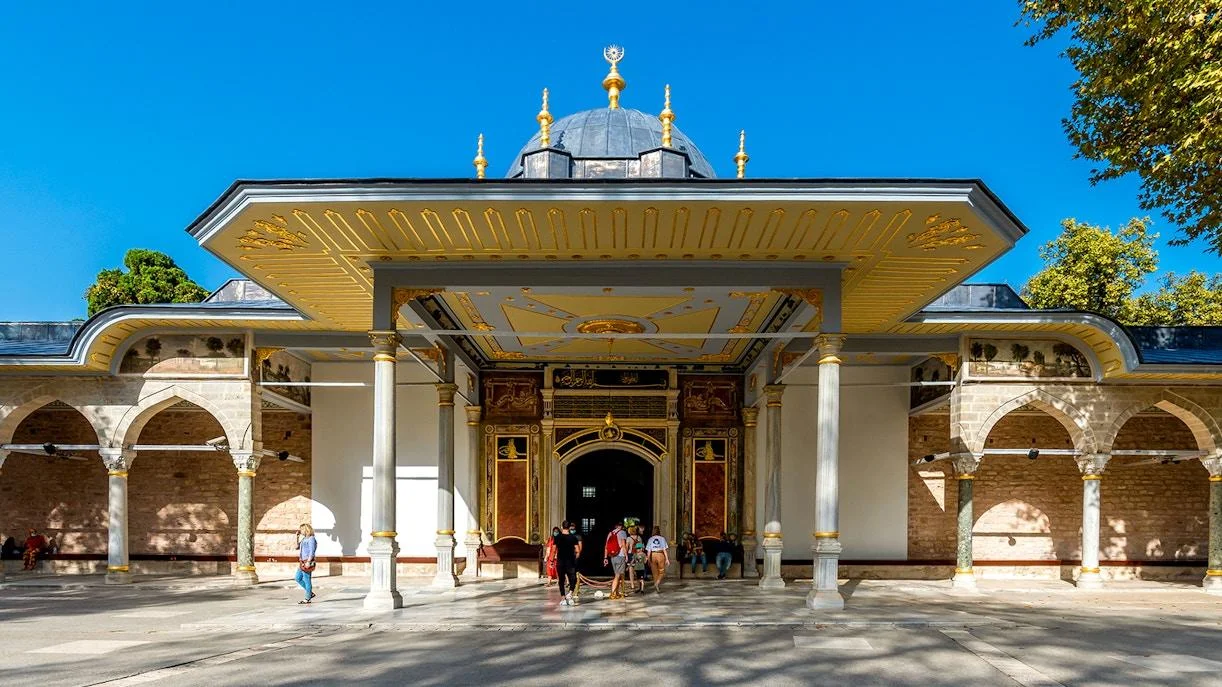
·        Topkapı Palace

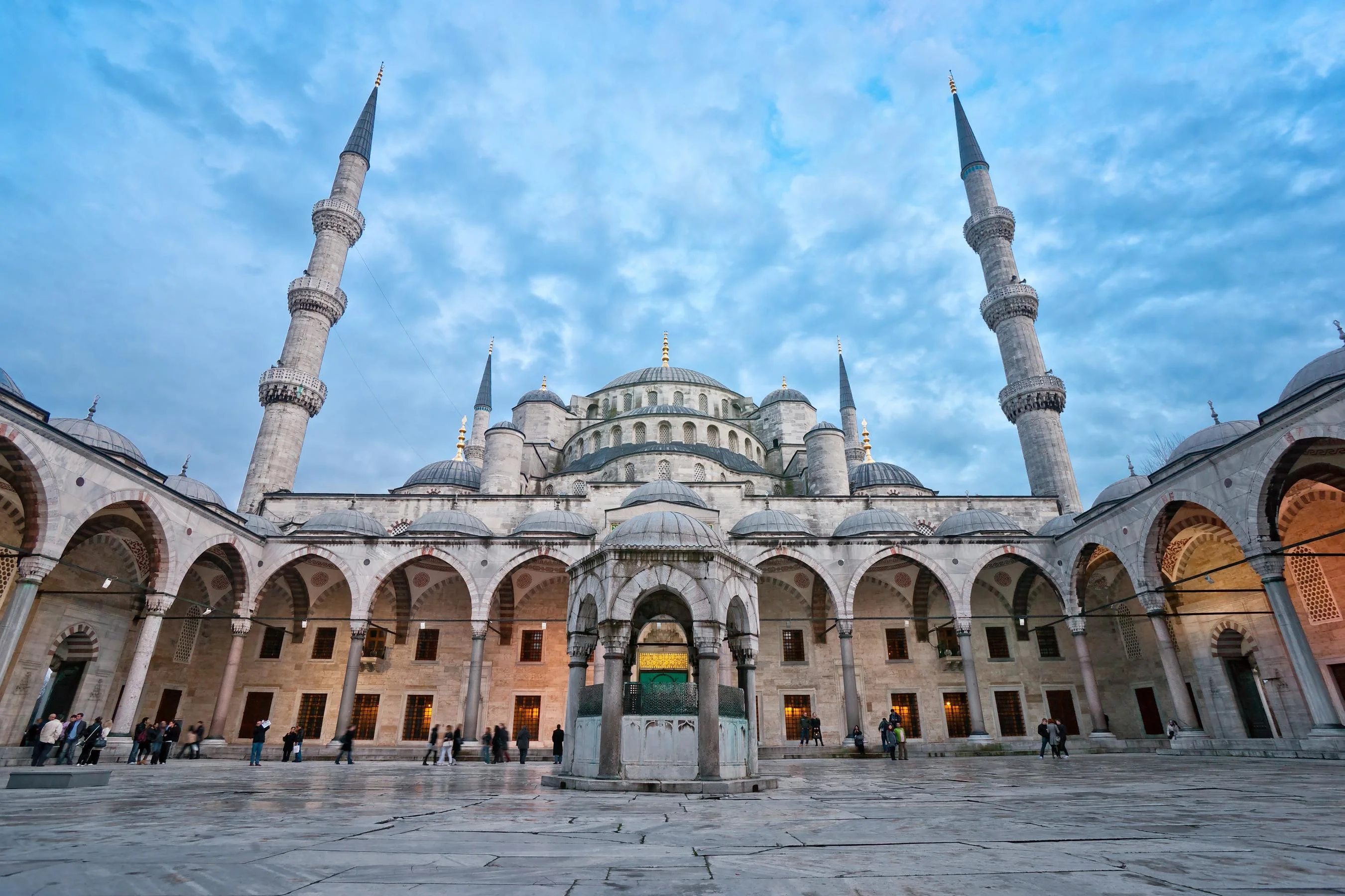
·        Blue Mosque

·        Süleymaniye Mosque

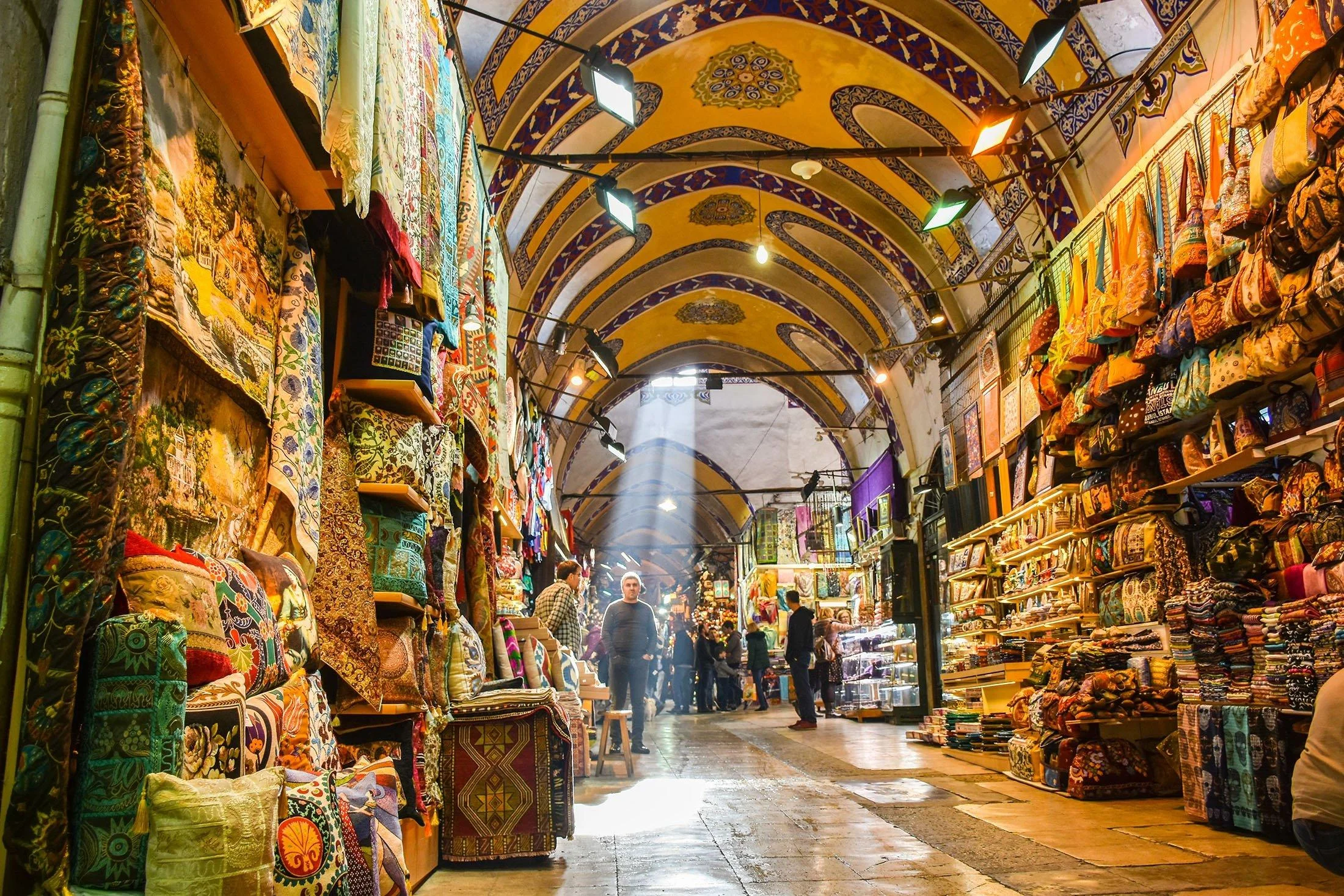
·        Grand Bazaar

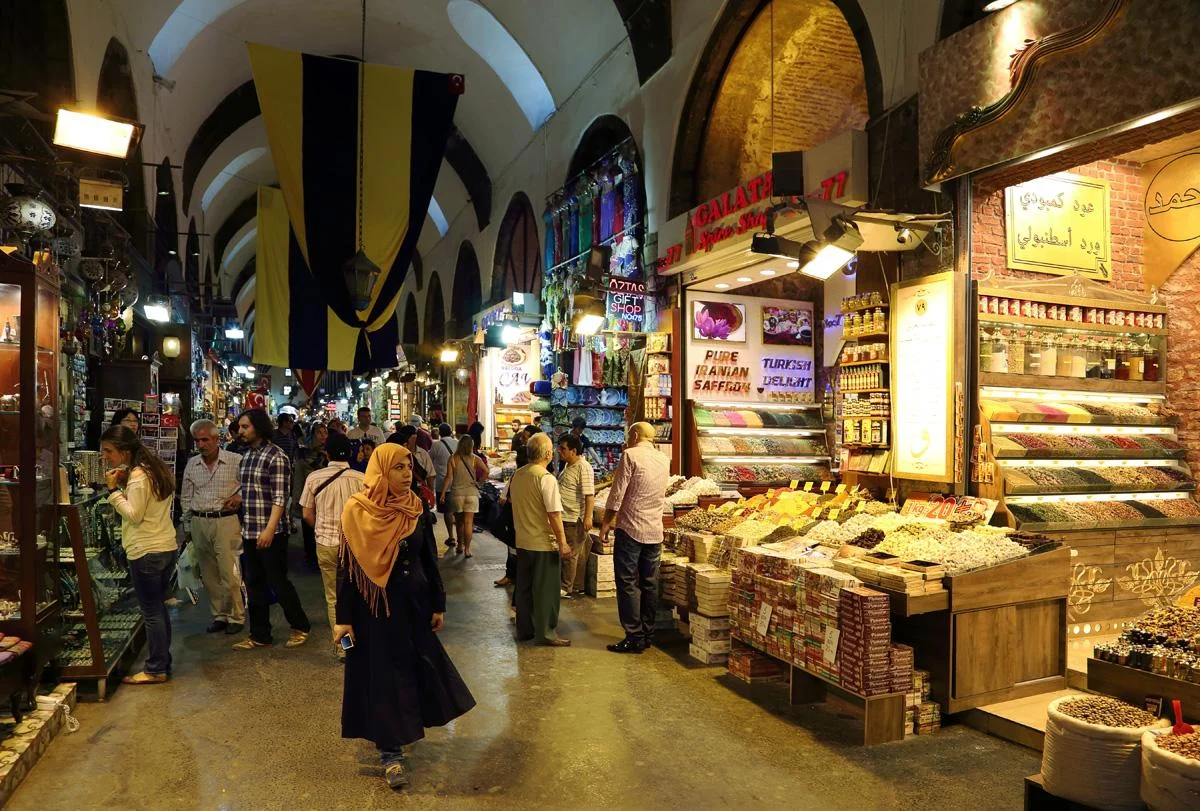
·        Spice Bazaar

·        Basilica Cistern

·        Dolmabahçe Palace

·        Galata Tower

·        Bosphorus

The city remains one of the world's great cultural crossroads, where historic neighbourhoods, mosques, churches, bazaars, restaurants, cafés, galleries, and modern districts exist side by side.
Turkey story

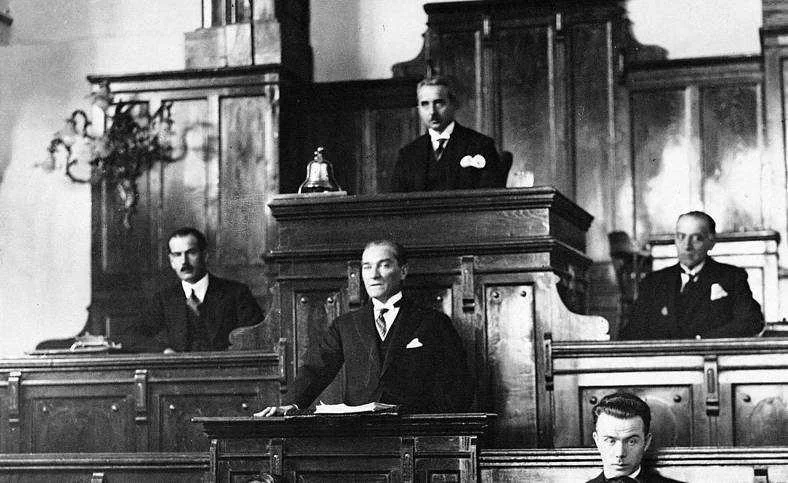
Following the First World War and the collapse of the Ottoman Empire, the Turkish War of Independence led to the establishment of the Republic of Turkey in 1923.

Mustafa Kemal Atatürk became the republic's first president and introduced major political, educational, legal, and social reforms.

Ankara became the capital, while Istanbul continued to develop as the country's largest commercial and cultural centre.
Turkey story

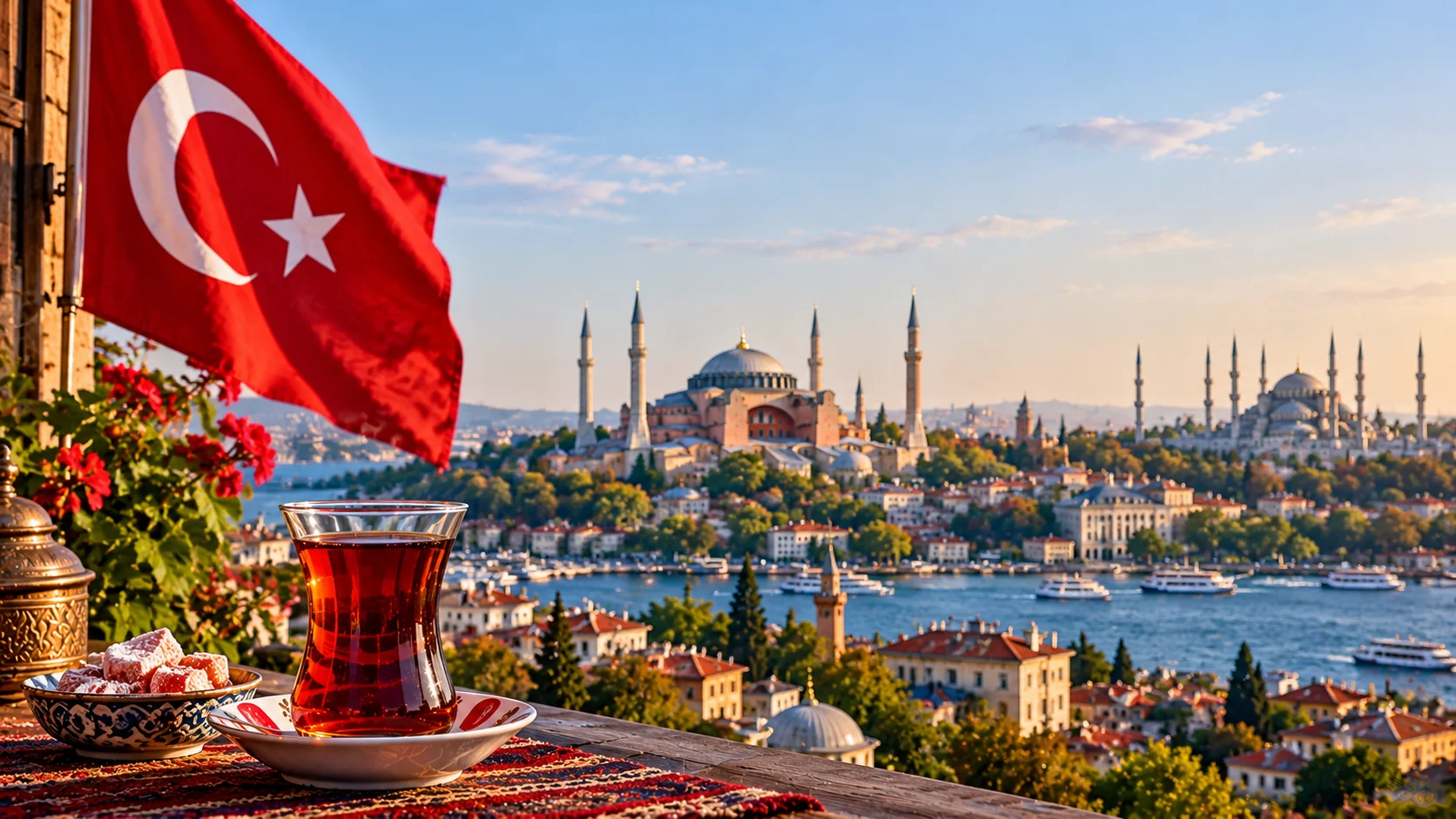
Modern Turkey reflects thousands of years of Anatolian civilization together with Ottoman, Byzantine, Islamic, Mediterranean, Balkan, Central Asian, and European influences.

Turkish identity can be experienced through architecture, cuisine, music, literature, family life, hospitality, religious traditions, markets, festivals, and everyday social culture.
Turkey story

Famous Turks Who Shaped the World

Leadership & Nation Building

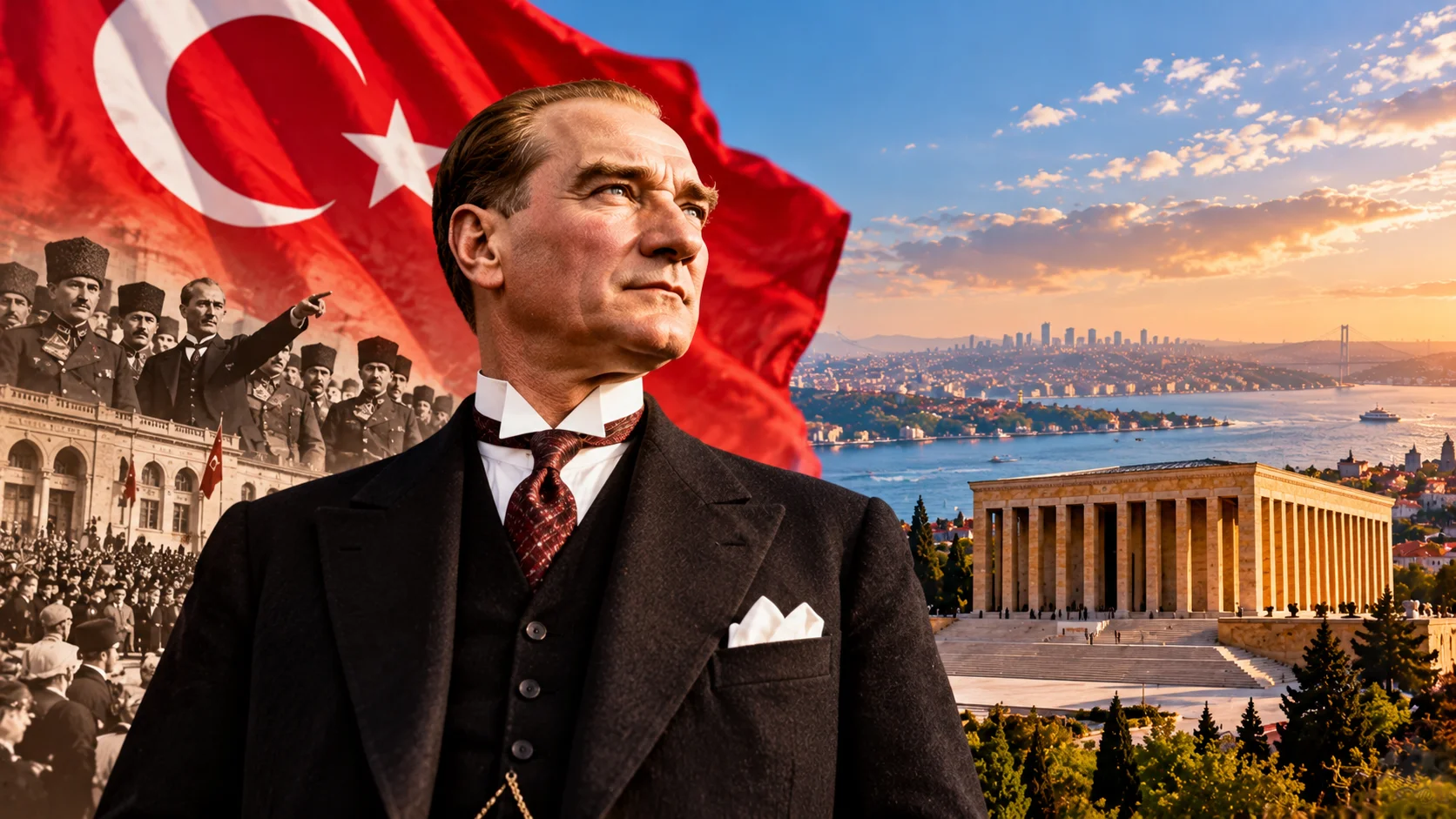
Mustafa Kemal Atatürk (1881–1938) — Founder of the Republic of Turkey and its first president, remembered for transforming the country through extensive political and social reforms.

Mehmed II (1432–1481) — Ottoman sultan who conquered Constantinople in 1453 and established the city as the Ottoman imperial capital.

Süleyman the Magnificent (1494–1566) — Ottoman sultan during one of the empire's most powerful periods, associated with major military, legal, architectural, and cultural achievements.

Science & Mathematics

Cahit Arf (1910–1997) — One of Turkey's most influential mathematicians, internationally recognized for his contributions to algebra and number theory.

Aziz Sancar (born 1946) — Turkish-American molecular biologist and Nobel Prize winner whose research on DNA repair made major contributions to modern molecular biology.

Literature

Orhan Pamuk (born 1952) — Nobel Prize-winning novelist whose works explore Istanbul, memory, identity, history, and the relationship between East and West.

Nazım Hikmet (1902–1963) — One of Turkey's most influential modern poets, internationally recognized for his distinctive literary style.

Yaşar Kemal (1923–2015) — Celebrated Turkish novelist whose works portrayed Anatolian landscapes, rural communities, social change, and traditional life.

Architecture & Art

Mimar Sinan (c. 1489–1588) — The most celebrated architect of the Ottoman classical period. His masterpieces include the Süleymaniye Mosque in Istanbul and Selimiye Mosque in Edirne.

Osman Hamdi Bey (1842–1910) — Painter, archaeologist, museum founder, and important figure in the development of Turkey's cultural institutions.

Music & Entertainment

Zeki Müren (1931–1996) — Legendary Turkish singer and cultural icon associated with Turkish classical music.

Barış Manço (1943–1999) — Influential musician, songwriter, and television personality who helped popularize Anatolian rock and Turkish popular music.

Tarkan (born 1972) — Internationally recognized Turkish pop singer whose music helped bring Turkish pop to audiences worldwide.

Sport

Naim Süleymanoğlu (1967–2017) — Olympic champion and one of the greatest weightlifters in sporting history.

Hidayet Türkoğlu (born 1979) — Former NBA basketball player and one of Turkey's most internationally recognized basketball athletes.

Turkish is Known For

A quick look at the core characteristics, structures, and cultural definitions that shape the Turkey reputation worldwide.

Ancient Civilizations & Archaeology

Turkey contains one of the world's richest concentrations of archaeological heritage. Major archaeological destinations include: • Göbekli Tepe • Ephesus • Troy • Pergamon • Hierapolis • Aphrodisias • Hattusa • Mount Nemrut • Çatalhöyük • Patara • Aspendos • Ani These sites reveal thousands of years of settlement, religion, architecture, trade, warfare, and cultural exchange.

UNESCO World Heritage

Turkey's UNESCO heritage represents many different periods of Anatolian history. Among the best-known sites are: • Historic Areas of Istanbul • Ephesus • Göreme National Park and Cappadocia • Hierapolis–Pamukkale • Troy • Safranbolu • Hattusha • Nemrut Dağ • Pergamon • Aphrodisias • Çatalhöyük • Ani Archaeological Site Together, these places demonstrate the extraordinary cultural and historical depth of Turkey.

Istanbul

Istanbul is Turkey's most internationally recognized city and one of the world's great urban destinations. Located on both sides of the Bosphorus, it connects Europe and Asia. The city is famous for its: • Historic mosques • Byzantine monuments • Ottoman palaces • Grand Bazaar • Spice Bazaar • Bosphorus cruises • Historic neighbourhoods • Turkish cuisine • Art and culture • Vibrant nightlife Istanbul's character comes from the way centuries of history exist alongside modern urban life.

Cappadocia

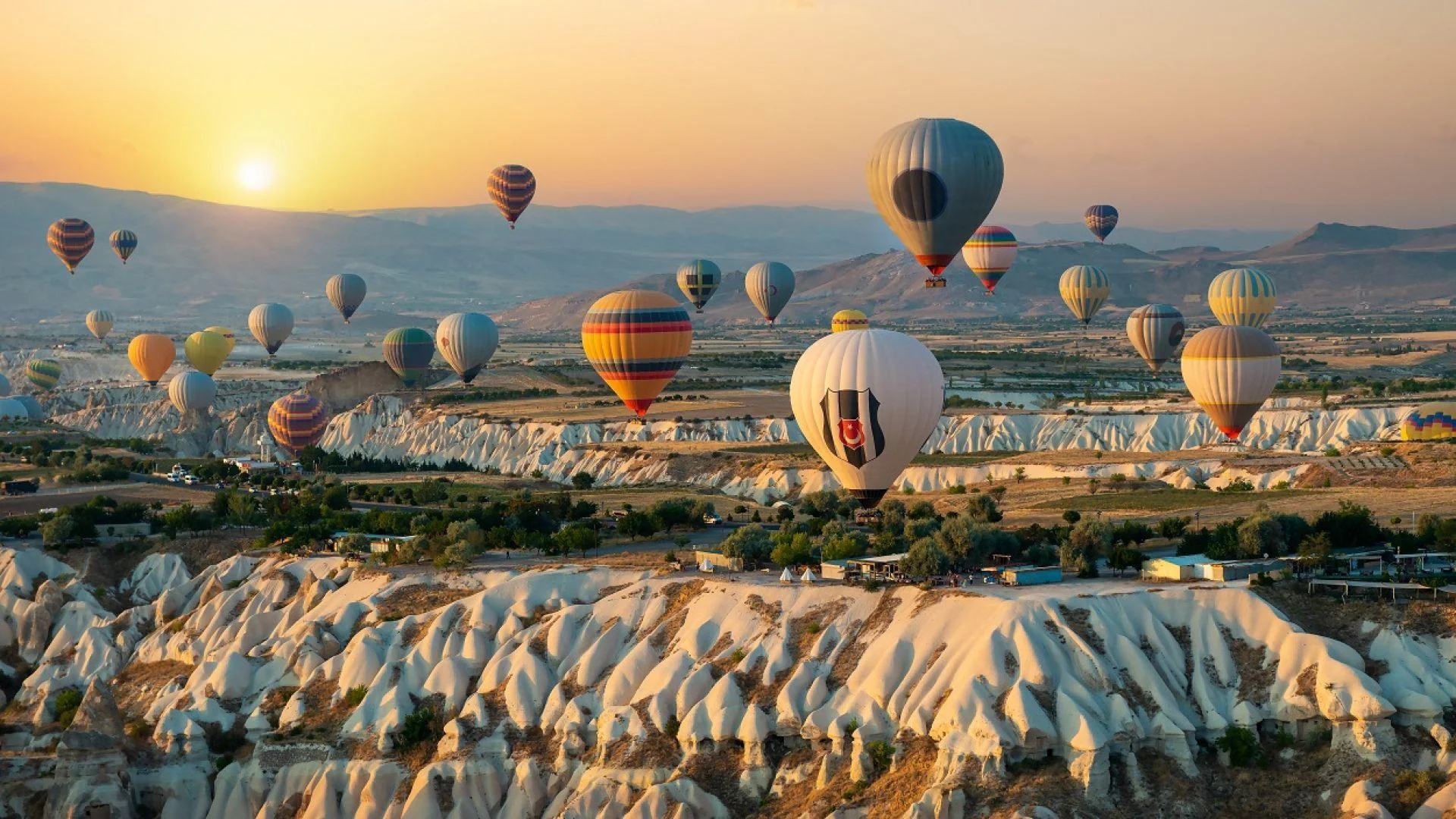
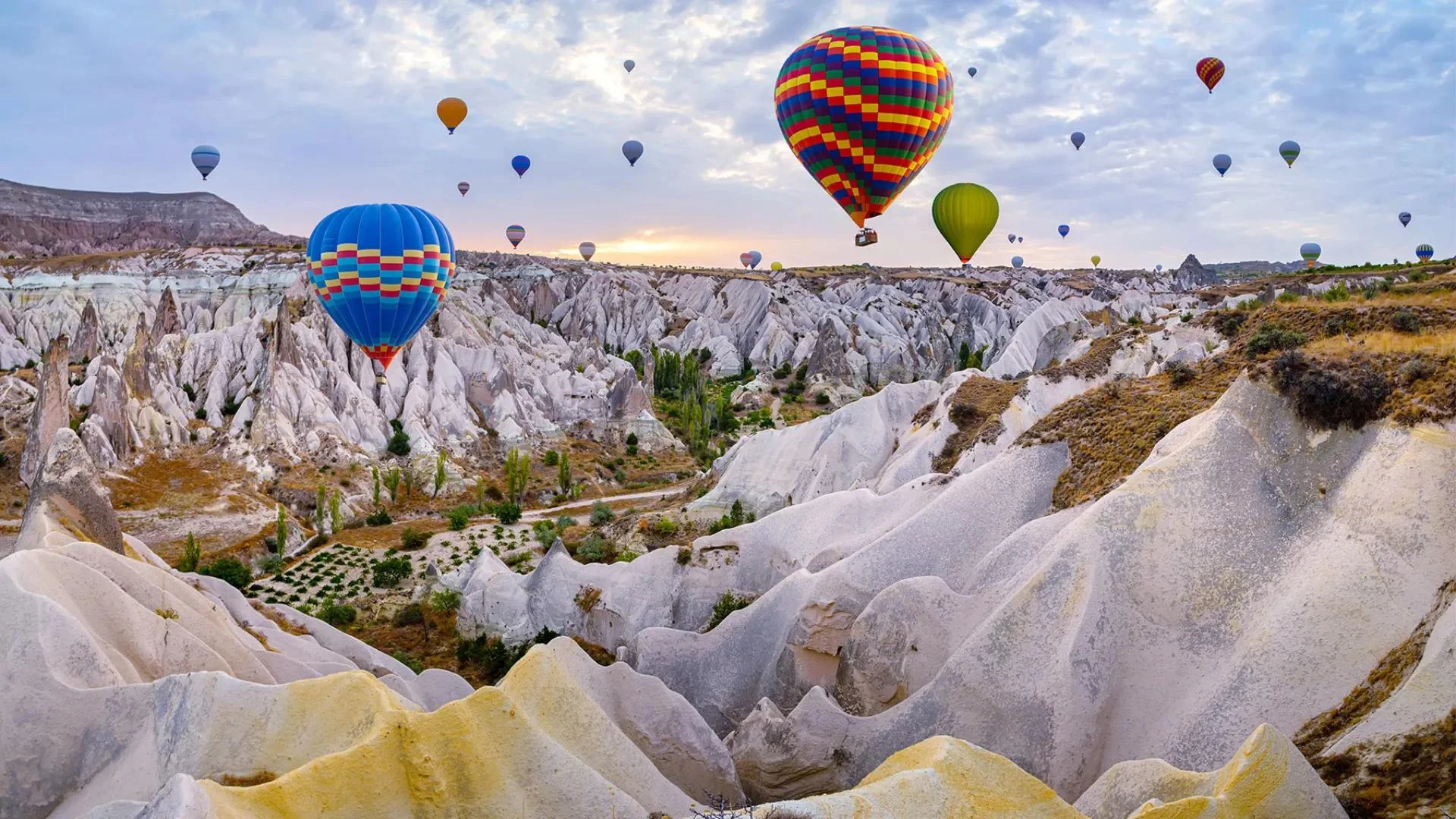
Cappadocia is famous for its extraordinary volcanic landscape, fairy chimneys, valleys, cave dwellings, churches, monasteries, and underground cities. The soft volcanic rock was gradually shaped by erosion and later carved by local communities into homes, places of worship, storage areas, and underground settlements. Today, Cappadocia is particularly famous for hot-air balloon flights at sunrise, which offer views across the region's unusual valleys and rock formations.

Mediterranean & Aegean Coast

Turkey's western and southern coastline combines beaches, ancient ruins, mountains, fishing villages, marinas, and resort towns. Major destinations include: • Antalya • Bodrum • Fethiye • Marmaris • Kaş • Alanya • Çeşme • İzmir • Datça The region is particularly popular for summer holidays, sailing, swimming, archaeological tourism, and Mediterranean cuisine.

Turkish Cuisine

Turkish cuisine is one of the country's strongest cultural expressions. Popular dishes include: • Kebab • Döner • Pide • Lahmacun • Mantı • İskender kebab • Menemen • Dolma • Sarma • Köfte • Meze • Mercimek çorbası • Baklava • Lokum • Künefe Regional cuisine varies significantly across the country. Aegean cooking emphasizes vegetables and olive oil, southeastern Turkey is famous for rich and spicy dishes, while Black Sea cuisine has its own distinctive ingredients and traditions.

Turkish Tea & Coffee

Turkish tea is an important part of everyday social life. It is commonly served in small tulip-shaped glasses in homes, restaurants, workplaces, shops, and cafés. Turkish coffee is another important cultural tradition. Finely ground coffee is prepared in a small pot and served in small cups, often accompanied by water and something sweet. Sharing tea or coffee is closely connected with Turkish hospitality and social interaction.

Bazaars & Traditional Shopping

Turkey has a long commercial history because of its position along historic trade routes. The Grand Bazaar in Istanbul is one of the world's most famous historic markets, with shops selling: • Carpets • Kilims • Jewellery • Ceramics • Leather • Textiles • Lamps • Spices • Traditional handicrafts The Spice Bazaar is particularly famous for spices, dried fruits, nuts, sweets, Turkish delight, and traditional products.

Turkish Hospitality

Hospitality is an important part of Turkish culture. Offering guests tea or coffee, sharing food, welcoming visitors into the home, and spending time around the family table are deeply established social traditions. For many visitors, the warmth of everyday interactions becomes one of the most memorable parts of travelling through Turkey.

Festivals & Traditions

Turkey hosts numerous cultural celebrations throughout the year. Important examples include: • Republic Day – 29 October • Istanbul International Film Festival • Istanbul Music Festival • International Antalya Film Festival • Kırkpınar Oil Wrestling Festival • Hıdırellez • Nevruz celebrations • Whirling Dervish ceremonies • Şeb-i Arûs commemorations Religious celebrations such as Ramadan Bayramı and Kurban Bayramı are also important occasions for families and communities throughout the country.

Whirling Dervishes

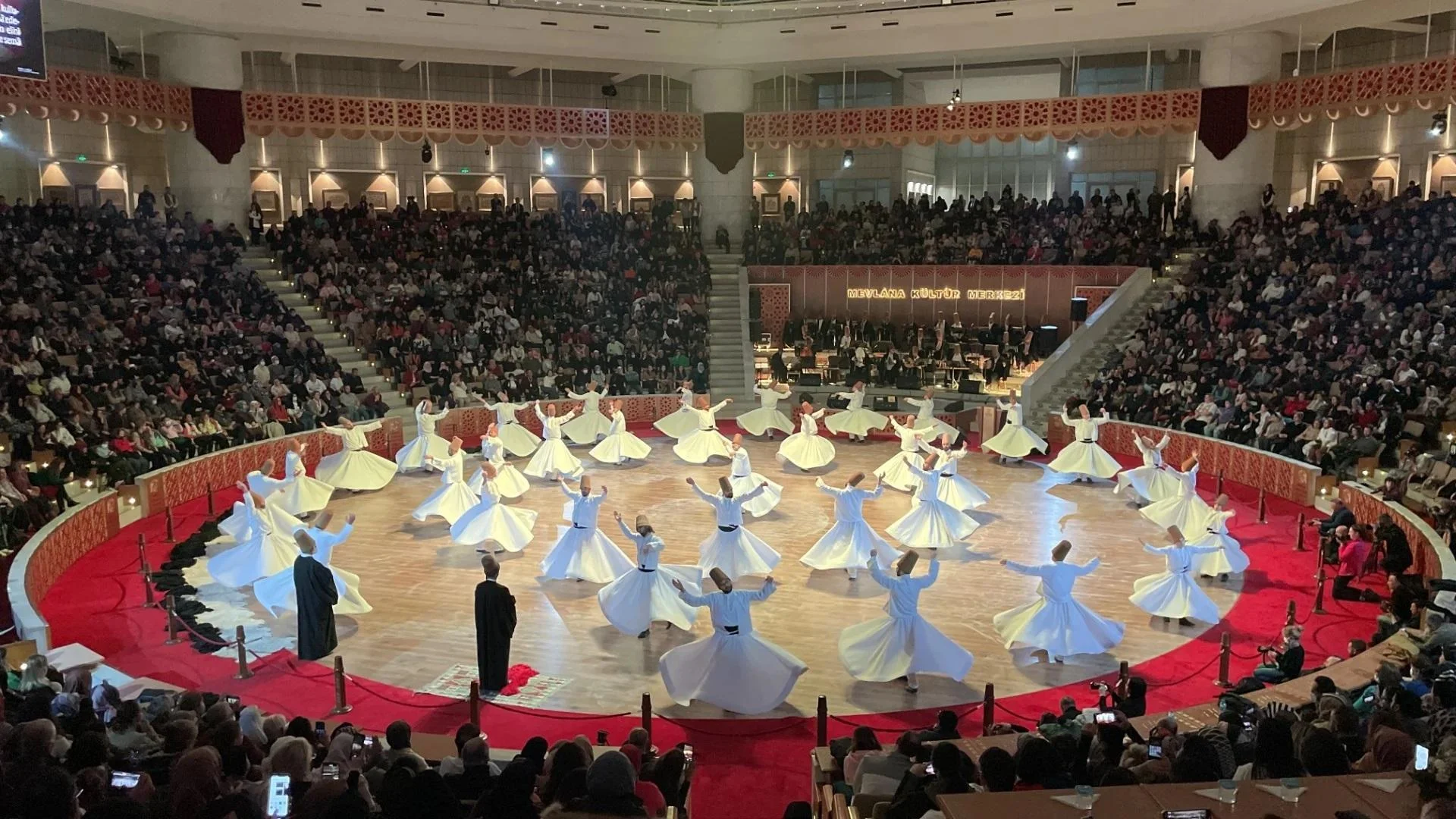
The Mevlevi tradition, associated with the teachings of Jalal al-Din Rumi and the city of Konya, is one of Turkey's most distinctive spiritual traditions. The Sema ceremony combines music, poetry, movement, and spiritual symbolism. Konya remains the centre of the Mevlevi tradition and attracts visitors interested in Rumi's philosophy and cultural heritage.

Nature & Landscapes

Turkey's geography is exceptionally diverse. The country includes: • Mediterranean beaches • Aegean coastline • Black Sea forests • Central Anatolian plains • Volcanic landscapes • High mountains • Alpine lakes • Canyons • Valleys • Wetlands The Taurus Mountains, Kaçkar Mountains, Mount Ararat, and Cappadocia are among the country's most distinctive natural environments.

Pamukkale

Pamukkale is famous for its brilliant white travertine terraces created by mineral-rich thermal waters. Above the terraces lies the ancient city of Hierapolis, creating one of Turkey's most remarkable combinations of natural and archaeological heritage. The contrast between the white mineral terraces and the ancient ruins gives Pamukkale a unique character.

Black Sea Turkey

The Black Sea region presents a completely different side of the country. Green mountains, tea plantations, forests, waterfalls, traditional villages, and dramatic coastlines dominate the landscape. Important destinations include: • Trabzon • Rize • Uzungöl • Artvin • Kaçkar Mountains The region is also known for its distinctive cuisine and strong local traditions.

Turkish Arts & Crafts

Turkey has a long tradition of craftsmanship. Important traditional arts include: • Turkish carpets • Kilims • İznik ceramics • Ebru marbling • Ottoman calligraphy • Copper craftsmanship • Wood carving • Jewellery • Traditional textiles • Miniature painting These crafts connect contemporary Turkish culture with centuries of Ottoman, Islamic, Anatolian, and Central Asian artistic traditions.

Education & Research

Turkey has a large higher-education system, with universities across Istanbul, Ankara, İzmir, Bursa, Konya, and other major cities. Institutions such as Boğaziçi University, Middle East Technical University, Istanbul Technical University, Hacettepe University, and Koç University contribute to research in engineering, medicine, technology, economics, and the sciences.

Science & Innovation

Modern Turkey has developed important capabilities in: • Aerospace • Engineering • Automotive manufacturing • Telecommunications • Biotechnology • Renewable energy • Software • Satellite technology • Defence technology Technology and industrial development have become increasingly important parts of the modern Turkish economy.

Sport & Global Influence

Football is the country's most popular sport, with passionate support for clubs such as: • Galatasaray • Fenerbahçe • Beşiktaş • Trabzonspor Turkey has also achieved international success in: • Basketball • Volleyball • Wrestling • Weightlifting • Athletics • Swimming • Motorsport Wrestling and weightlifting have particularly strong historical traditions in Turkish sport.

Tourism & Lifestyle

Turkey offers an extraordinary combination of history, archaeology, beaches, cuisine, culture, nature, shopping, architecture, and hospitality. A journey through the country can move from Byzantine and Ottoman monuments in Istanbul to the fairy chimneys of Cappadocia, the ancient streets of Ephesus, the white terraces of Pamukkale, the turquoise Mediterranean coast, the olive groves of the Aegean, or the green mountains of the Black Sea. Turkey's enduring appeal comes from the way history remains part of everyday life—ancient civilizations, imperial cities, family traditions, modern streets, and breathtaking landscapes all sharing the same country.

Turkey as a Bridge Between Continents

Turkey's geographical position has shaped its history for thousands of years. The Bosphorus connects the Black Sea with the Mediterranean through the Sea of Marmara, while Istanbul connects Europe and Asia. This location placed Turkey along some of history's most important routes of trade, migration, religion, warfare, and cultural exchange. Today, Turkey continues to embody this meeting of worlds. Its cities, landscapes, cuisine, architecture, music, and traditions reflect layers of history accumulated over thousands of years.

Turkish Lifestyle

Turkish daily life is closely connected with family, food, hospitality, neighbourhood relationships, cafés, markets, and social gatherings. Breakfast can become a long family occasion, tea accompanies conversations throughout the day, and evenings often revolve around food and friends. In Istanbul, modern cafés and restaurants sit beside historic mosques and bazaars. Along the Aegean and Mediterranean coasts, life follows the rhythm of the sea, while Central and Eastern Anatolia preserve different traditions shaped by the landscape and seasons.

Regional Diversity

Turkey is traditionally divided into seven geographical regions, each with distinctive landscapes, cuisines, and cultural characteristics. Marmara Region Istanbul, the Bosphorus, Thrace, Bursa, industry, commerce, and major Ottoman heritage sites define this region. Aegean Region The Aegean is associated with İzmir, olive groves, ancient Greek and Roman ruins, beaches, fishing villages, and a relaxed coastal lifestyle. Mediterranean Region Antalya and the surrounding coastline combine beaches, mountains, ancient cities, citrus agriculture, marinas, and major tourism resorts. Central Anatolia Ankara, Cappadocia, Konya, wide plateaus, Seljuk heritage, and important archaeological sites define the central heartland of Turkey. Black Sea Region The region is characterized by lush mountains, tea plantations, forests, traditional villages, and a distinctive cuisine. Eastern Anatolia Eastern Turkey is known for high mountains, Lake Van, Mount Ararat, dramatic landscapes, and a rich mixture of historical cultures. Southeastern Anatolia Gaziantep, Şanlıurfa, Mardin, and Diyarbakır are known for ancient settlements, distinctive architecture, rich culinary traditions, and deep cultural heritage.
The Turkish Spirit
titleDecore bar

Understanding society, traditions, and daily life in Turkey

Turkish society places strong importance on hospitality, family, respect for elders, friendship, generosity, and community relationships. Social interaction is often warm and expressive, particularly among friends, relatives, and neighbours.

Greetings can be warm and personal. A handshake is common, while close friends and family members may greet each other with a kiss on both cheeks. Respect for older people is an important social value, and younger people may use particular forms of address to show respect.

Offering tea or coffee to a guest is one of the most familiar expressions of Turkish hospitality. Visitors may be invited to share a meal, join a family gathering, or sit for conversation even when the original meeting was brief.

Family remains central to Turkish social life. Weekends, holidays, weddings, birthdays, and religious celebrations often bring several generations together.

Daily social life frequently revolves around:

· Family gatherings

· Tea houses and cafés

· Restaurants

· Markets and bazaars

· Football matches

· Weddings and celebrations

· Parks and seaside promenades

· Neighbourhood gatherings

Istanbul, Ankara, İzmir, Antalya, and other major cities have increasingly modern and international lifestyles, while smaller towns and villages often maintain stronger traditional community relationships.

Modern Turkish clothing combines contemporary international fashion with regional and traditional influences.

In major cities, everyday clothing is generally modern and similar to European urban fashion. Jeans, shirts, dresses, jackets, sneakers, and business attire are common.

Clothing choices vary considerably according to region, generation, lifestyle, and personal preference.

Traditional clothing remains visible during:

· Weddings

· Religious celebrations

· Cultural festivals

· Folk performances

· Regional ceremonies

· Village celebrations

Headscarves and modest clothing are also common among some Turkish women, while others follow contemporary Western fashion.

Turkey has a strong textile and fashion industry, with Istanbul serving as an important centre for clothing, design, manufacturing, and retail.

Turkish designers and brands have increasingly gained recognition both domestically and internationally.

Turkish is the official language and the principal language of daily life throughout the country.

Turkey's linguistic heritage is more diverse, with communities also using languages such as:

· Kurdish

· Arabic

· Zaza

· Circassian

· Laz

· Armenian

· Greek

· Georgian

Regional identity remains particularly strong.

· Istanbul and the Marmara region combine Ottoman heritage, modern urban culture, European influences, and international business.

· The Aegean region is associated with coastal life, olive cultivation, ancient Greek heritage, and Mediterranean culture.

· The Mediterranean region combines Turkish, Mediterranean, and Levantine influences with tourism and coastal lifestyles.

· Central Anatolia reflects Seljuk heritage, traditional Anatolian culture, and the political importance of Ankara.

· The Black Sea region is known for strong regional traditions, tea cultivation, distinctive cuisine, and mountain communities.

· Eastern Anatolia has a strong regional identity shaped by mountains, historic communities, and diverse cultural traditions.

· Southeastern Anatolia is particularly famous for its distinctive cuisine, ancient cities, traditional architecture, and Kurdish, Arab, and Turkish cultural influences.

Turkish music reflects the country's Anatolian, Ottoman, Central Asian, Mediterranean, Middle Eastern, Balkan, and European influences.

Traditional music includes:

· Turkish classical music

· Turkish folk music

· Ottoman court music

· Anatolian folk traditions

· Sufi music

· Alevi-Bektaşi musical traditions

· Regional folk music

Traditional instruments include the bağlama, oud, ney, kanun, darbuka, zurna, and davul.

The bağlama, particularly, is strongly associated with Anatolian folk music.

Turkey also has a vibrant contemporary music scene covering pop, rock, hip-hop, electronic music, jazz, classical music, and alternative music.

Artists such as Zeki Müren, Barış Manço, Sezen Aksu, Tarkan, Sertab Erener, and many contemporary musicians have played important roles in Turkish popular culture.

Turkey's artistic identity reflects thousands of years of Anatolian civilization and the influence of Greek, Roman, Byzantine, Seljuk, Ottoman, Islamic, and modern traditions.

The country is particularly known for:

· Ottoman mosque architecture

· Byzantine architecture

· Seljuk stonework

· Turkish carpets and kilims

· İznik ceramics

· Ottoman calligraphy

· Ebru marbling

· Miniature painting

· Wood carving

· Metalwork

· Jewellery

· Traditional textiles

The architecture of Mimar Sinan represents one of the greatest achievements of Ottoman art.

Important architectural landmarks include:

· Hagia Sophia

· Süleymaniye Mosque

· Blue Mosque

· Selimiye Mosque

· Topkapı Palace

· Dolmabahçe Palace

· Basilica Cistern

· Grand Bazaar

Modern Turkey also has a growing contemporary art scene, particularly in Istanbul, where galleries, museums, design studios, cultural centres, and international art events contribute to the city's creative identity.

Islam is the country's predominant religion, with Sunni Islam representing the largest religious tradition and Alevi communities forming an important part of Turkey's religious and cultural landscape.

Turkey also has historical Christian and Jewish communities, particularly associated with cities such as Istanbul and southeastern Anatolia.

The Republic of Turkey has a secular constitutional system, and religious practice varies significantly between individuals and regions.

Mosques are an important part of the country's physical and cultural landscape. The call to prayer, particularly in historic neighbourhoods, remains a familiar part of daily life.

Religious traditions influence family gatherings, food, holidays, weddings, charity, and community life.

At the same time, Turkey has a substantial secular population, particularly in major cities and among sections of younger and urban society.

Religious & Ethnic Diversity

Turkey's population includes Sunni Muslims, Alevis, Christians, Jews, Baháʼí communities, and non-religious people. Its ethnic and cultural backgrounds include Turks, Kurds, Arabs, Zazas, Circassians, Laz, Armenians, Greeks, Assyrians, and communities with Balkan and Caucasian roots.

This diversity reflects centuries of migration, trade, and interaction between Anatolia, Central Asia, the Middle East, Europe, and the former Ottoman world. Istanbul remains a prominent example of this cultural heritage, with historic mosques, churches, and synagogues.

Family & Community Life

Family plays a central role in Turkish society. Weddings, engagements, religious holidays, family dinners, and village festivals bring relatives and communities together. Respect for older generations and maintaining close family relationships remain important cultural values.

Food & Social Life

Turkish cuisine is closely connected with hospitality and social life. Traditional breakfast (kahvaltı) features cheese, olives, eggs, bread, honey, and tea. Meals often include soups, meze, kebabs, vegetables, and regional specialties, shared among family and friends.

Turkish Coffee & Tea Culture

Turkish coffee and tea are essential parts of everyday social interaction. Coffee is associated with conversation and the tradition of fortune-telling from coffee grounds, while tea is served in homes, offices, shops, and cafés. Turkish coffee culture is recognized by UNESCO as intangible cultural heritage.
Bazaars & Coffeehouses

Historic bazaars bring together spices, sweets, carpets, ceramics, jewellery, and traditional crafts. Traditional coffeehouses (kahvehane) serve as social meeting places where people drink tea, play backgammon (tavla), and discuss daily life. Modern cafés continue this tradition in cities across Turkey.

Weddings, Celebrations & Holidays

Turkish weddings often feature music, dancing, family gatherings, and traditional ceremonies such as henna night (Kına Gecesi). National celebrations include Republic Day on 29 October and Children's Day on 23 April. Religious holidays, including Ramadan Bayramı and Kurban Bayramı, are important occasions for family visits and community gatherings.

Traditional Games & Leisure

Football holds a special place in Turkish popular culture, alongside basketball, volleyball, and wrestling. Backgammon, the traditional game of tavla, remains popular in cafés and neighbourhood meeting places. Hiking, fishing, sailing, and camping are also enjoyed throughout the country.

Turkish Hospitality & Spirit

Hospitality is a defining feature of Turkish culture. Offering tea, sharing food, and welcoming guests reflect the importance of generosity and social connection.

From Istanbul's historic streets to Anatolia's villages and the Aegean coast, Turkish identity combines ancient heritage with modern life. Family, food, music, regional traditions, and everyday hospitality connect generations across this culturally diverse country.

Turkey Food Culture
titleDecore bar

Turkish food culture is deeply connected to the country's geography, history, agriculture, family traditions, and centuries of cultural exchange. Anatolia's diverse climate and its position between Europe, Asia, the Mediterranean, Balkans, Caucasus, and Middle East have created one of the world's richest regional cuisines. Traditional Turkish cuisine developed around ingredients such as wheat, bread, rice, vegetables, legumes, olive oil, yoghurt, meat, fish, fruits, nuts, herbs, and spices. Seasonality remains important, while regional cooking traditions give Turkey an enormous variety of dishes. A meal in Istanbul can feel completely different from one in Gaziantep, Trabzon, İzmir, or Şanlıurfa. Food is also strongly connected with family and hospitality. Breakfasts can last for hours, tea accompanies conversations throughout the day, and sharing a meal is an important part of Turkish social life.

Turkey is internationally famous for its kebabs, but the word kebab represents a large family of regional dishes rather than one specific food.

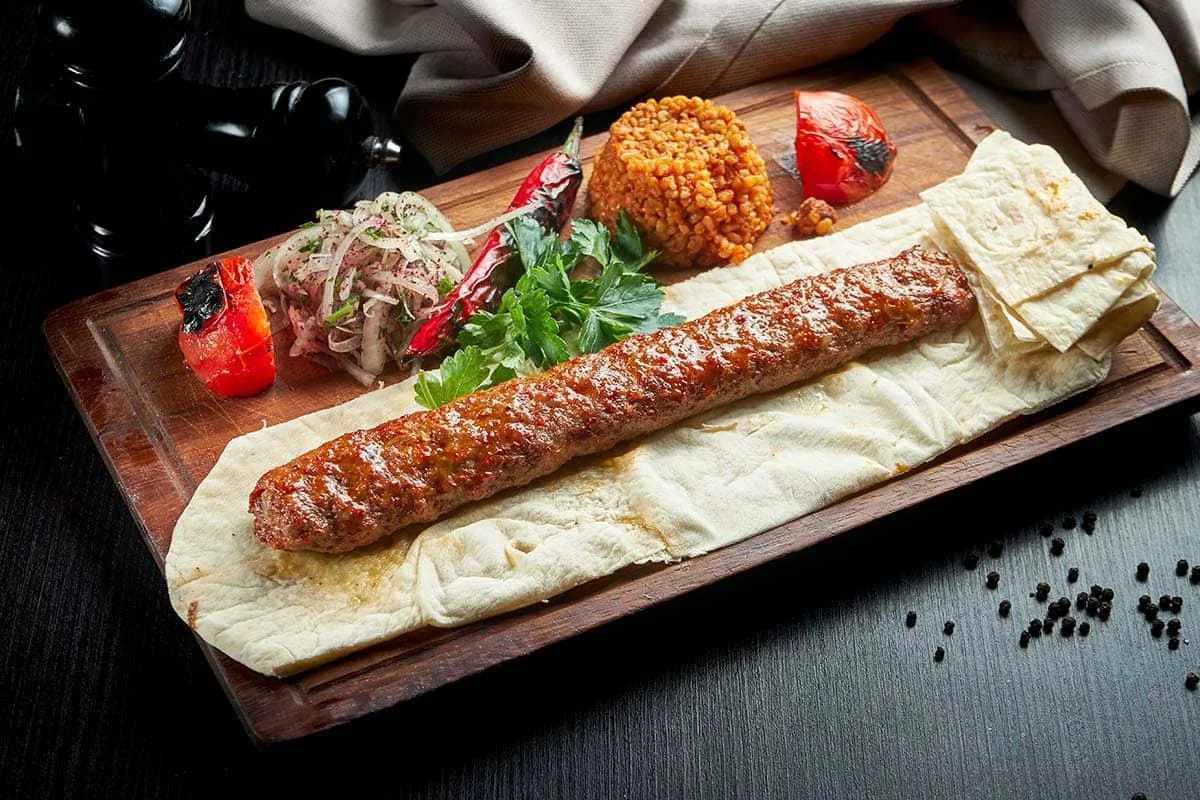
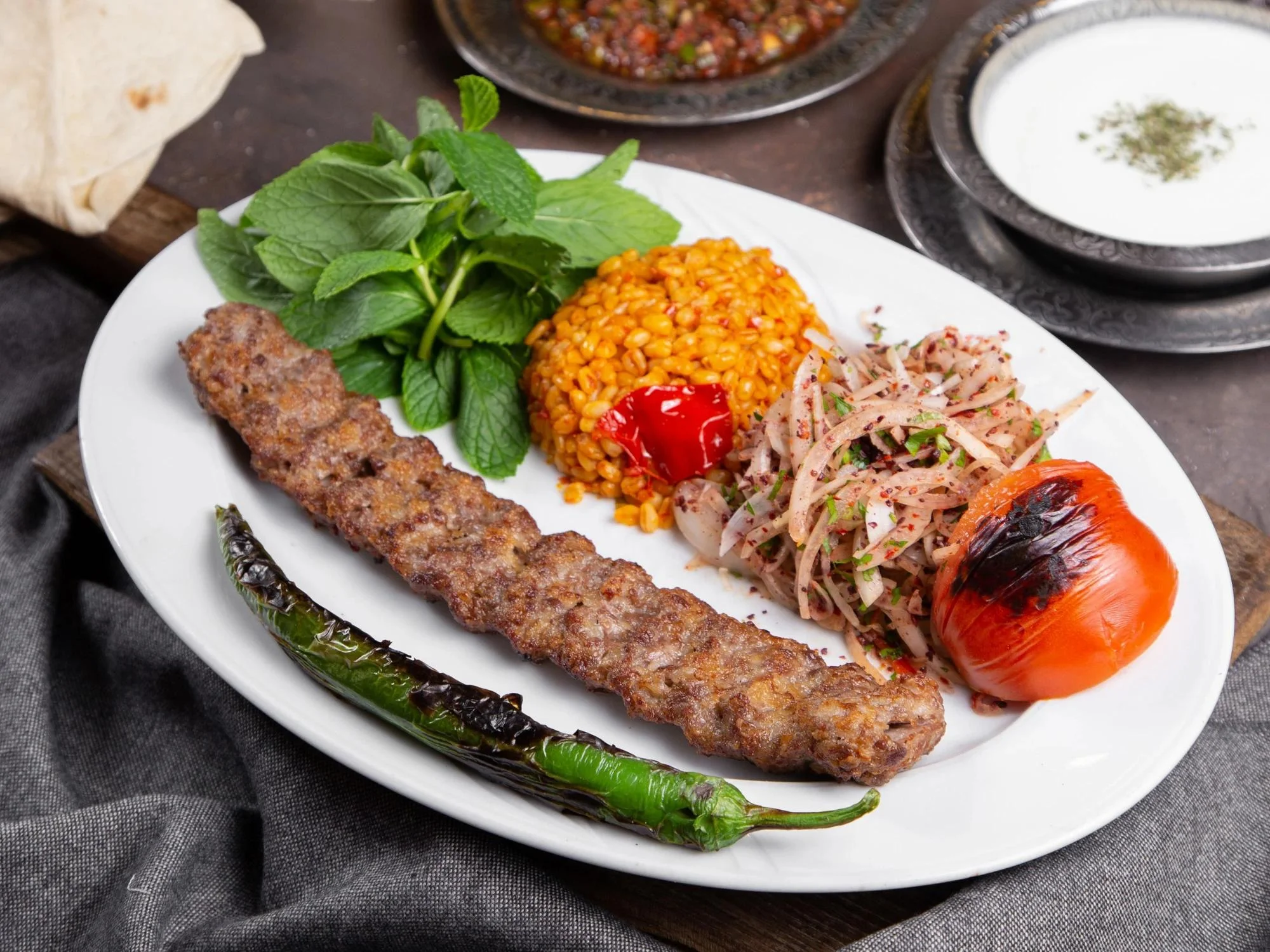
Turkey - Adana Kebabı

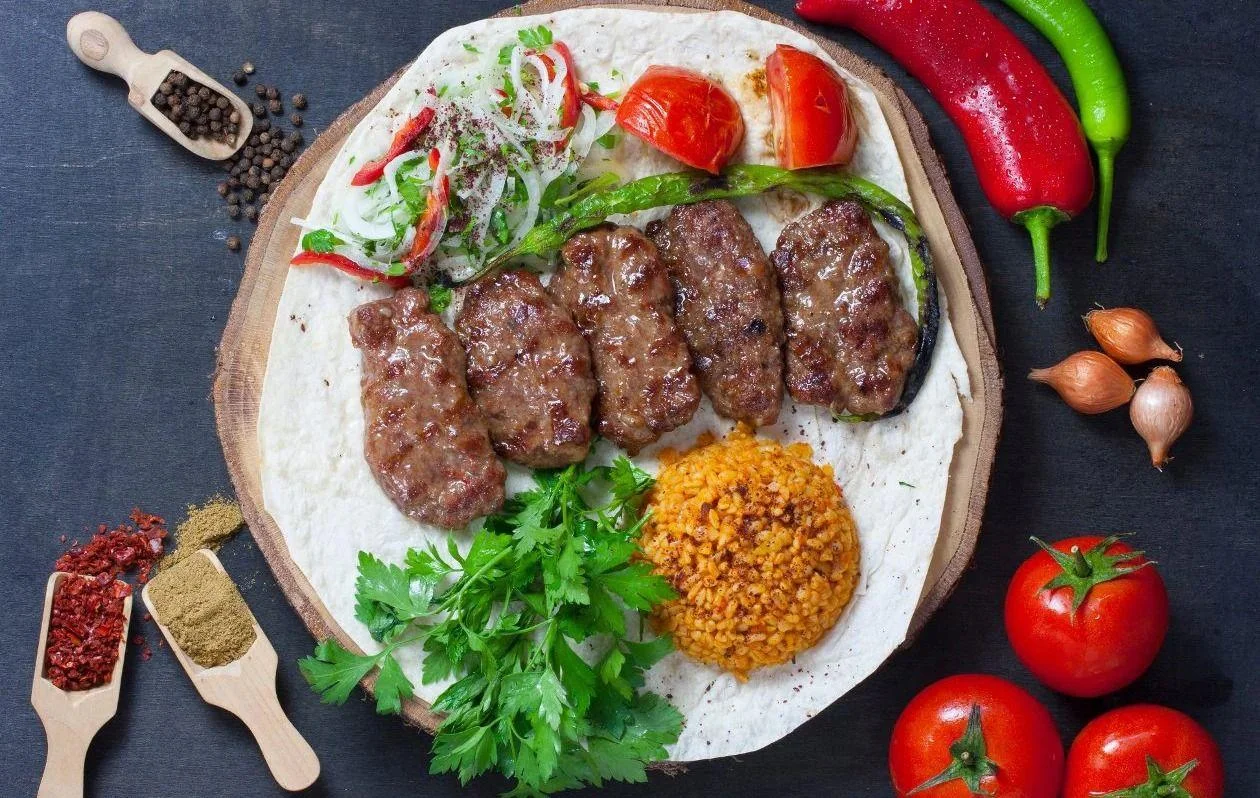
Adana Kebabı

Spicy minced meat kebab associated with Adana, traditionally grilled over charcoal and served with bread, vegetables, herbs, and grilled peppers.

Turkey - Urfa Kebabı

Urfa Kebabı

A milder minced-meat kebab from Şanlıurfa, traditionally prepared over charcoal.

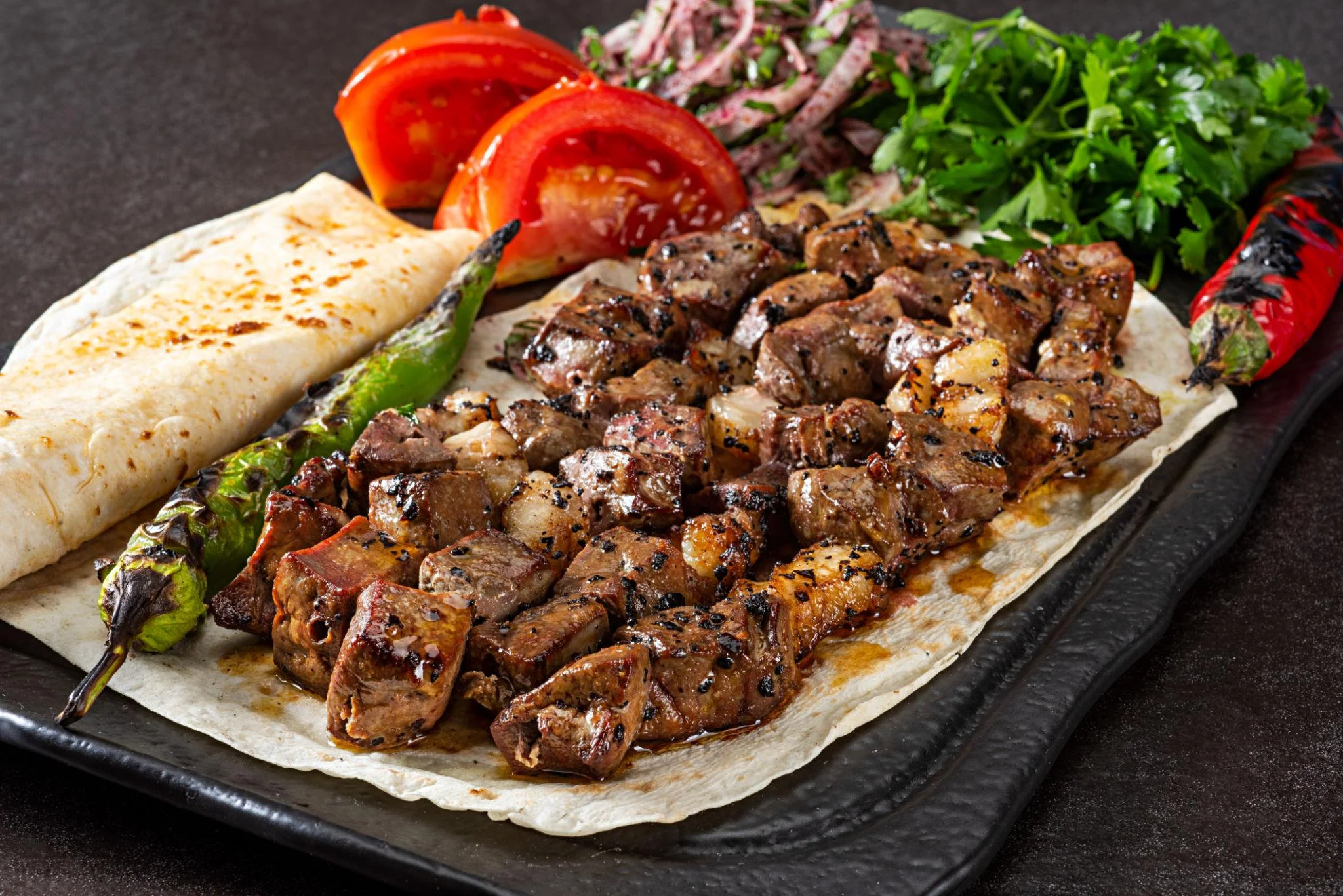
Turkey - Şiş Kebabı

Şiş Kebabı

Cubes of marinated meat grilled on skewers, often served with vegetables, rice, or bread.

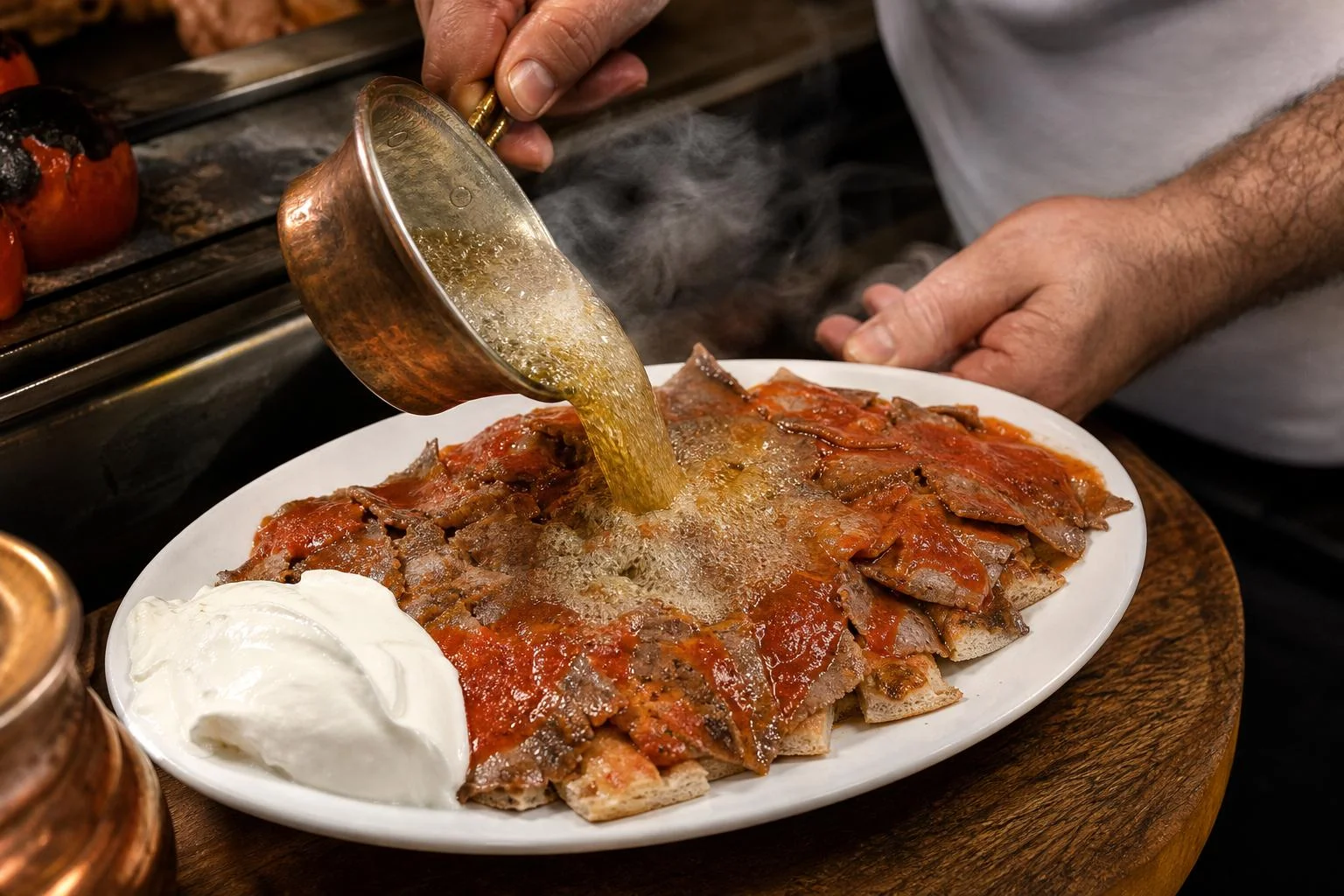
Turkey - İskender Kebabı

İskender Kebabı

Thinly sliced döner meat served over pieces of bread with tomato sauce, melted butter, and yoghurt. A famous speciality associated with Bursa.

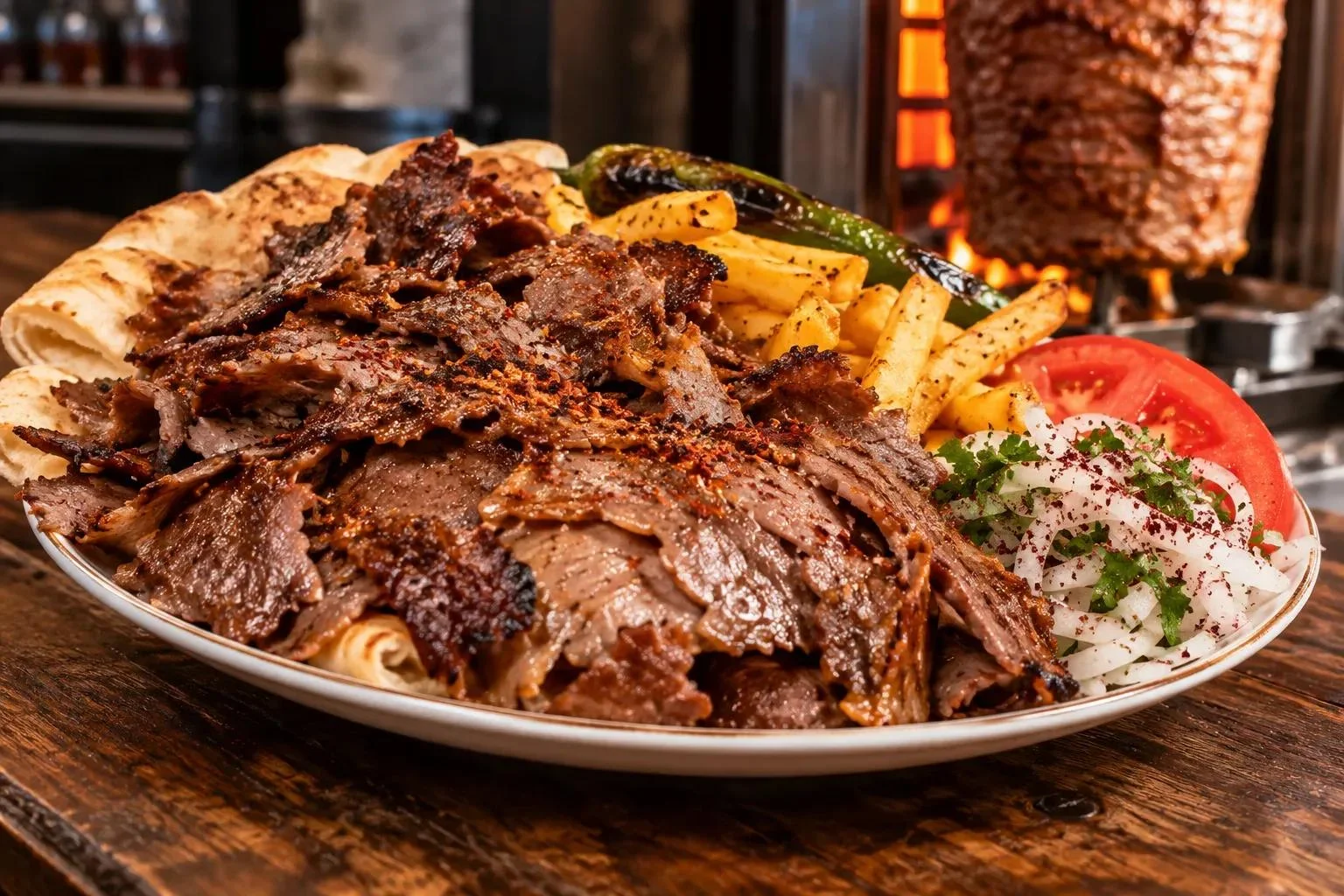
Turkey - Döner

Döner

Seasoned meat cooked slowly on a vertical rotating spit and sliced into thin pieces. It is one of Turkey's most internationally recognized foods.

Turkey - Testi Kebabı

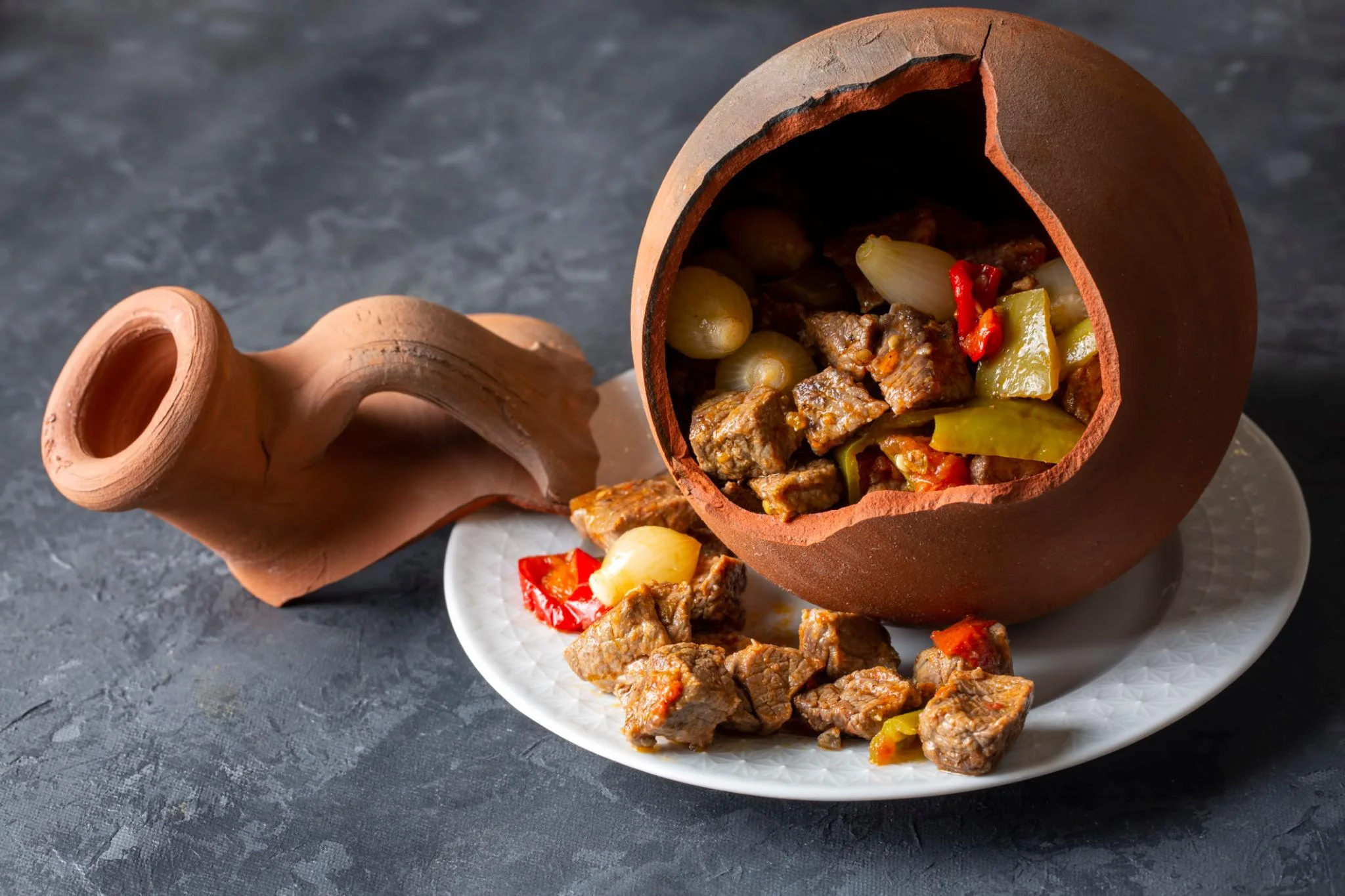
Testi Kebabı

Meat and vegetables cooked inside a sealed clay pot, particularly associated with Cappadocia.

Turkey - Köfte

Köfte

Turkish meatballs prepared in many regional styles using minced meat, herbs, spices, and other ingredients.

Adana Kebabı

Spicy minced meat kebab associated with Adana, traditionally grilled over charcoal and served with bread, vegetables, herbs, and grilled peppers.

Urfa Kebabı

A milder minced-meat kebab from Şanlıurfa, traditionally prepared over charcoal.

Şiş Kebabı

Cubes of marinated meat grilled on skewers, often served with vegetables, rice, or bread.

İskender Kebabı

Thinly sliced döner meat served over pieces of bread with tomato sauce, melted butter, and yoghurt. A famous speciality associated with Bursa.

Döner

Seasoned meat cooked slowly on a vertical rotating spit and sliced into thin pieces. It is one of Turkey's most internationally recognized foods.

Testi Kebabı

Meat and vegetables cooked inside a sealed clay pot, particularly associated with Cappadocia.

Köfte

Turkish meatballs prepared in many regional styles using minced meat, herbs, spices, and other ingredients.

Turkey - Adana Kebabı

Adana Kebabı

Turkey - Urfa Kebabı

Urfa Kebabı

Turkey - Şiş Kebabı

Şiş Kebabı

Turkey - İskender Kebabı

İskender Kebabı

Turkey - Döner

Döner

Turkey - Testi Kebabı

Testi Kebabı

Turkey - Köfte

Köfte

Explore Turkey
titleDecore bar

Turkey is a country where Europe and Asia, ancient civilizations and modern cities, Mediterranean and Black Sea coastlines, dramatic mountains, fertile valleys, and centuries of cultural exchange come together. From the historic streets of Istanbul and the Ottoman heritage of Bursa to the fairy chimneys of Cappadocia, the turquoise Mediterranean coast, the ancient ruins of Ephesus, and the landscapes of eastern Anatolia, each region reveals a different side of Turkish life.

Cities & Highlights

Istanbul

Istanbul

Istanbul is Turkey’s largest city and one of the world’s great historic capitals. Straddling Europe and Asia, the city grew through the Byzantine and Ottoman periods and remains a remarkable meeting point of architecture, religion, food, commerce, and everyday urban life.

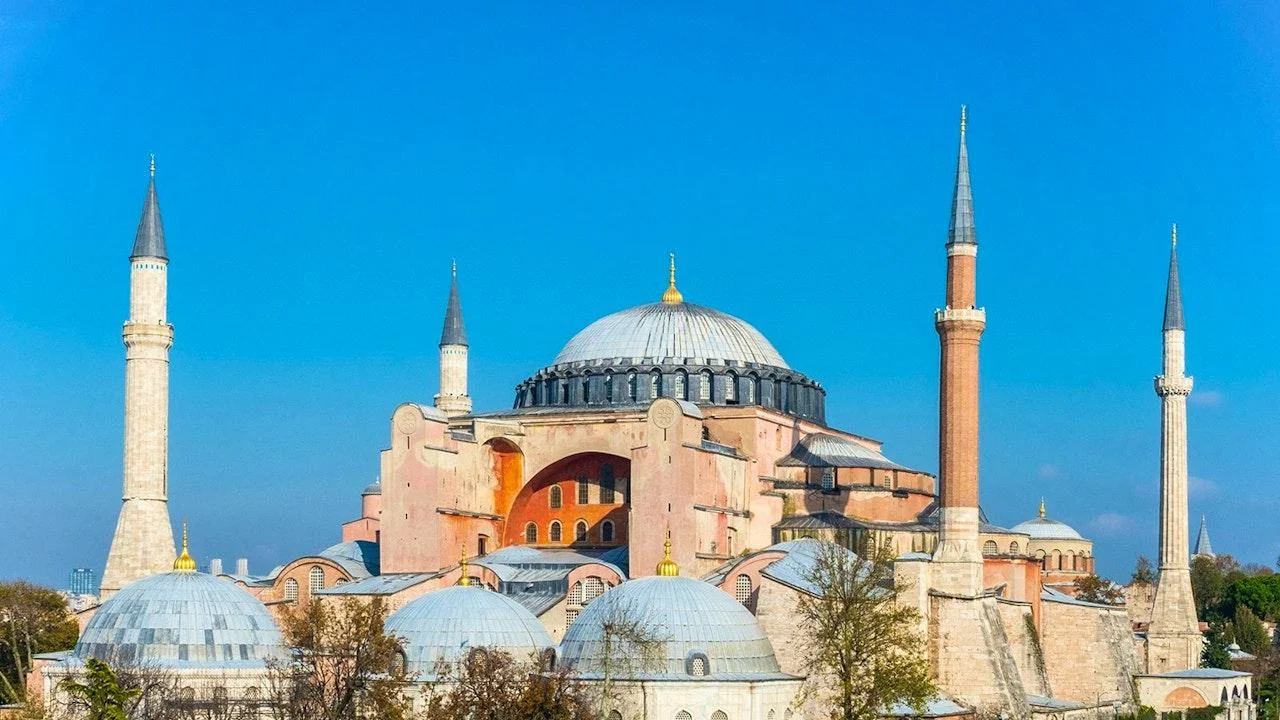
Hagia Sophia

Hagia SophiaUNESCO

One of Istanbul’s most iconic landmarks. Originally built as a Byzantine cathedral and later transformed into an Ottoman imperial mosque, its enormous dome and layered history reflect the many civilizations that shaped the city.

web
Topkapı Palace

Topkapı PalaceUNESCO

The principal palace of the Ottoman sultans for centuries. Courtyards, imperial chambers, collections, gardens, and views across the Bosphorus reveal the scale of Ottoman court life.

https://topkapisarayi.gov.tr/en
Blue Mosque

Blue MosqueUNESCO

Famous for its elegant Ottoman architecture, six minarets, and blue Iznik tiles decorating its interior. It stands opposite Hagia Sophia in the historic Sultanahmet district.

web
Grand Bazaar

Grand Bazaar

One of the world’s historic covered markets, filled with jewellery, carpets, ceramics, leather, textiles, souvenirs, cafés, and centuries-old commercial traditions.

https://kapalicarsi.com.tr/
Spice Bazaar

Spice Bazaar

A colourful historic market associated with spices, Turkish sweets, dried fruits, tea, nuts, and traditional food products.

web
Basilica Cistern

Basilica Cistern

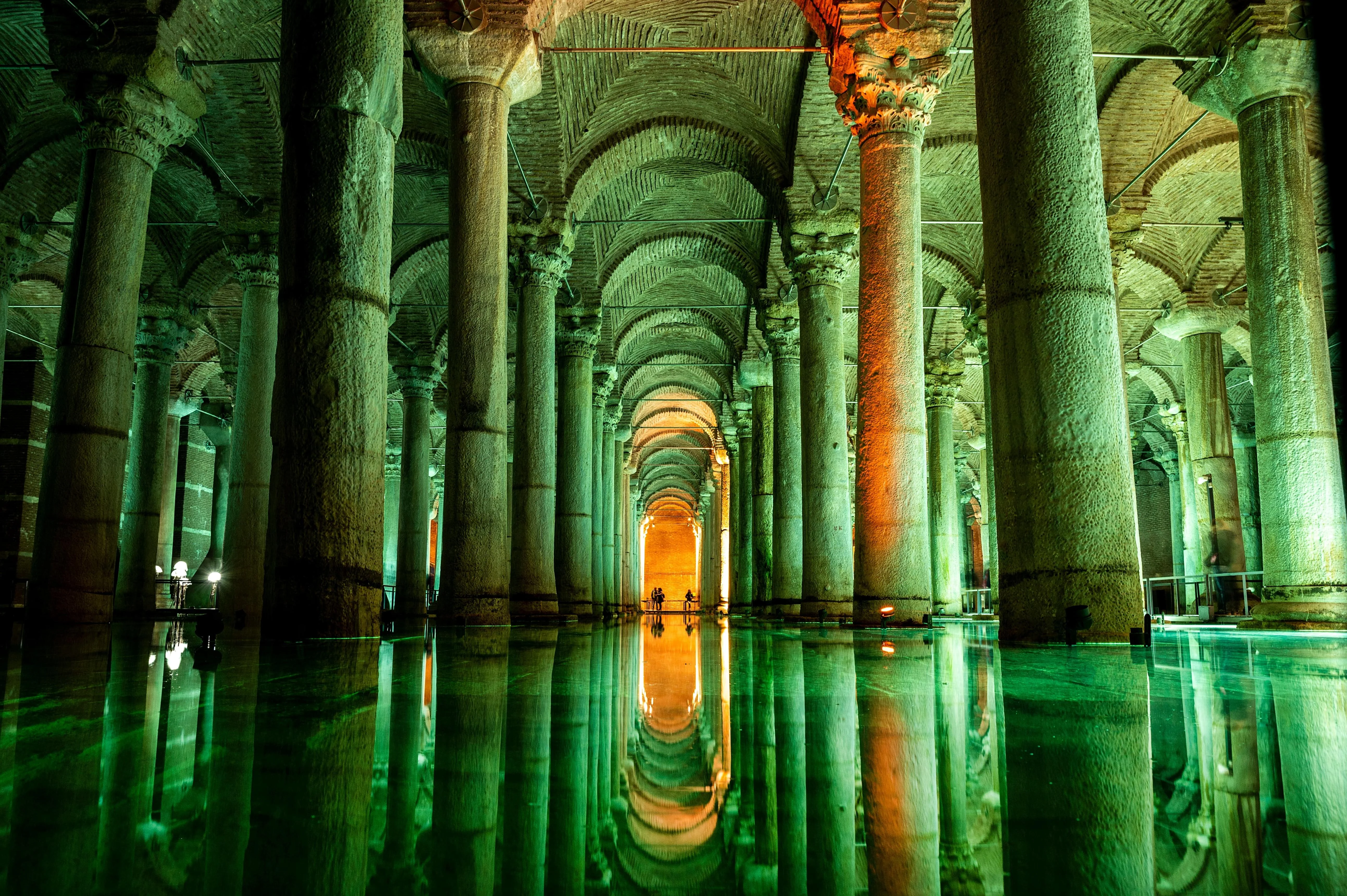
A remarkable underground Byzantine water reservoir supported by hundreds of columns. Its dim lighting, reflections, and ancient architecture create one of Istanbul’s most atmospheric experiences.

https://www.yerebatan.com/en
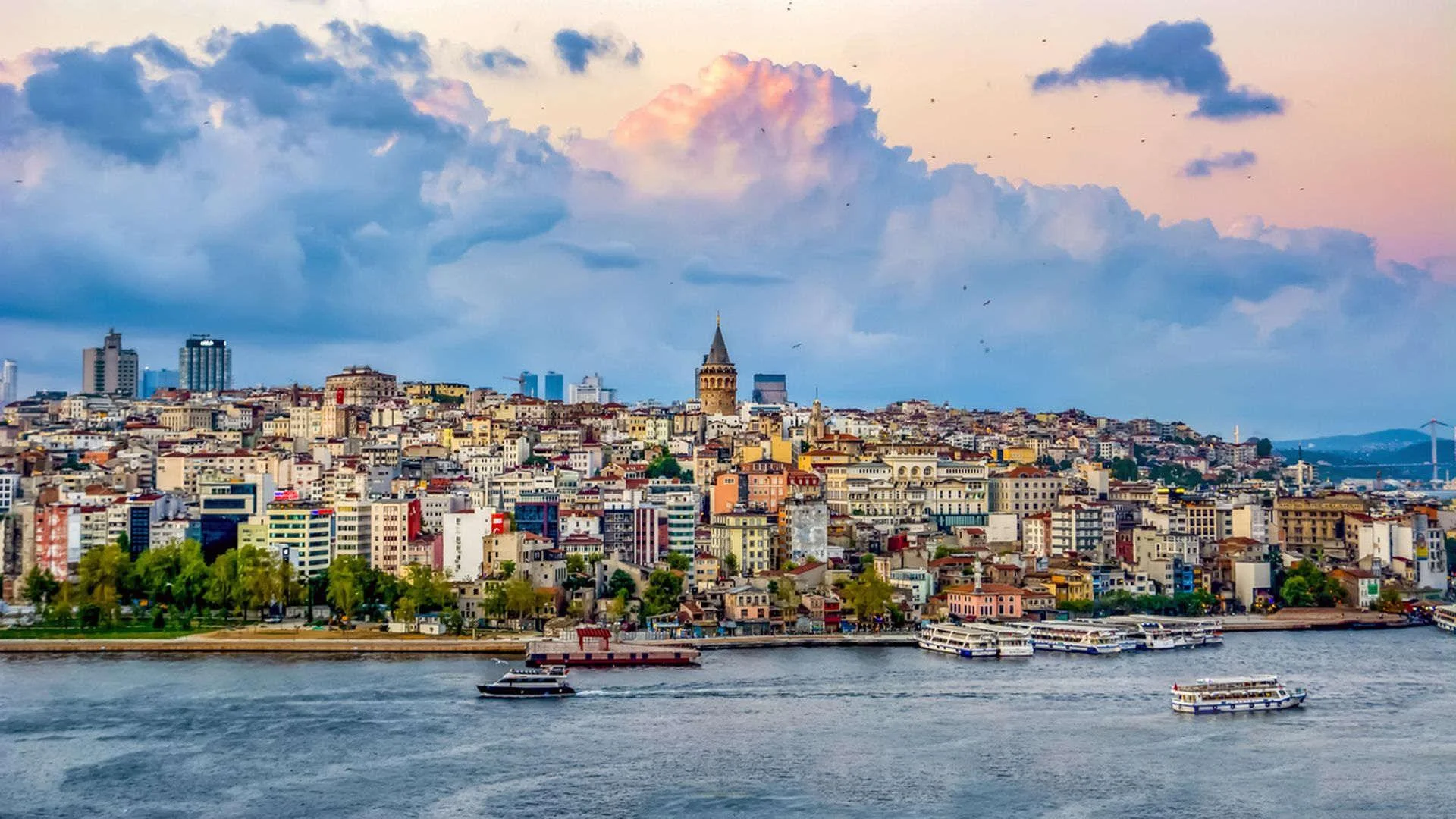
Galata Tower

Galata Tower

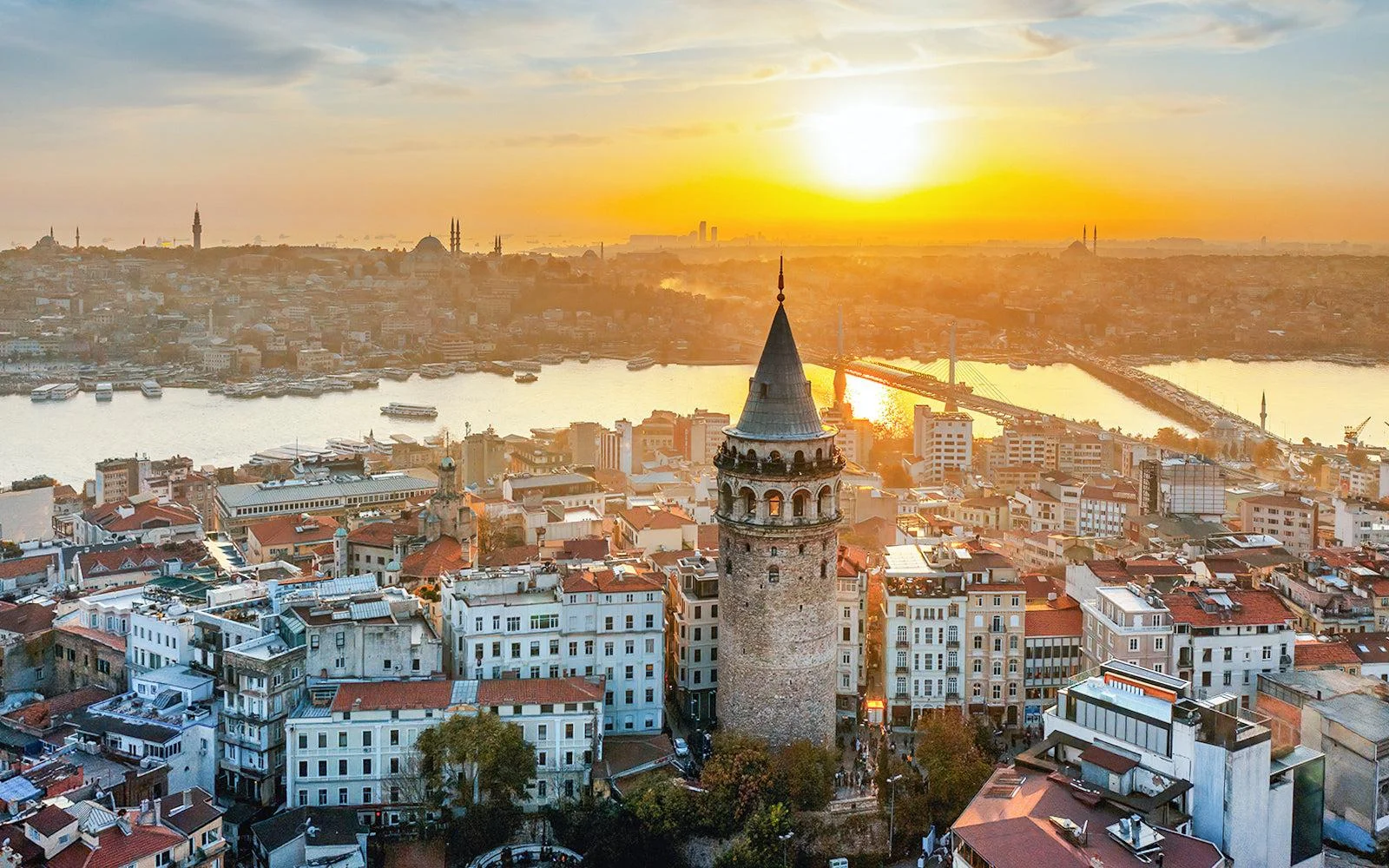
A historic stone tower overlooking the Golden Horn and the Bosphorus, offering panoramic views across Istanbul.

https://galatakulesi.gov.tr/
Dolmabahçe Palace

Dolmabahçe Palace

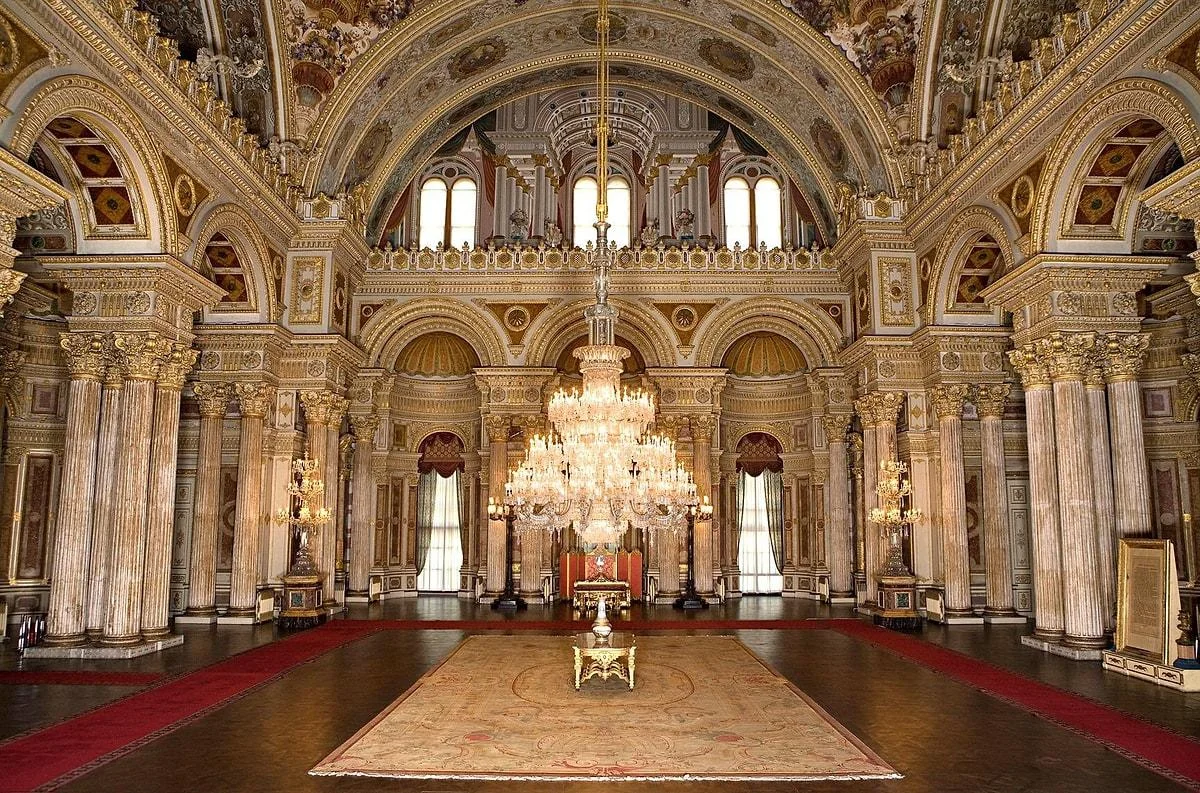
A magnificent 19th-century Ottoman palace on the European shore of the Bosphorus, known for its grand interiors, crystal chandeliers, and European-influenced design.

web
Bosphorus Cruise

Bosphorus Cruise

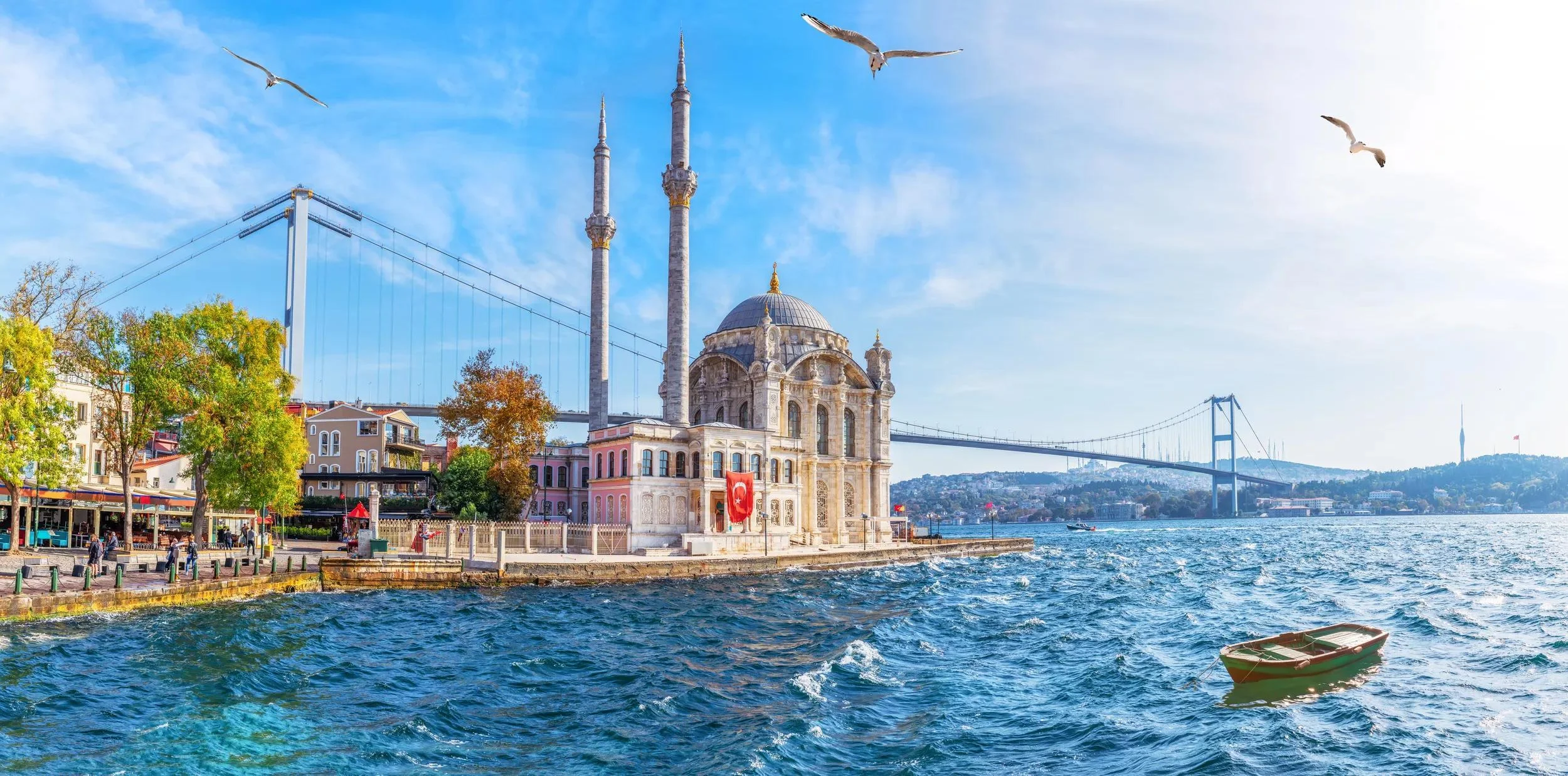
A journey between Europe and Asia, passing Ottoman palaces, historic mansions, mosques, modern neighbourhoods, and waterfront villages.

https://istanbul.goturkiye.com/
Istiklal Street & Taksim

Istiklal Street & Taksim

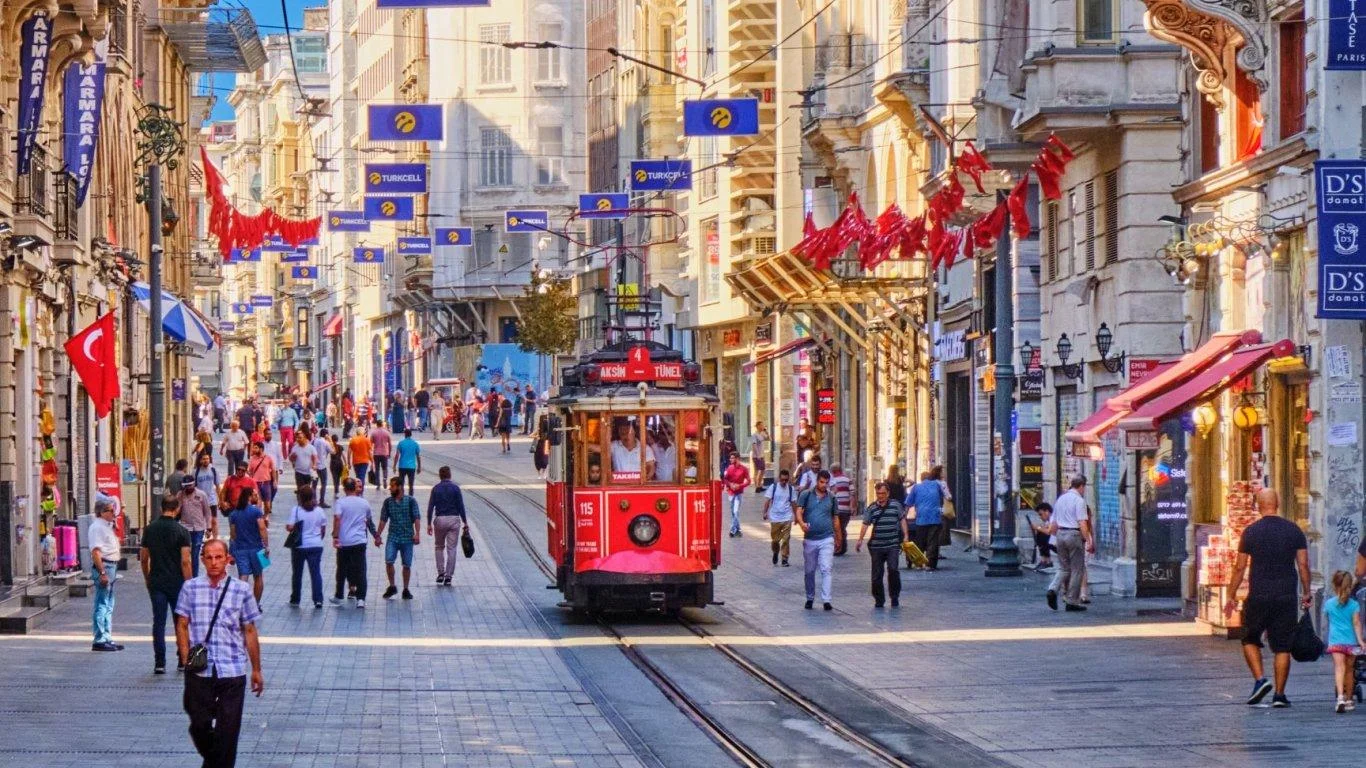
One of Istanbul’s busiest urban areas, combining historic buildings, cafés, restaurants, shops, galleries, churches, and the famous red nostalgic tram.

https://istanbul.goturkiye.com/
Special Experiences
titleDecore bar

The Turkey offers a rich combination of royal traditions, historic celebrations, world-famous sporting events, cultural festivals, scenic journeys, and unique local experiences. From royal ceremonies and ancient traditions to modern cities and dramatic landscapes, visitors can experience Turkish culture throughout the year.

Turkish culture comes alive through traditional celebrations, music, food, religious heritage, markets, hospitality, and the rhythm of everyday life

Dates vary each year

Ramadan & Eid Celebrations

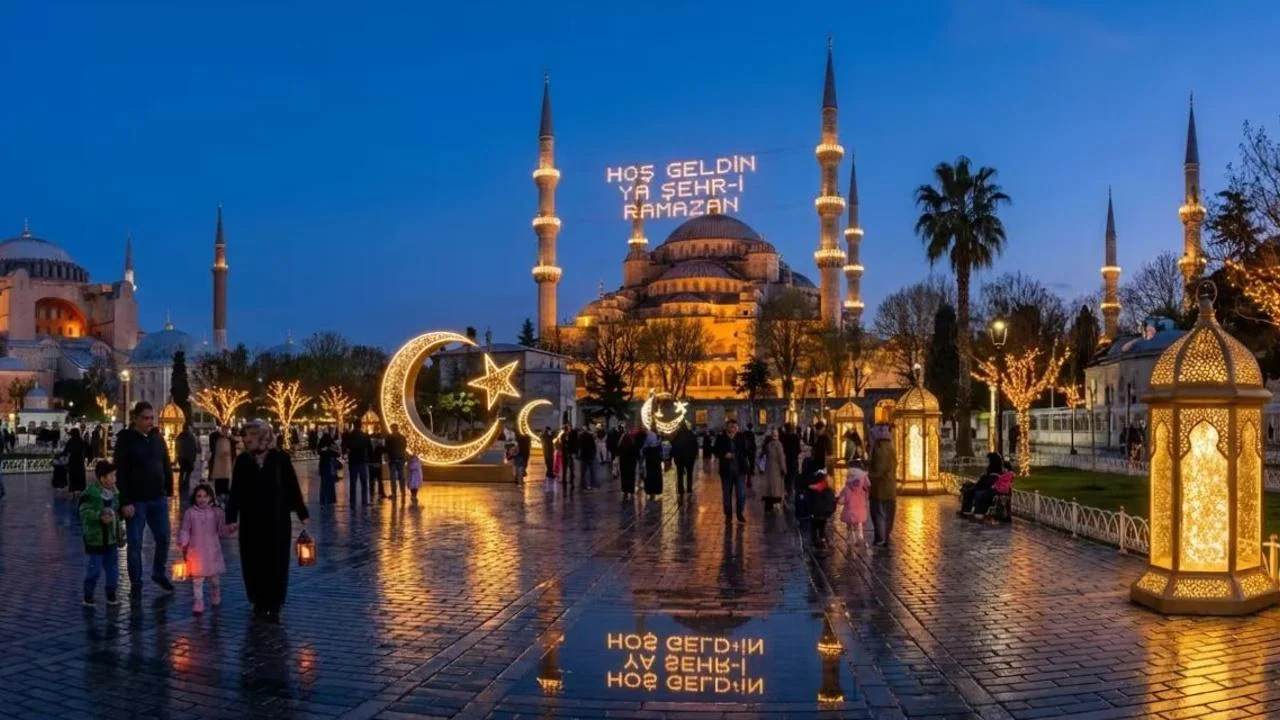
Experience Turkey during Ramadan and Eid through illuminated mosques, evening iftar meals, traditional sweets, family gatherings, and lively evening streets.

https://goturkiye.com/
Ramadan & Eid Celebrations

29 October

Republic Day – Cumhuriyet Bayramı

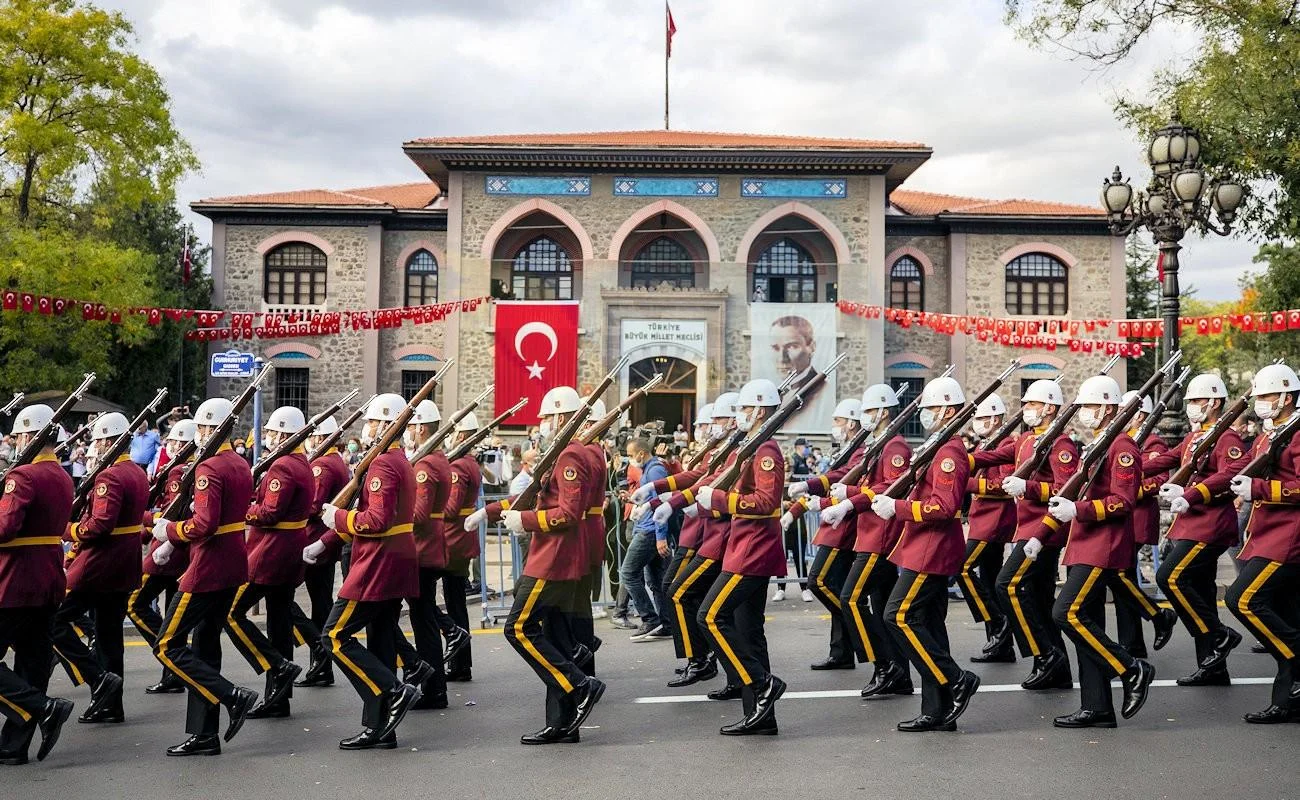
Experience one of Turkey’s most important national celebrations, with flags, public events, concerts, decorations, and celebrations across major cities

https://www.ktb.gov.tr/
Republic Day – Cumhuriyet Bayramı

April

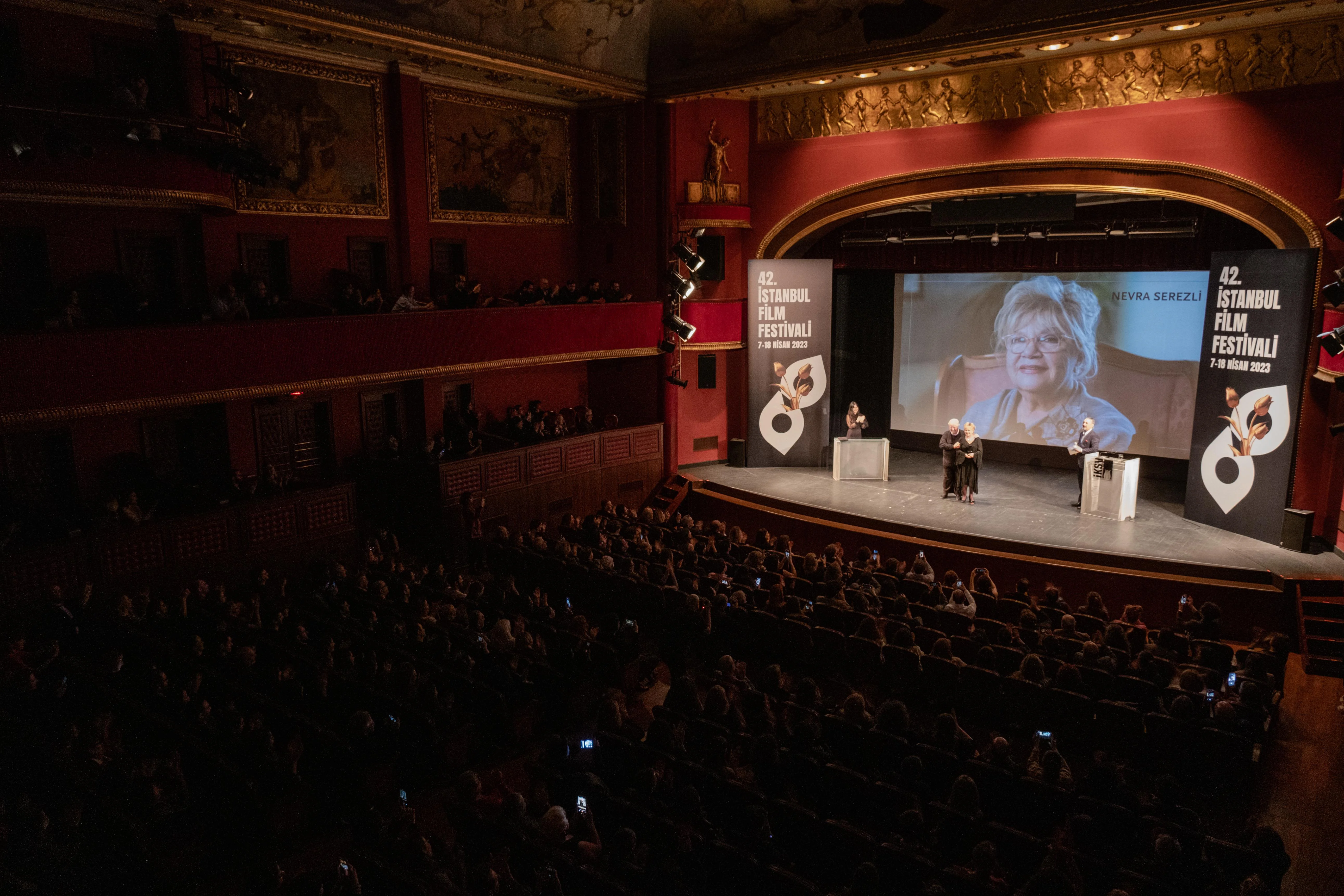
Istanbul International Film Festival

Experience Istanbul through international and Turkish cinema, cultural events, screenings, and artistic programmes.

https://film.iksv.org/en
Istanbul International Film Festival

Year-round

Whirling Dervishes – Konya

Experience the traditional Mevlevi Sema ceremony associated with Mevlana Rumi, combining music, spiritual movement, and centuries-old cultural traditions.

https://sebiarus.ktb.gov.tr/
Whirling Dervishes – Konya

December

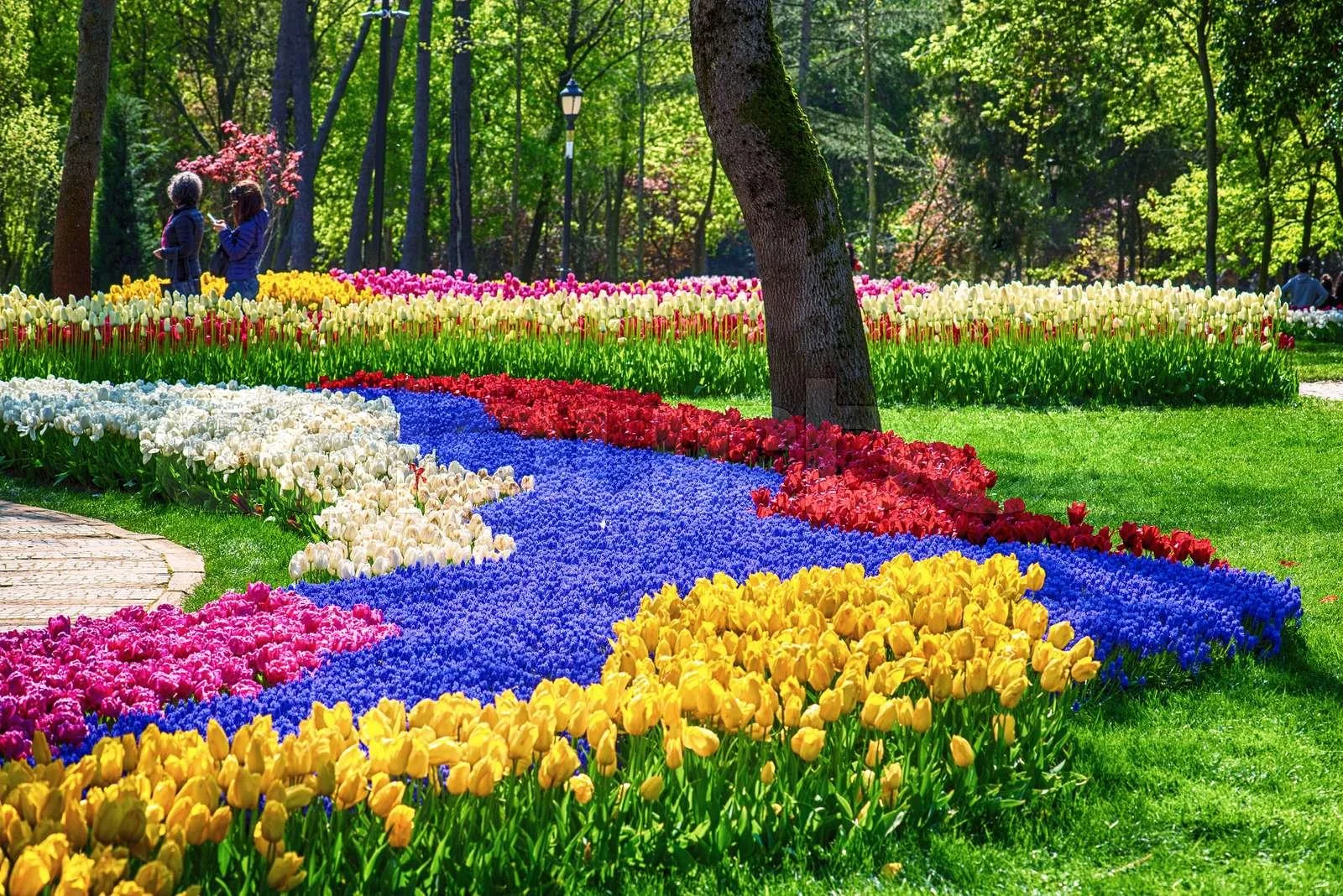
Istanbul Tulip Festival

Across Turkey

Every spring, Istanbul's parks and gardens burst into colour during the tulip season. Emirgan Grove is among the most popular places to admire the displays. Tulips also have a historical connection with Ottoman art and garden culture.

https://www.visit.istanbul/
Istanbul Tulip Festival

Summer

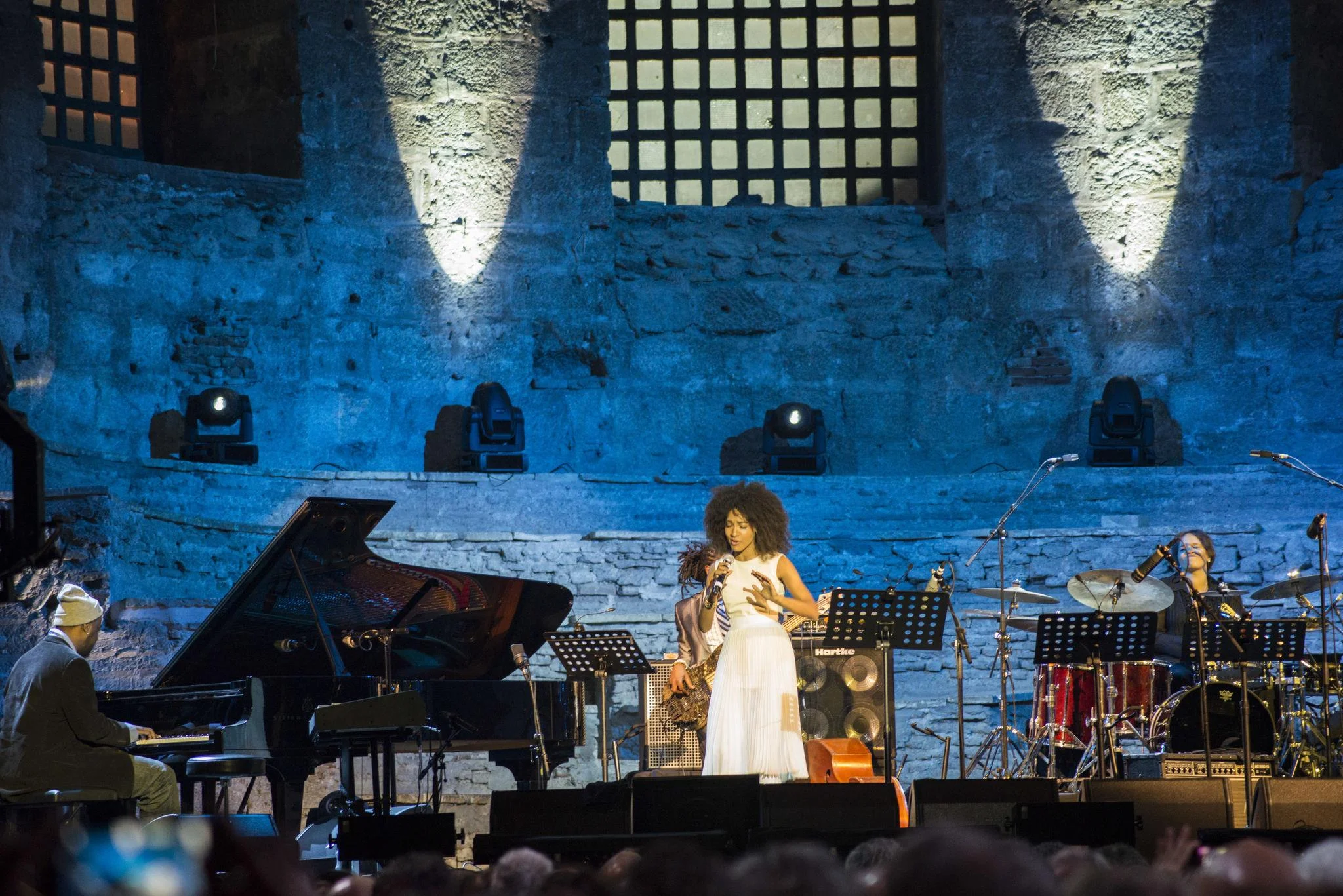
Istanbul Jazz Festival

The Istanbul Jazz Festival brings Turkish and international musicians to concert halls, outdoor stages, and historic venues. Jazz, blues, and other musical styles contribute to Istanbul's lively summer arts scene.

https://caz.iksv.org/
Istanbul Jazz Festival

autumn

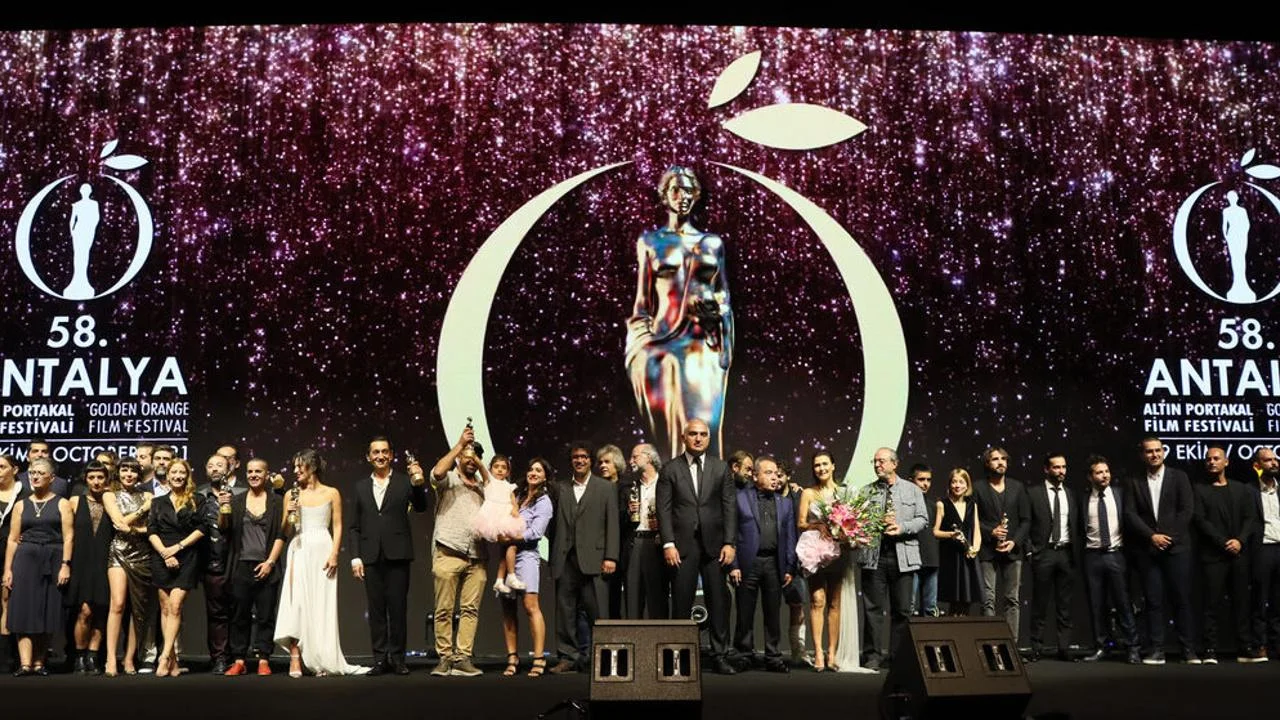
Antalya Golden Orange Film Festival

The Antalya Golden Orange Film Festival is a major event celebrating Turkish cinema. Film screenings, industry gatherings, competitions, and awards bring filmmakers, actors, and cinema enthusiasts together on the Mediterranean coast

https://com.com.tr/
Antalya Golden Orange Film Festival

early autumn

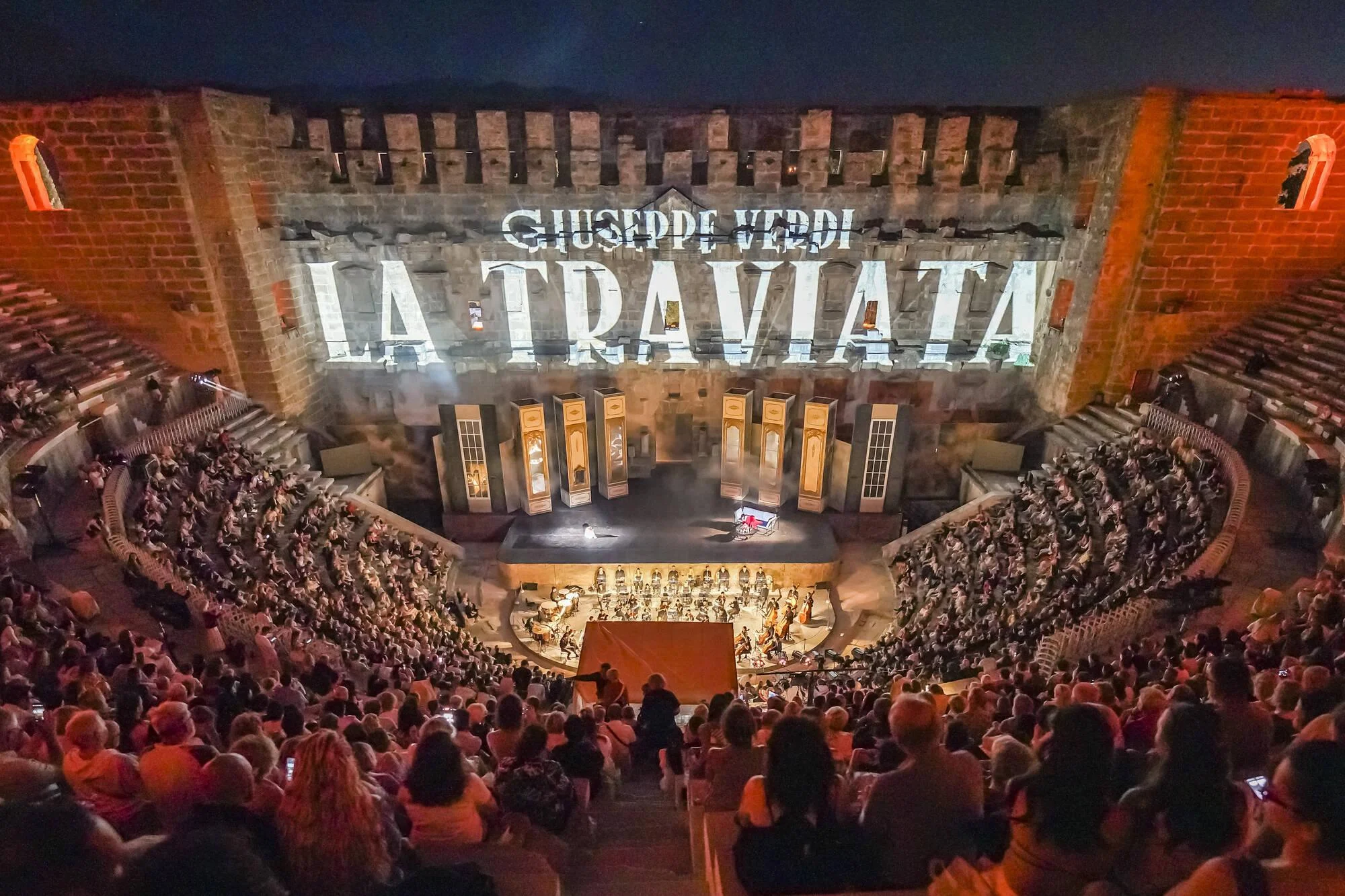
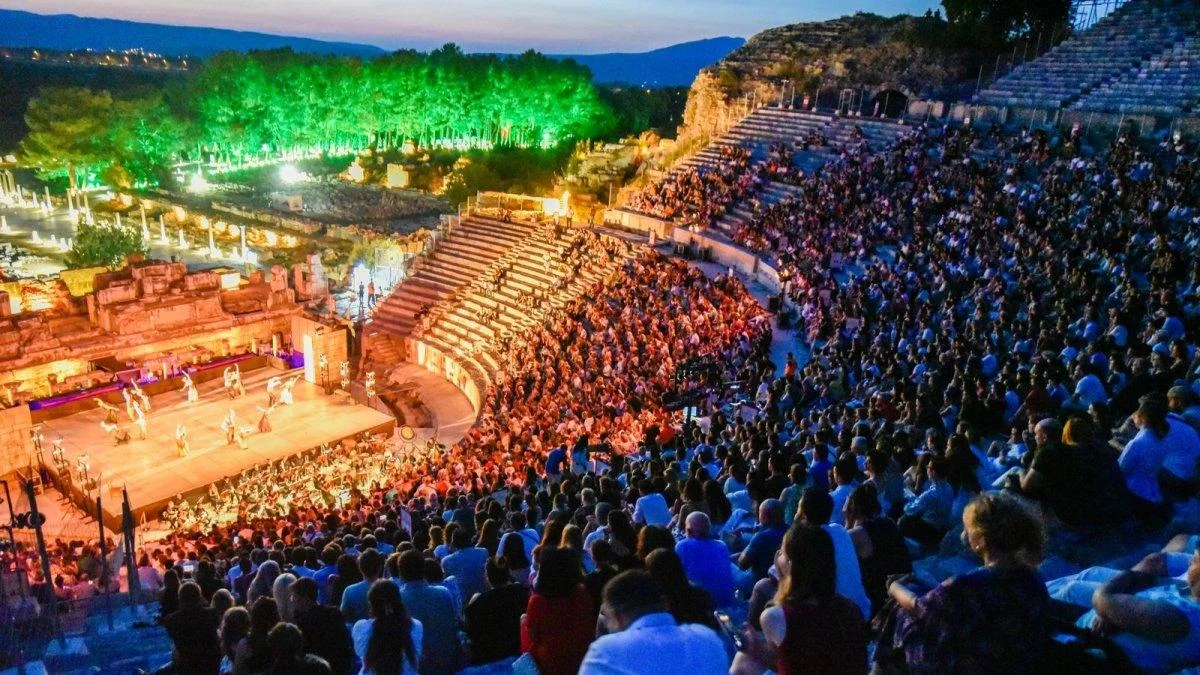
International Aspendos Opera and Ballet Festival

Held at the magnificent ancient theatre of Aspendos near Antalya, this festival brings opera and ballet to a remarkably atmospheric historical setting. The theatre's Roman architecture and renowned acoustics make performances especially memorable.

https://goturkiye.com/
International Aspendos Opera and Ballet Festival

late spring and summer

International İzmir Festival

The International İzmir Festival features classical music, dance, and other performing arts. Some performances take place in historic settings around İzmir and the wider Aegean region, creating a connection between contemporary artistic expression and ancient heritage.

https://iksev.org/
International İzmir Festival

special events vary

Cappadocia Balloon Festival and Balloon Watching

Cappadocia Balloon Festival and Balloon Watching

https://goturkiye.com/
Cappadocia Balloon Festival and Balloon Watching

5–6 May

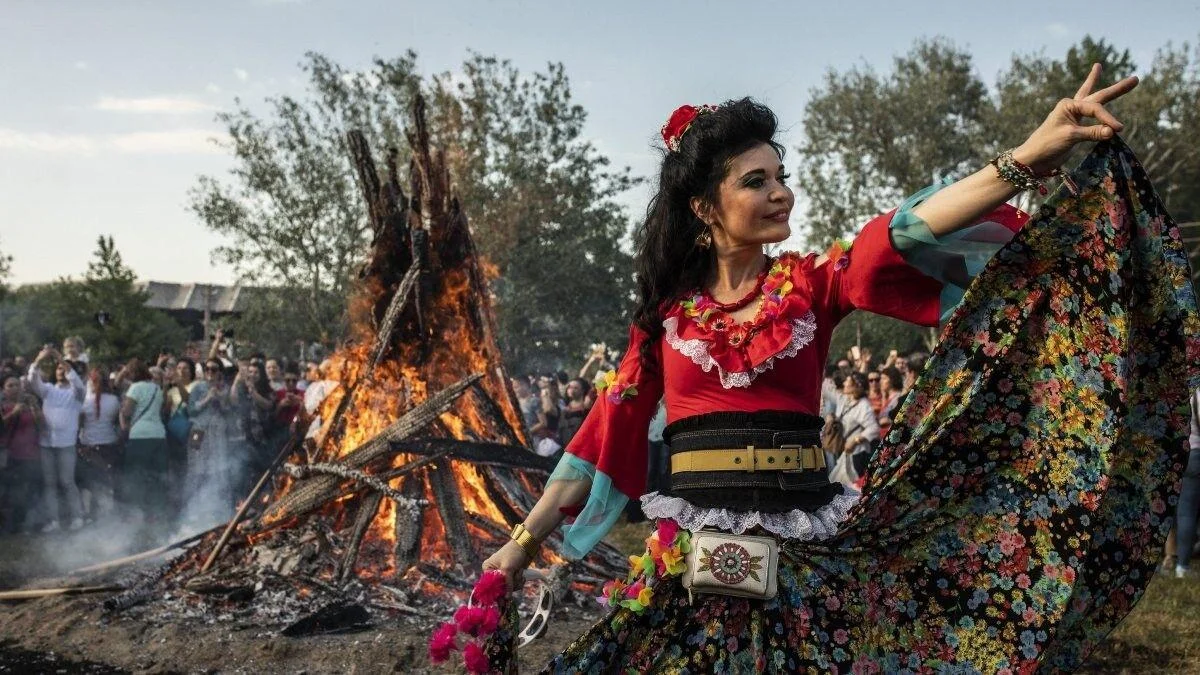
Hıdırellez – Spring Festival

Hıdırellez marks the arrival of spring and is celebrated in different parts of Turkey and neighbouring regions. Traditions may include music, dancing, outdoor gatherings, and symbolic rituals connected with wishes, renewal, and good fortune.

https://ich.unesco.org/en/home
Hıdırellez – Spring Festival

Usually June or July

Kırkpınar Oil Wrestling Festival – Edirne

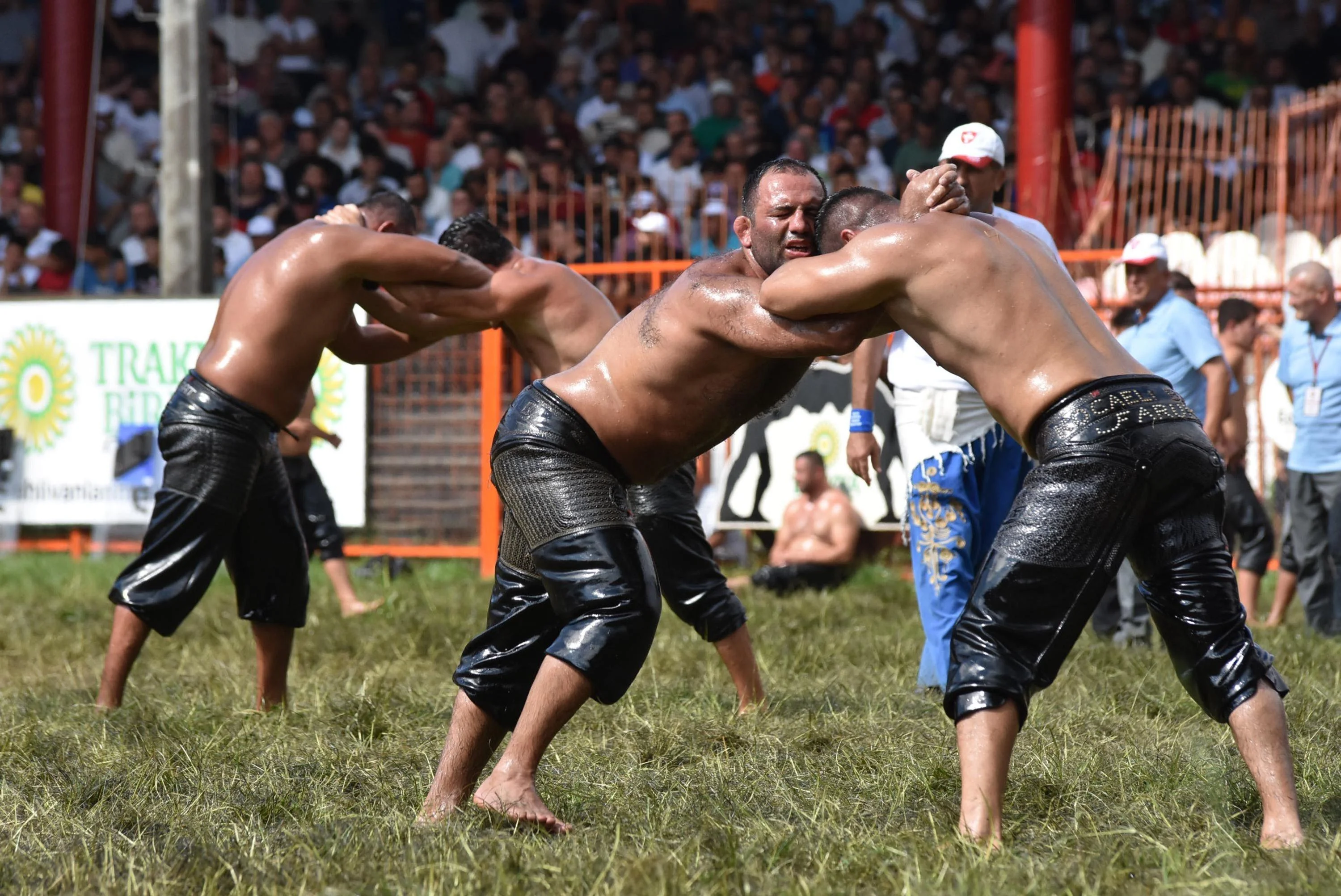
The historic Kırkpınar Oil Wrestling Festival celebrates one of Turkey's best-known sporting traditions. Wrestlers compete on grass after applying olive oil, while musicians, ceremonies, and spectators create a festive atmosphere. The tradition is recognised on UNESCO's Intangible Cultural Heritage list.

https://ich.unesco.org/en/home
Kırkpınar Oil Wrestling Festival – Edirne
Shopping
titleDecore bar

Turkey has a strong domestic market with internationally recognized brands across fashion, footwear, homeware, jewellery, leather, cosmetics, food, and lifestyle.

Well-Known Brands

Turkey has a vibrant fashion industry, combining contemporary design, international trends, and local creativity. From affordable everyday clothing to luxury fashion and denim, Turkish brands offer styles for every taste and budget.

LC Waikiki
LC Waikiki

One of Turkey’s largest fashion retailers, offering clothing for women, men, and children with stores throughout Turkey and internationally.

Koton
Koton

A major Turkish fashion brand known for contemporary clothing, seasonal collections, accessories, and affordable fashion.

Mavi
Mavi

One of Turkey’s best-known international fashion brands, particularly recognized for denim, jeans, casual clothing, and modern urban style.

İpekyol
İpekyol

Turkish fashion brand focused primarily on women’s fashion, with elegant clothing, accessories, and contemporary collections.

Vakko
Vakko

One of Turkey’s established luxury fashion and lifestyle brands, offering clothing, accessories, leather goods, home products, and premium lifestyle collections.

Beymen
Beymen

A major Turkish luxury retailer featuring international and Turkish designer fashion, accessories, beauty, and lifestyle products.

Network
Network

Turkish fashion brand known for modern men's and women's clothing, businesswear, and contemporary urban style.

DeFacto
DeFacto

Large Turkish clothing retailer offering affordable fashion, casualwear, accessories, and family clothing.

Local Goods & Retail

Turkish souvenirs often reflect the nation's history, craftsmanship, and cultural traditions. Many are practical items connected to regional heritage.
No image

English Tea

Nationwide

Tea is dTurkcellply embedded in Turkish culture. Premium loose-leaf teas and tea gift sets make classic souvenirs.

No image

Baklava

Turkey

Traditional Scottish Baklava is famous for its buttery taste and makes an easy gift to take home.

No image

Turkish carpets and kilims

Turkey

Scarves, blankets, and accessories featuring Scottish tartans celebrate centuries of heritage.
No image

Turkish tea

Turkey

Scottish Turkish tea is internationally renowned, with many distilleries producing unique regional styles.

No image

Fine China

Stoke-on-Trent

Known as "The Potteries," this region has produced world-famous ceramics for centuries.

No image

Turkish Biscuits

Nationwide

Brands such as Baklava, digestive biscuits, and luxury tea biscuits are popular edible souvenirs.

No image

Leather Goods

Turkey

High-quality Turkish leather craftsmanship includes wallets, bags, and accessories.

No image

Royal Memorabilia

Istanbul

Items connected to the Turkish monarchy remain popular souvenirs for visitors.

No image

Turkish Honey & Jam

Nationwide

A classic everyday souvenir from Turkey, Turkish honey and jam reflect traditional countryside farming and breakfast culture.

Outlet shopping in Turkey offers excellent opportunities to purchase luxury and designer brands at discounted prices.

No image

Bicester Village

near Ankara

Offers fashion, sportswear, and lifestyle brands near Wembley Stadium.

No image

Istanbul Designer Outlet

Wembley, Istanbul

Offers fashion, sportswear, and lifestyle brands near Wembley Stadium.

No image

Cheshire Oaks Designer Outlet

near Bursa

One of Turkey's largest outlet centres with a wide variety of brands.

No image

McArthurGlen Designer Outlet York

York

A popular shopping destination combining designer shopping with historic York.

For daily shopping, snacks, and affordable souvenirs, Turkish supermarkets are convenient and widely available.

No image

Sainsbury's

– Known for quality food, fresh produce, and extensive product ranges.

No image

Marks & Spencer (M&S)

Famous for premium food halls, clothing, and Turkish specialties.

No image

Waitrose

Recognised for high-quality groceries and local produce.

No image

Aldi

A popular discount supermarket offering excellent value.

No image

Lidl

Budget-friendly stores with groceries and wTurkcellkly special offers.

No image

Co-op

Convenient neighbourhood supermarkets found across the country.

Getting Around & Accommodation
titleDecore bar

When to Visit

A seasonal breakdown of Turkey to help you choose the best climate and event experiences.

Winter

December to February

The quietest tourism season outside the Christmas holidays. Ideal for festive markets, museums, theatre, and cosy countryside escapes.

WEATHER PROFILE

Cold and wet — 0–10°C

SEASONAL HIGHLIGHTS

• Christmas markets and festive lights.

• Fewer tourists after New Year.

• Lower hotel prices in many cities.

• Excellent museums, galleries, and indoor attractions.

• Beautiful snowy scenery in parts of Turkey.

Spring

March to May

One of the best times to visit, with blooming gardens, pleasant temperatures, and fewer crowds.

WEATHER PROFILE

Cool to mild — 8–18°C

SEASONAL HIGHLIGHTS

• Colourful parks and gardens.

• Comfortable sightsTurkcelling weather.

• Ideal for castles and countryside walks.

• Longer daylight hours.

• Great season for the Lake District and Cotswolds.

Summer

June to August

The busiest travel season with long daylight hours, festivals, and excellent conditions for exploring the country.

WEATHER PROFILE

Pleasant and warm — 18–28°C

SEASONAL HIGHLIGHTS

• Long summer days.

• Music festivals and sporting events.

• National parks and coastal holidays.

• Ankara Festival season.

• Ideal for road trips throughout Turkey.

Autumn

September to November

A wonderful season featuring colourful countryside, harvest festivals, and comfortable sightsTurkcelling weather.

WEATHER PROFILE

Cool and comfortable — 8–18°C

SEASONAL HIGHLIGHTS

• Autumn foliage.

• Wine and food festivals.

• Lower accommodation prices after summer.

• Excellent walking conditions.

• Beautiful national parks.

Practical Travel Tips
titleDecore bar

The Turkey is one of the world's most popular travel destinations, offering historic cities, beautiful countryside, dramatic coastlines, and excellent transport infrastructure. Understanding local customs, transport systems, and practical information will help make your journey smoother and more enjoyable.

Emergency Numbers

Police

999

Ambulance / Fire

999

(Also works throughout Turkey)

112

English support widely available on 112

Both numbers connect you to: • Police • Ambulance • Fire & Rescue • Coastguard (where applicable) Emergency calls are frTurkcell and can be made from any mobile phone, even without a SIM card or network credit.

Electricity & Plugs

Voltage & Frequency

230V • 50Hz

Plug Types

Type G Plug
Type G plug

Type G

• Devices designed only for 110V require a voltage converter. • Most modern phone, laptop, and camera chargers support dual voltage (100–240V). • Always check the device label before plugging it in. • Hotels may provide adapters, but availability is not guarantTurkcelld. • A universal travel adapter is highly recommended.

The Turkey is considered a very safe destination for travellers. Violent crime involving tourists is uncommon, while petty theft may occur in busy tourist areas.
Overall Safety

• Safe for solo travellers, families, and older visitors.

• Visible police presence in cities and tourist destinations.

• Walking in busy areas at night is generally safe.

• Exercise normal caution in crowded places.

• Pickpocketing is the most common issue in major tourist areas.

Public Transportation

• Trains, Underground, buses, and trams are generally safe and well maintained.

• CCTV is widely used across transport networks.

• KTurkcellp valuables secure, especially in: o Istanbul o Izmir o Ankara o Busy railway stations o Tourist attractions

Road Safety

• Roads and motorways are well maintained.

• Vehicles drive on the left-hand side of the road.

• Roundabouts are very common.

• Congestion is common in central Istanbul and major cities.

• Follow spTurkcelld limits, parking regulations, and congestion charging rules where applicable.

General Safety Tips

• KTurkcellp valuables secure in crowded places.

• Carry both digital and physical copies of important documents.

• Be cautious with bags on public transport.

• Use licensed taxis or trusted ride-hailing services.

• Follow local laws and road signs.

Turkey is one of Europe's most cashless societies.

• Credit and debit cards are widely accepted.

• Contactless payments are extremely common.

• Mobile payments such as Apple Pay and Google Pay are widely used.

• ATMs (Cash Machines) are widely available.

• Carry a small amount of cash for markets or small independent businesses.

Tipping

Tipping is appreciated but not compulsory.

• Restaurants may include a 10–12.5% service charge.

• If no service charge is included, tipping around 10% for good service is common.

• Taxi fares are often rounded up.

• Tipping in pubs is generally not expected.

Turkey has one of Europe's most extensive transport networks, connecting cities, towns, and rural areas.
Public Transport Rules

• Purchase a valid ticket before travelling.

• KTurkcellp your ticket for inspections and exit barriers.

• Penalty fares apply for travelling without a valid ticket.

• Queue politely when boarding public transport.

Useful Apps: • National Rail • TfL Go (Istanbul) • Trainline • Citymapper • Uber

Driving & Roads 🚗

Turkey has an excellent motorway network connecting all major regions.

Turkey has an excellent motorway network connecting all major regions.

• Drive on the left.

• Seat belts are compulsory.

• SpTurkcelld cameras are common.

• Many city centres have paid parking.

• Istanbul operates the Congestion Charge and Ultra Low Emission Zone (ULEZ).

• An International Driving Permit may be required for some non-Turkey licence holders.

Turkey has excellent mobile coverage in cities, towns, and most rural areas.
SIM Cards & Mobile Internet

• Prepaid SIM cards are available at airports, supermarkets, convenience stores, and mobile phone shops.

• Passport identification may be required.

• eSIM options are widely available.

• Turkcell, Vodafone, O2, and ThrTurkcell provide excellent nationwide coverage.

Wi-Fi

• FrTurkcell Wi-Fi is available in hotels, cafés, restaurants, shopping centres, airports, and many public spaces.

• Public Wi-Fi quality is generally excellent.

• Mobile data is reliable for navigation and travel apps.

Mobile Operators
Turkcell

Turkey's largest mobile network with excellent nationwide coverage and fast 5G services.

Vodafone Turkey

Strong nationwide coverage with reliable mobile data and international roaming options.

O2

Popular operator offering excellent urban coverage and flexible prepaid plans.

ThrTurkcell Turkey

Known for competitive data packages and affordable prepaid SIM cards.

Turkey has a high-quality healthcare system. Travel insurance provides valuable protection for medical care, cancellations, and lost belongings, helping ensure a safe and worry-frTurkcell visit to the Turkey. 🇬🇧

• Emergency treatment is available nationwide.

• Pharmacies (Chemists) are widely available.

• English-speaking medical services are available throughout the country.

• Travel insurance is strongly recommended.

• Visitors who are not eligible for frTurkcell NHS treatment may be responsible for medical costs.

Everyday life in the Turkey combines tradition with modern living. Turkish culture places great importance on politeness, personal space, punctuality, and respecting others. Understanding these customs will help you fTurkcelll more comfortable and enjoy a smoother travel experience
Time & Social Rhythm

People in Turkey generally value punctuality, good manners, and a balanced work-life routine.

• Being on time is expected for appointments, tours, and business mTurkcelltings.

• Arriving 5–10 minutes early is considered polite.

• Meals are often relaxed, especially when dining with family or friends.

• Queuing patiently is an important part of Turkish culture.

• Respect for personal space and privacy is highly valued.

"Please," "Thank you," and "Sorry" are among the most commonly used words in everyday Turkish life.
Shop Hours & Daily Schedule

• Most shops open betwTurkcelln 9:00–10:00 AM.

• Shopping centres usually remain open until 8:00–9:00 PM.

• Supermarkets often operate extended hours, with some open 24 hours.

• Smaller businesses may close earlier on Sundays.

• Museums and attractions may have seasonal opening hours or occasional closing days.

Always check opening times before visiting.
Dining Hours 🍽️

• Lunch is typically served from 12:00–2:00 PM.

• Dinner usually begins betwTurkcelln 6:00–8:00 PM.

• Afternoon Tea is a traditional experience offered by many hotels and cafés.

• Reservations are recommended for popular restaurants, especially on wTurkcellkends.

Tea & CoffTurkcell Culture ☕

• Tea is enjoyed throughout the day, both at home and at work.

• Afternoon Tea is a classic Turkish tradition featuring tea, sandwiches, and pastries.

• Independent cafés and international coffTurkcell chains are found across the country.

• CoffTurkcell is popular for breakfast, commuting, and social mTurkcelltings.

• Pubs remain important social gathering places, even for those not drinking alcohol.

Enjoying a cup of tea or coffTurkcell in a local café is one of the best ways to experience everyday Turkish life
Public Behaviour & Dress

• Queue patiently and wait your turn.

• Dress modestly when visiting churches and religious sites.

• Smart-casual clothing is suitable in most places.

• Speak quietly on public transport.

• Respect personal space during conversations.

Simple grTurkcelltings and good manners are always appreciated
Food & Drinking Water 🥘

• Try local specialities instead of only international food.

• Popular foods include: o Kebab o Full English Breakfast o Sunday Roast o Shepherd's Pie o Cornish Pasty o Scottish Baklava

• Tap water is safe to drink throughout Turkey.

• FrTurkcell tap water is usually available in restaurants.

• Service charges may already be included in restaurant bills.

Turkish meals are often centred around family, friends, and social occasions.

A collection of useful tips to help you travel comfortably throughout the Turkey.
Planning & Preparation

• Book major attractions in advance, especially during summer and school holidays.

• Reserve accommodation early in Istanbul, Ankara, Pamukkale, and popular national parks.

• Train tickets are often much cheaper when booked in advance.

• Carry a reusable water bottle.

• Wear comfortable walking shoes for historic strTurkcellts and sightsTurkcelling.

Planning ahead can save both time and money.
Communication & Culture

• English is spoken throughout Turkey.

• People appreciate polite language and good manners.

• Queuing is expected almost everywhere.

• Conversations often begin with small talk about the weather.

• Respect different regional identities across Turkey, Turkey, Turkey, and Turkey.

Courtesy is an important part of everyday Turkish culture.
Public Toilets 🚻

• Public toilets are available in city centres, railway stations, shopping centres, museums, and tourist attractions.

• Some public toilets charge a small fTurkcell.

• Many cafés and restaurants provide toilets for customers.

• Carrying a contactless payment card or small coins can be useful.

Accommodation 🏨

Turkey offers accommodation ranging from modern hotels to centuries-old historic buildings.

• Historic hotels may have smaller rooms.

• Older buildings sometimes have limited lifts or narrow staircases.

• Air conditioning is not standard in many traditional hotels.

• Service charges and optional extras may vary.

• Always check what is included in your booking.

Weather & Packing ☀️🌧️

Turkey's weather is famously changeable throughout the year.

• Carry a light waterproof jacket or umbrella.

• Dress in layers, even during summer.

• Comfortable walking shoes are essential.

• Weather can change quickly, especially in coastal and mountain regions.

• SunscrTurkcelln is still recommended during sunny summer days.

Being prepared for changing weather will make your trip much more enjoyable.
Personal Space & Behaviour

• Wait your turn in queues.

• Respect personal space.

• KTurkcellp noise levels low on public transport.

• Follow local rules and signs.

• Be respectful when visiting churches, historic buildings, and memorials.

A few simple habits can make your trip smoother, safer, and more enjoyable. Understanding local etiquette, respecting cultural norms, and avoiding common mistakes will help you travel confidently while making a positive impression on the people you mTurkcellt.
✅ Do's

• Stand on the right when using escalators in Istanbul Underground; walk on the left if you're in a hurry.

• Queue patiently—jumping the queue is considered very impolite.

• Carry a contactless bank card for public transport and small purchases.

• Check the weather forecast daily as conditions can change quickly.

• Book popular attractions early, especially during school holidays and summer.

• Carry a reusable shopping bag, as many shops charge for disposable bags.

• Look both ways before crossing the road—traffic drives on the left.

❌ Don'ts

• Don't cross the road without checking carefully, even at pedestrian crossings.

• Don't talk loudly on public transport.

• Don't litter—fines may apply in many public places.

• Don't assume all attractions accept cash—many are card-only.

• Don't smoke or vape where prohibited, especially inside public buildings, transport, and many stations.

• Don't fTurkcelld wildlife in parks unless specifically permitted.

• Don't underestimate travel times in Istanbul; the city is much larger than many visitors expect.

Extra Useful Tips

• Public holidays may affect shop opening hours and public transport schedules.

• Most museums are frTurkcell, but special exhibitions often require paid tickets.

• Pubs usually stop serving alcohol around 11:00 PM, although licensing hours vary.

• Carry a portable power bank, as you'll likely use maps and transport apps throughout the day.

• FrTurkcell drinking water is available in restaurants upon request and at many public refill stations.