Paris is more than a city of monuments; it is a living story shaped by history, art, faith, and everyday life. From the Eiffel Tower and the grand halls of the Palais Garnier to the treasures of the Louvre, the artistic streets of Montmartre, and the luminous domes of Sacré-Cœur, this journey discovers the many faces of Paris through architecture, culture, people, and unforgettable moments.
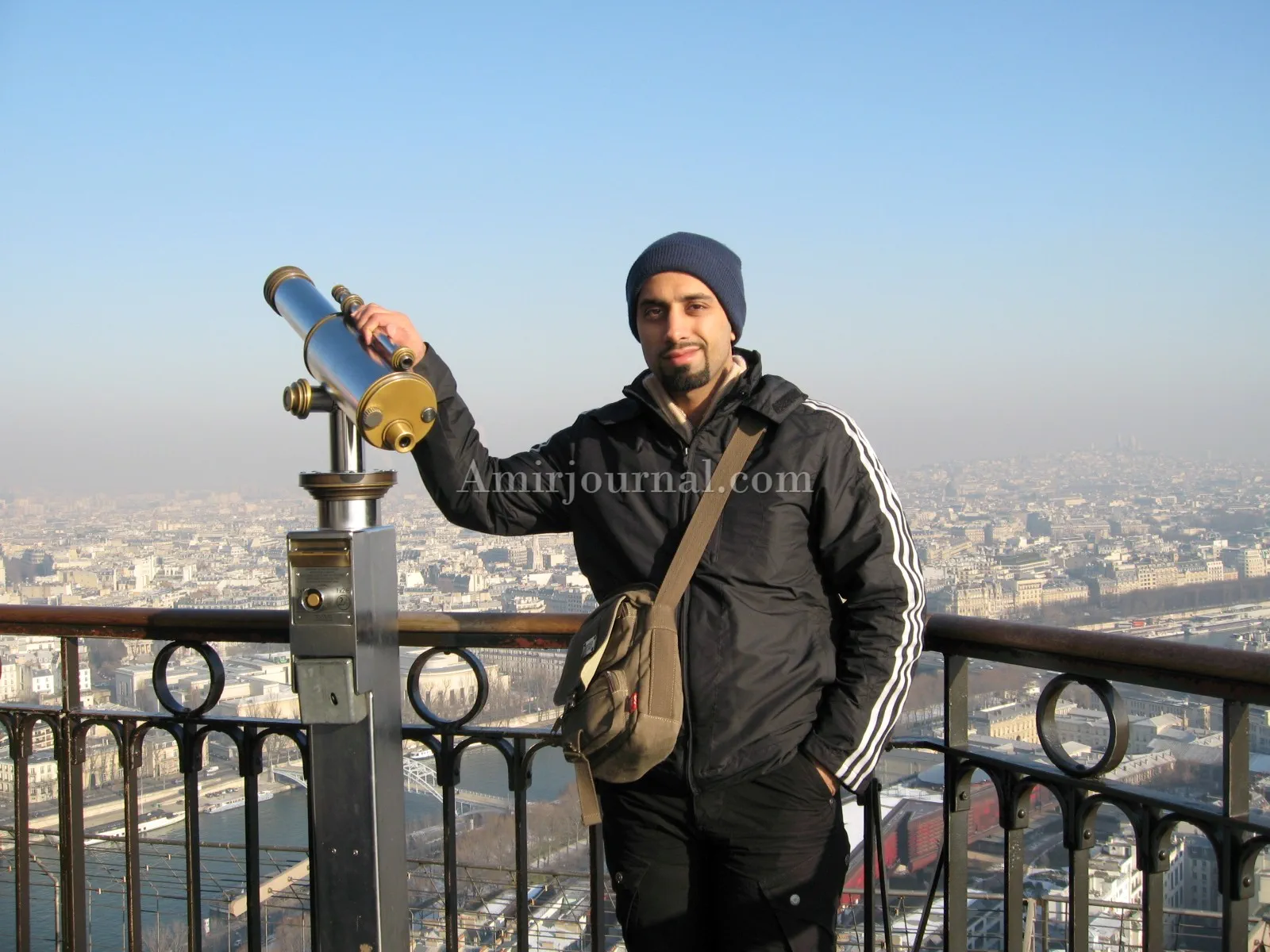
Eiffel Tower — Paris . A memorable view from the Eiffel Tower, overlooking the rooftops, Seine River, and expansive cityscape of Paris. From this elevated viewpoint, the city unfolds in every direction, offering a remarkable perspective of the French capital and its historic urban landscape
Paris is a city where history continues to live. It appears in the ironwork of the Eiffel Tower, the golden dome of Les Invalides, the quiet interiors of its churches, the grand halls of the opera, and paintings that have survived for centuries. The city feels less like a collection of monuments and more like a living museum, where history opens onto the streets and people, artists, cafés, and evening lights become part of the story.
This journey moves through architecture, art, faith, history, and everyday life—from the Eiffel Tower and the Champs-Élysées to the Panthéon and Notre-Dame, from the treasures of the Louvre and the civilizations of Egypt and Mesopotamia to the artistic streets of Montmartre and the peaceful heights of Sacré-Cœur.
The Story
2009
The journey begins with the Eiffel Tower, perhaps the most familiar image of Paris. Yet standing beneath it feels entirely different from seeing it from a distance. Looking upward, the intricate iron lattice stretches into the sky, and the immense scale of the structure slowly reveals itself.
Built for the 1889 Exposition Universelle, the tower was designed under the direction of engineer Gustave Eiffel. Thousands of individual iron pieces were assembled with remarkable precision, creating a structure that gradually became one of the most recognizable landmarks in the world.
From within the tower, Paris takes on another form. The iron framework moves across the view, while from higher levels the city unfolds into the Seine, historic rooftops, grand avenues, and monuments. The higher the journey rises, the broader the story of Paris becomes.
further through the city, Les Invalides appears beneath its magnificent golden dome. Created during the reign of Louis XIV, the complex was established to house and care for wounded soldiers and later became closely associated with France’s military history.
Historic cannons line the courtyard beneath elegant arcades, while the golden dome catches the changing daylight above. Beneath this dome lies the monumental tomb of Napoleon Bonaparte, adding another powerful chapter to the story of the complex.
A different chapter of French history appears at the heart of the Place de la Bastille.
The July Column rises above the square as a monument to the July Revolution of 1830. Built between 1835 and 1840, it is crowned by the golden figure known as the Spirit of Liberty.
Today, the square has a distinctly contemporary rhythm, surrounded by cafés, restaurants, traffic, and pedestrians. History and everyday Paris meet here naturally, with the monument standing quietly within the movement of modern city life.
From political history, the journey moves toward the world of theatre and culture.
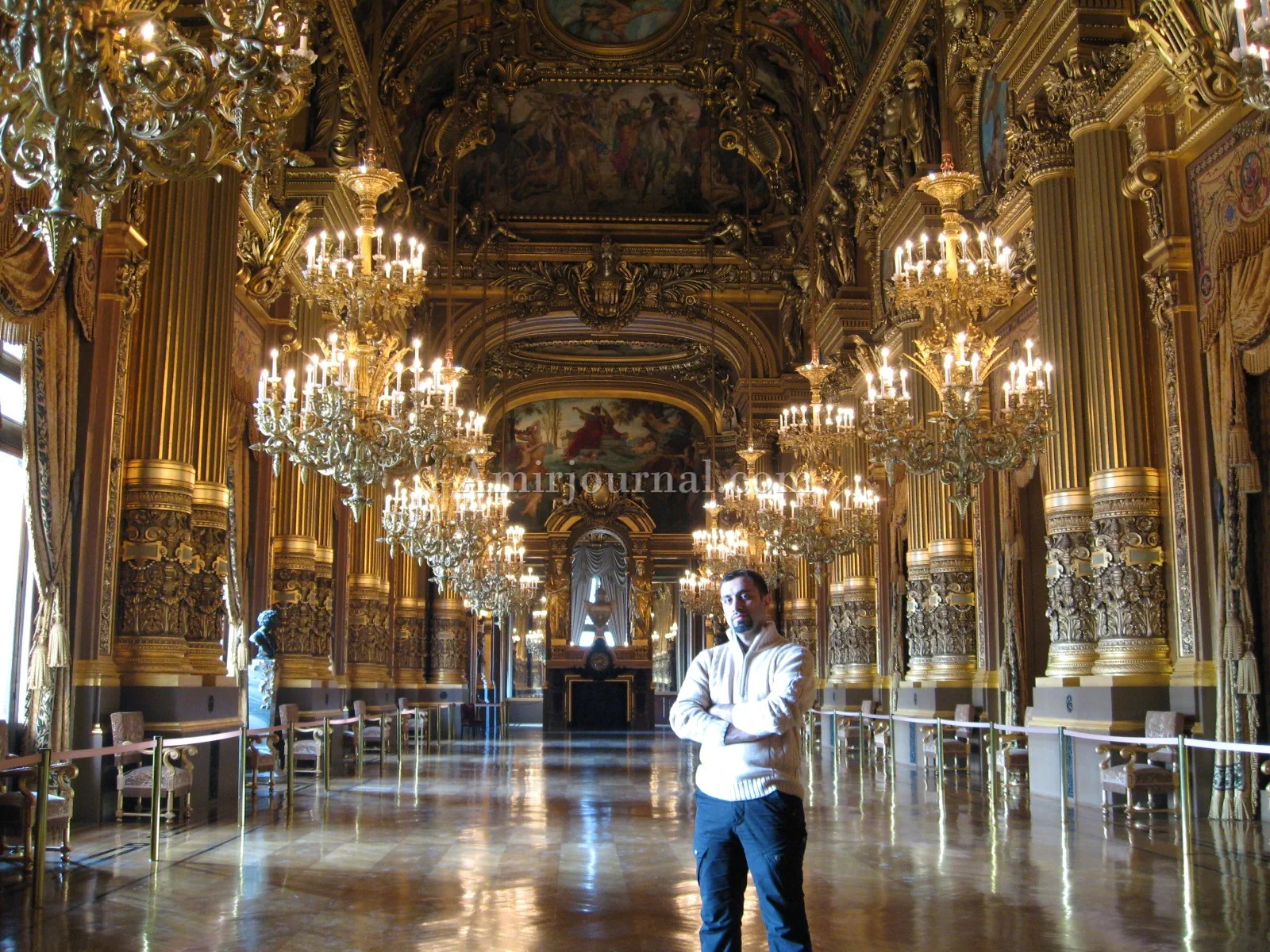
The Palais Garnier opened in 1875, carrying the name of its architect, Charles Garnier. Its elaborate façade, sculptures, columns, and decorative details represent the extraordinary theatricality of Second Empire Paris. Even Garnier’s own bust appears prominently on the building, creating a symbolic connection between architect and creation.
Inside, the Grand Foyer continues the spectacle. Mirrors, gilded decoration, painted ceilings, elegant furniture, and enormous chandeliers create an atmosphere designed for ceremonies and grand social occasions. Walking through the space feels like entering a Paris of another century, when architecture itself became part of the performance.
Nearby, the city becomes quieter and more contemplative.
The Panthéon rises with its monumental dome and classical columns, one of Paris’s great expressions of Neoclassical architecture. Originally conceived as a church dedicated to Saint Geneviève, it later became a national mausoleum honoring distinguished figures from French history.
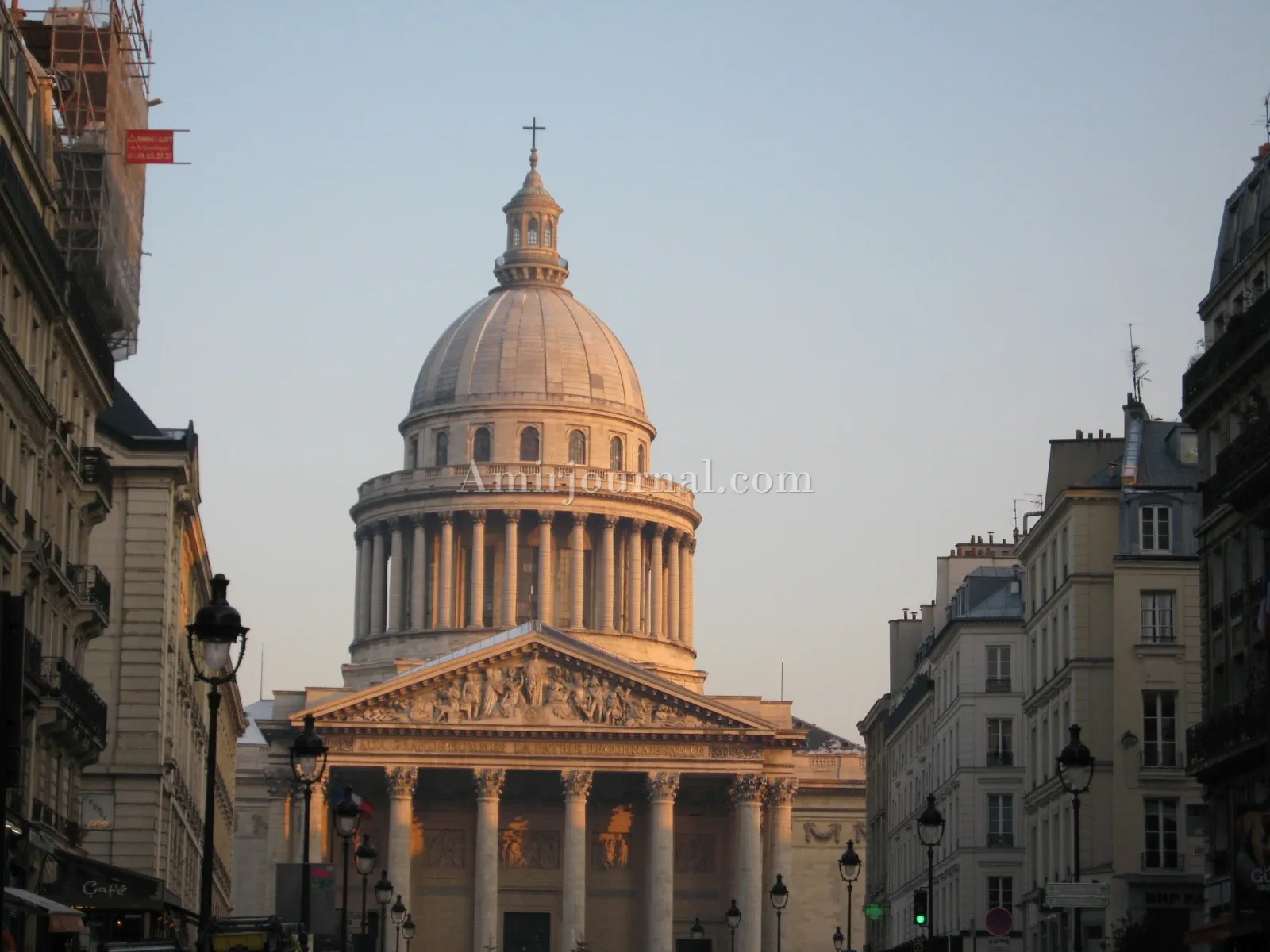
Around it, the Latin Quarter preserves the intellectual character of the city. Historic academic buildings, students, bookshops, cafés, and narrow streets create an atmosphere shaped by centuries of education and debate. The inscription “Liberté, Égalité, Fraternité” on the former Faculty of Law adds another layer to this historic setting.
A short distance away, the towers of Notre-Dame rise beside the Seine.
Notre-Dame Cathedral has stood at the heart of Paris since the 12th century and remains one of the great masterpieces of Gothic architecture. Its twin towers, rose windows, sculpted details, and flying buttresses have shaped the visual identity of the city for generations.
Paris then becomes intimate again, in a quieter corner of the city.
Along Rue Barbet-de-Jouy, the historic garden of the Hôtel de Clermont offers a peaceful winter scene. Trees, old ironwork, and a frozen fountain create a delicate contrast with the movement of the surrounding city. The garden dates back to the 18th century, when it was enriched with sculptures, fountains, trees, and ornamental features.
From this quiet corner, the journey returns to one of Paris’s grandest avenues.
The Arc de Triomphe stands at the western end of the Champs-Élysées, a monumental symbol of France’s military history and the Napoleonic era. Construction began in 1806 and was completed in 1836.
Its sculpted reliefs record important episodes from French history, while beneath the arch lies the Tomb of the Unknown Soldier, marked by an eternal flame in memory of those who lost their lives during the First World War.
Elsewhere in the city, art takes on a more contemporary character.
In front of the Palais de Tokyo, the monumental bull and calf sculpture creates a striking dialogue with the vast architecture of the building. The Palais de Tokyo itself is connected to the 1937 International Exhibition and today remains one of Paris’s important spaces for modern and contemporary art.
Yet no place brings together so many centuries and civilizations as the Louvre.
Experiences
The Louvre Pyramid creates a remarkable meeting point between historic architecture and modern design. Designed by I. M. Pei and inaugurated in 1989, the glass pyramid stands at the center of the Cour Napoléon and has become an emblem of the museum itself.
The photograph from 2009, taken in front of the pyramid, captures a small personal moment within one of the most recognizable settings in Paris.
Inside, Mona Lisa draws visitors toward Leonardo da Vinci’s celebrated portrait. Painted in the early 16th century, the work is admired for its subtle transitions of light and shadow, the famous sfumato technique, and the enigmatic expression that has fascinated generations.
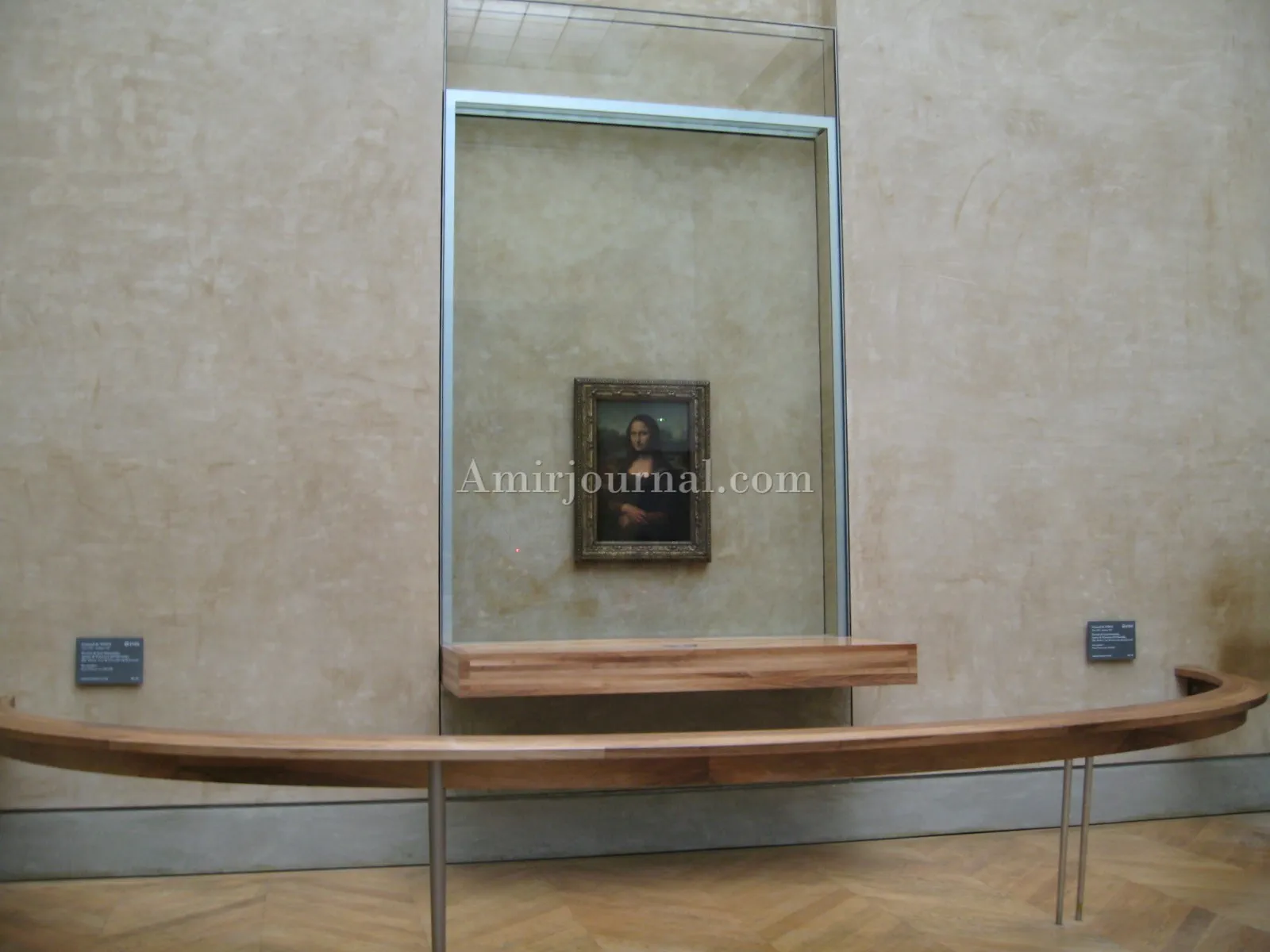
A few galleries away, the journey moves thousands of years further into the past.
The Code of Hammurabi, created around 1750 BCE, is one of the most important surviving monuments of ancient Mesopotamia. This 2.25-metre-high basalt stele shows King Hammurabi before Shamash, the god of justice, symbolizing the divine authority behind his laws.
Below the relief, 282 legal judgements are written in Babylonian cuneiform, covering family, property, trade, labour, and social responsibilities. Discovered at Susa in 1901–1902, the stele has been displayed at the Louvre since 1904, offering a remarkable glimpse into Babylonian society more than 3,700 years ago
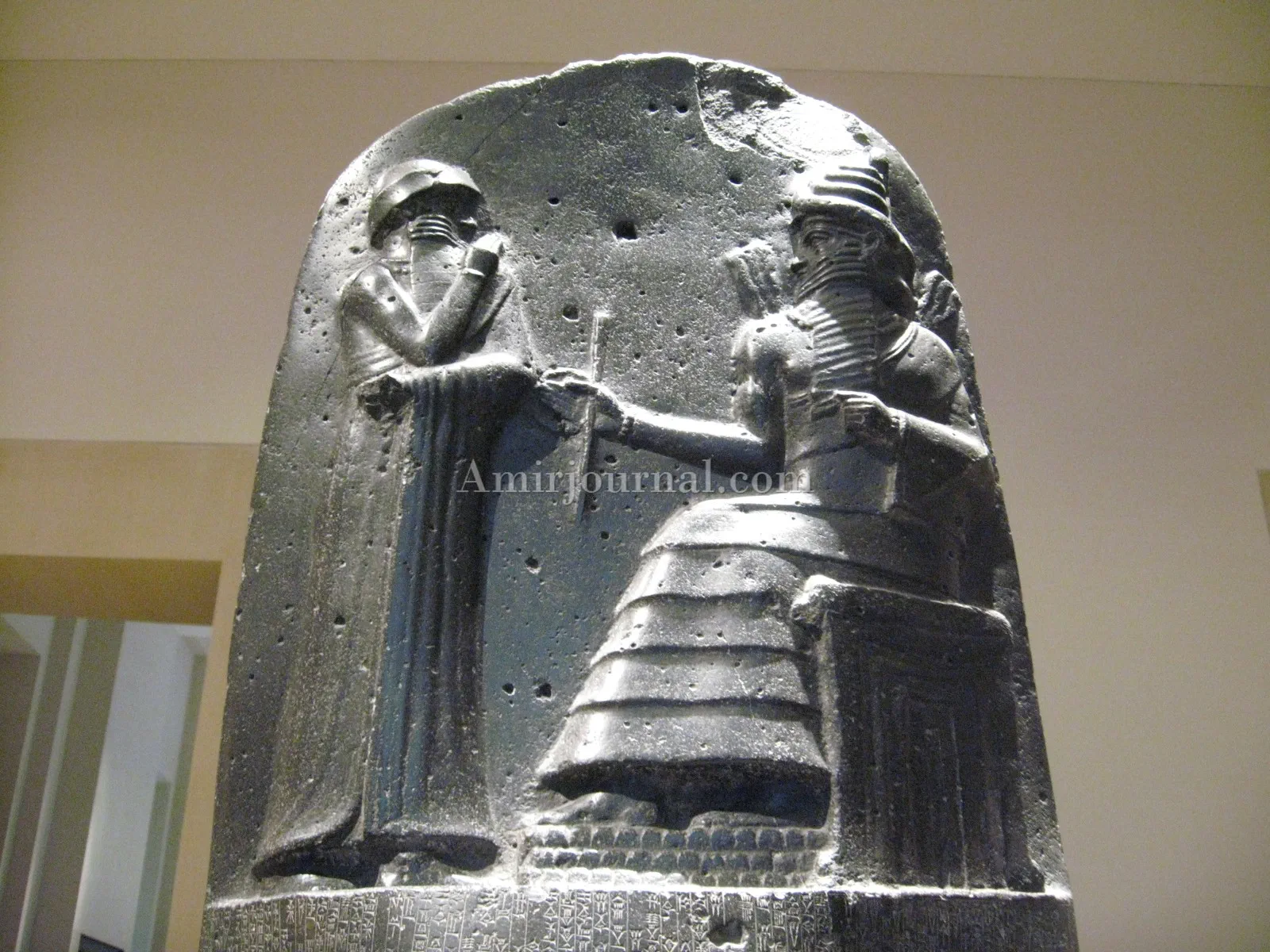
The Code of Hammurabi
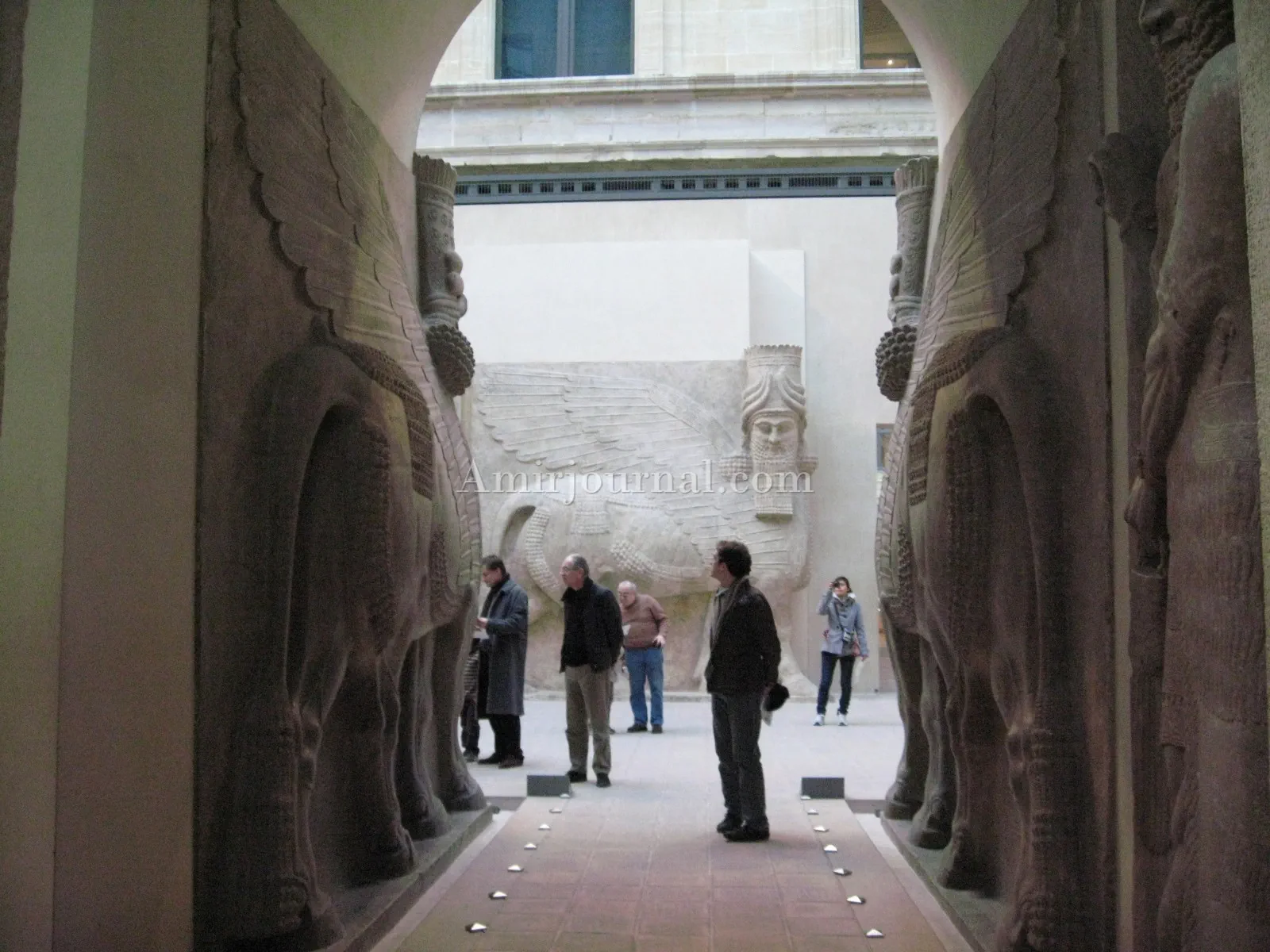
Inside the Cour Khorsabad, monumental Assyrian Lamassu stand like ancient guardians. These protective beings, with human heads, bull bodies, and enormous wings, originally belonged to the palace of Sargon II at Dur-Sharrukin, the Assyrian royal capital built in the 8th century BCE.
Nearby, finely carved reliefs show bearded figures, elaborate garments, winged protective spirits, and powerful animals. The Winged Genius, carrying a ritual bucket and sacred cone, reflects the religious symbolism of Assyrian palace art.
One of the most captivating scenes is much more contemporary: art students sitting on the floor, carefully drawing the ancient sculptures. Their pencils follow forms created thousands of years ago, bringing ancient art and modern artistic practice together in one quiet moment.
The Assyrian lion reliefs add another dimension, presenting the lion as a powerful symbol of royal strength while capturing movement and anatomy with extraordinary precision.
Then the galleries lead toward the civilization of the Nile.
The Great Sphinx of Tanis combines the powerful body of a lion with the head of a pharaoh, expressing the connection between royal authority and divine power in ancient Egypt. Carved from granite, the monument dates back to the Old Kingdom, with inscriptions added by later rulers.
Nearby, Isis in Mourning presents a more intimate image. The Ptolemaic-period wooden sculpture shows Isis kneeling with her arms raised in grief, recalling her mourning for Osiris and her central place within one of ancient Egypt’s most important mythological traditions.
The Sacred Bull recalls the importance of animal worship in ancient Egyptian religion, particularly the cult of Apis. Ram-headed figures and sphinxes reveal the connection between sacred animals, royal imagery, and temple traditions.
The bearded image of Serapis tells another story: a deity whose worship brought Egyptian and Greek religious traditions into close contact during the Hellenistic world. Nearby Egyptian seated figures continue a much older artistic tradition of presenting the human form with dignity, order, and symbolic meaning.
Even a mummy brings a deeply personal story from this distant world into the present.
The Mummy of Pacherimin dates from the Ptolemaic period, approximately 332–30 BCE. Linen, stuccoed cartonnage, and hieroglyphic inscriptions preserve elements of the funerary traditions surrounding the deceased and offer a glimpse into ancient Egyptian beliefs about death and the afterlife.
The journey then returns to Europe, where art becomes a language of culture, ceremony, and power.
In the Napoleon III Apartments at the Louvre, the atmosphere changes completely. Crimson fabrics, mirrors, gilded decoration, elegant furniture, and an enormous chandelier recreate the extraordinary luxury of Second Empire Paris. Here, architecture becomes a stage for ceremony and social life.
After hours among paintings, sculptures, and civilizations, Paris once again leads the traveler outdoors.
In the streets of Montmartre, art becomes part of everyday life. Under large umbrellas, portrait artists work beside their easels while visitors pause to watch faces emerge from simple pencil lines. Café lights reflect softly on the pavement, conversations fill the evening air, and the rhythm of the neighborhood feels wonderfully human.
Montmartre became one of Paris’s great artistic districts during the late 19th and early 20th centuries. Painters, writers, musicians, cafés, and studios shaped its identity, and today the tradition continues through the artists who work in its squares and streets.
A little higher, the white domes of Sacré-Cœur appear above the rooftops.
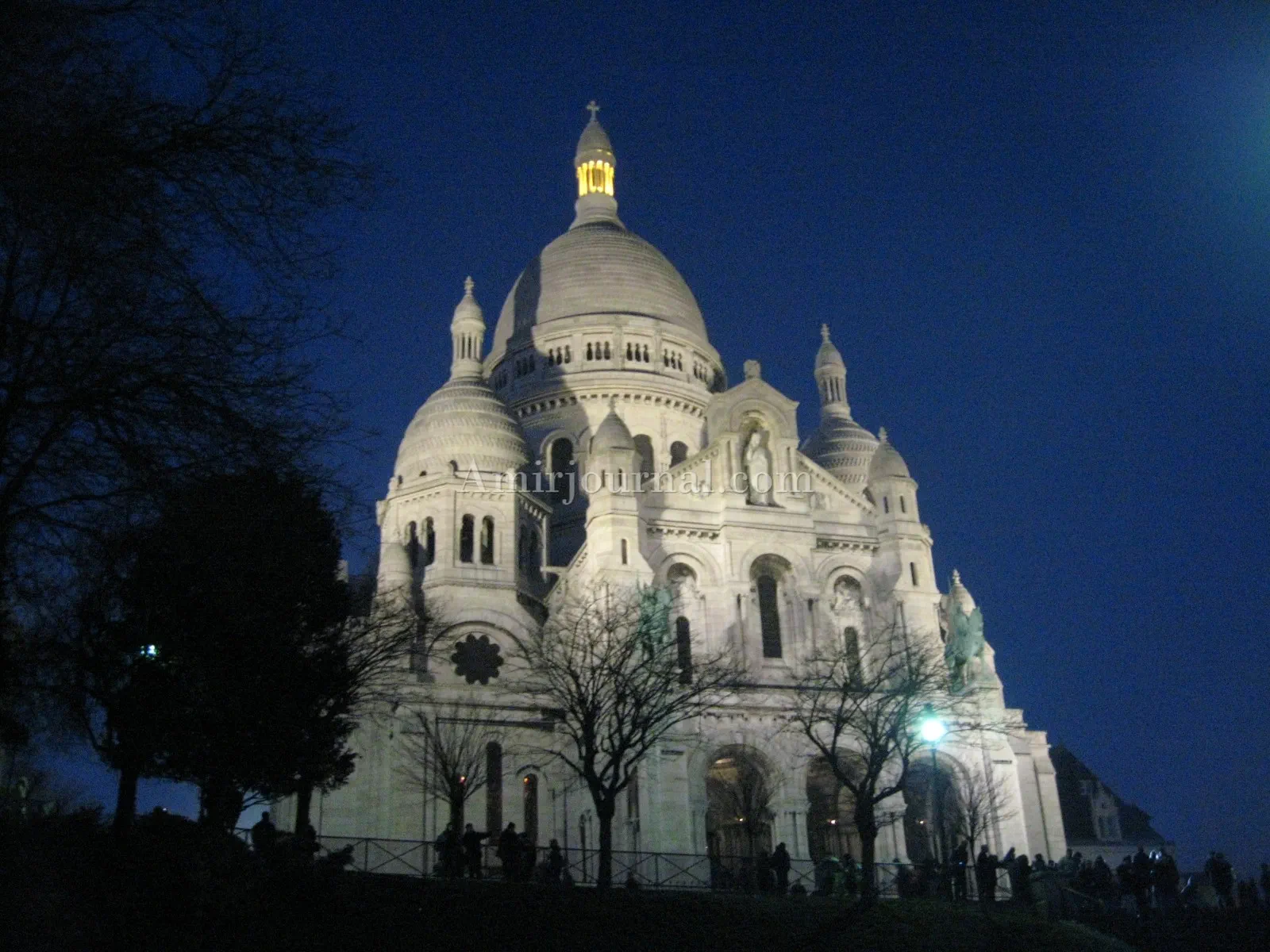
Sacré-Cœur Basilica crowns Montmartre with its distinctive Romanesque-Byzantine architecture and brilliant white stone. Construction began in 1875, following the design of architect Paul Abadie, and the basilica gradually became one of the defining landmarks of the Paris skyline.
Inside, the atmosphere changes immediately. Soft light, arches, stone, and the quiet presence of visitors lead the eye toward the sanctuary and the magnificent mosaic of Christ in Glory.
Completed and inaugurated in 1923, the monumental mosaic covers approximately 475 square metres. Christ stands at its center with arms extended, surrounded by heavenly figures, while blue and gold dominate the vast composition. The image expresses the basilica’s devotion to the Sacred Heart of Jesus.
Elsewhere inside the basilica, the statue of Saint Peter sits with his hand raised in blessing and the keys of Heaven beside him. Flowers placed around the statue and the quiet presence of visitors create a deeply human atmosphere within this monumental religious space.
As evening arrives, Sacré-Cœur takes on another personality.
The basilica glows against the deep blue evening sky. Its central dome and smaller cupolas rise above Montmartre while the lights of Paris stretch across the horizon below.
From this height, the entire journey seems to return in fragments: the Eiffel Tower, Les Invalides, the Bastille, the Palais Garnier, the Panthéon, Notre-Dame, the Louvre, ancient Egypt, Mesopotamia, the artists of Montmartre, and the quiet interior of Sacré-Cœur.
Paris becomes more than a collection of places. It becomes a feeling created through movement—the sound of a city street, the warm glow of a café, the reflection of lights on stone, the pencil of an artist, the silence of a church, and the presence of objects that have travelled across thousands of years to meet us here.
Perhaps this is the lasting beauty of Paris: the past lives in its monuments, the present lives in its streets, and every traveler adds a small chapter to the story.
And when the final lights settle over the white dome of Sacré-Cœur, Paris remains quietly luminous, carrying the memory of the journey into the night.